

Cycle times slashed
Having purchased a Tornos Deco sliding head turning centre some years ago, County Wexford subcontractor Mann Engineering had no hesitation recently in ordering another two machines to meet the changing needs of the marketplace
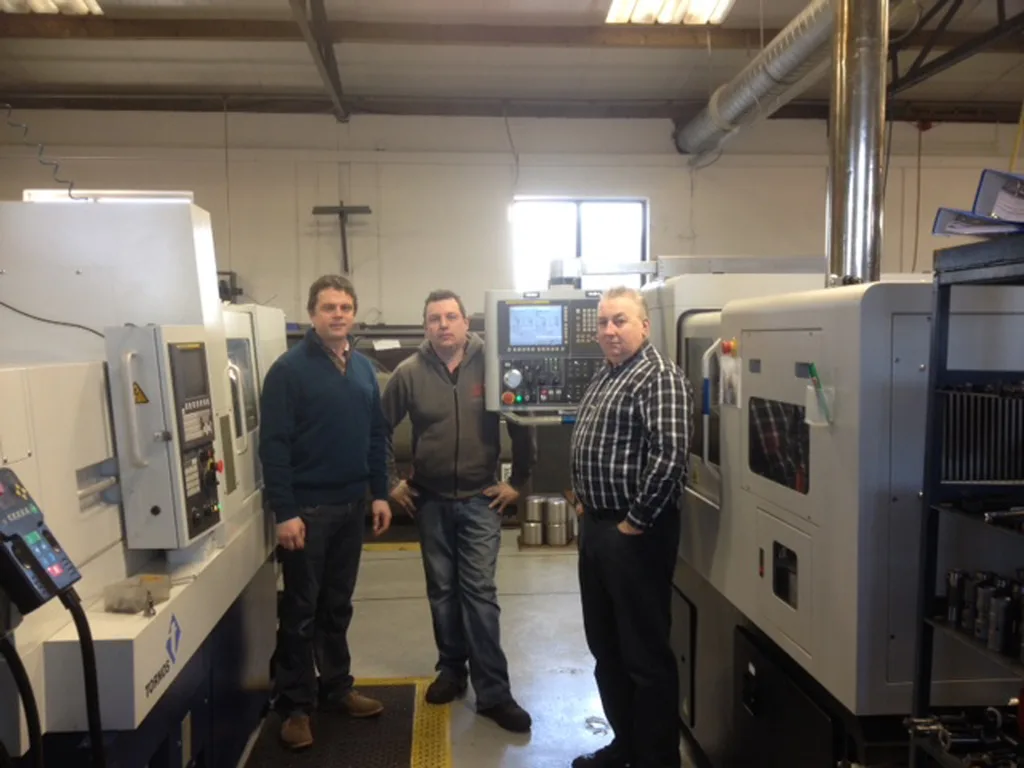
The Irish manufacturer bought its first Tornos Deco 2000 to replace four CAM Auto machines whilst reducing secondary operations. At the time, the savings from the sub spindle and driven tooling on the Deco cut some cycle times from more than 2.5min to less than 30s. Further savings have been made on floor-space, labour, lead-time and power consumption.
A decade down the line and Mann Engineering has seen significant changes to the manufacturing landscape in Ireland. It reports that customers are no longer ordering large batches. The New Ross business had to respond. Company director, Rolf Fuhrmann, explains: “Our regular batch sizes have fallen from 5000 to 30,000 off to anything from 200 to 5000, so we needed to review the feasibility of our machine tools. Nothing would match the Deco for its productivity, precision and quality levels, but for small batch runs in the region of 200, the set-up times prevented it from being a feasible option. We just couldn’t compete on cost when we took set-up times into account.”
Reviewing the marketplace and taking its existing plant list of four twin spindle triple turret Japanese turning centres into account, Mann realised it needed flexibility and productivity for parts below 38mm diameter. This is because its larger twin spindle machines would support the turning of parts up to 64mm diameter. It believed the answer to be a Tornos ST26 and a Delta 38 turning centre.
The new additions were acquired to replace the ageing Deco machine, increase capacity and relieve the workload on the larger twin spindle multi-axis centres.
Fuhrmann continues: “We turn our parts around for customers within a week and sometimes within 24h, so the critical factor in machine selection was service and support. Tornos are fully supported in Ireland by Premier Machine Tools and its excellent support over the last decade was a contributing factor in our decision process. After that, the key element was flexibility. Both machines offered this in abundance.”
With a machine shop equipped with a variety of Fanuc machines, the Fanuc 31i control on the new Tornos additions reduced the learning curve and created the simple transition of programs from alternate machines. As soon as the Delta 38 and ST26 were up and running, the benefits were clear. Set-up times were instantly slashed by more than 70%, which instantly made Mann Engineering competitive on smaller batch runs. Fuhrmann says: “We will do a job changeover every day and sometimes twice a day on a multiple of machines with a longer batch being loaded in the evening for lights-out machining. The new machines have instantly made us competitive whilst the productivity of the machines has been excellent.”
The productivity of the new machines has been attributed to a number of factors: The new Tornos machines have integrated motor spindles and pneumatically activated clamping mechanism, which cuts the time required for workpiece clamping and feeding bar from the Robobar SBF 326 barfeeding. Additionally, the kinematics of the Delta 38 and ST26 plus the modular tooling arrangements have attributed to flexibility and cycle time savings.
Fuhrmann confirms: “Compared to hydraulic chucks and collets, the Tornos system has cut the feeding of a work piece, clamping and unclamping times by 5s per part. In addition, the tool configuration sees every tool no further than 50-60mm from the workpiece at all times, whereas our turret machines will have to move the tool by up to 350mm before cutting can commence. These two factors alone have seen parts transferred from the larger machines to the Delta 38 with a cycle time reduction from 40 to 20 seconds. Another part, a stainless steel pin for specialised shelving applications was drilled, tapped and turned externally and at both ends in 60 seconds, a 15% saving from the larger machines.”
These reductions are also accomplished on the ST26 where a hydraulic ram port component at Mann Engineering was cut on the larger machine in 50s and then transferred to the ST26 to achieve a cycle time of less than 40s. For a part that required internal and external turning, internal screw cutting and machining from both ends, the cycle time reflects the saving from the machine kinematics and tool configurations alone.
IPE Newsletter
IPE publishes a weekly eNewsletter, delivering a carefully chosen selection of the latest stories straight to your inbox.
Subscribe here