

Passivation explained and demonstrated
The latest video from William Hughes features the passivation process facility based at the company’s headquarters in Dorset. NADCAP accredited and Honeywell Aerospace approved, the video explains how passivation can be used to remove exogenous iron or iron compounds left behind on the surface of stainless steel as a result of machining and fabrication processes.
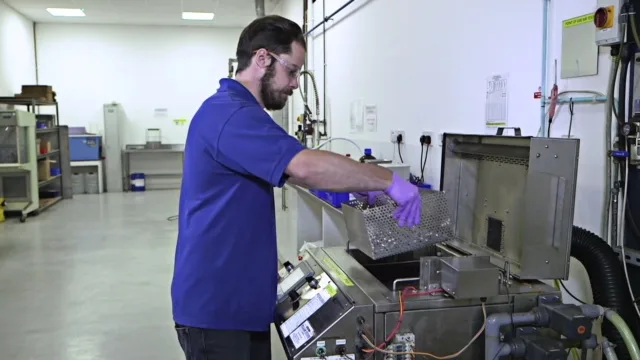
To view the video, simply enter 'Passivation William Hughes' into YouTube or follow the link:https://www.youtube.com/watch?v=6QlBWYUVS8s www.youtube.com/watch?v=6QlBWYUVS8s
The William Hughes passivation plant is fully automated and PLC controlled, offering novel functionality in that once the component basket is placed in position, there is no manual ‘dunking’ of components from station-to-station, as with traditional systems. Instead the plant performs ‘fluid transfer’, moving chemical solutions from holding tanks into the main processing unit as required. This prevents damage to the parts involved as they are not required to move.
Typical treatments feature nitric acid/sodium dichromate and rinse cycles followed by a further rinse in deionised water before the parts are placed in a drying cell.
Other innovative plant functionality includes an ultrasonic passivation facility and a rotary option where parts can be rotated through the solution, thus filling air gaps in more complex and tubular-type components, for example.
IPE Newsletter
IPE publishes a weekly eNewsletter, delivering a carefully chosen selection of the latest stories straight to your inbox.
Subscribe here