

Training,training and more training
Ensuring staff are adequately prepared for
working safely in a confined space is all down to
training, according to Mark Winfield, director of
HSS Training
Working in confined spaces
may initially seem like
quite a
Ensuring staff are adequately prepared for
working safely in a confined space is all down to
training, according to Mark Winfield, director of
HSS Training
Working in confined spaces
may initially seem like
quite a specific area of
health and safety provision, but it is
surprising how many industries
encounter such situations. One of the
most common misconceptions is that
a confined space will be easily
identifiable as a small, cramped space
but even the largest of working areas
could fall within the official
classification of a ‘confined space’.
According to the 1997 Confined
Space Regulations, a confined space
can actually be a place of any size
with limited or restricted access
where, due to its enclosed nature,
there is specific risk to the health of
the person working within it.
However, confined spaces aren’t
always obvious. The working
environments that often come to
mind include tanks, silos, sewers,
flues and wells. However, confined
spaces could also include opentopped
chambers, containers or
storage vessels, poorly ventilated
rooms and ductwork. But whether
easily identifiable or not, confined
spaces pose a risk to the safety of the
people working within them.
According to the HSE, an average
of 15 people are seriously injured each
year as a result of working within or
attempting to rescue a colleague from
within a confined working space.
Why? Well, a confined space may
contain hazardous substances; it may
have poor ventilation, free-flowing
liquids and solids or other peculiar
working conditions either inside the
space or nearby. It is possible that the
area is full of water or completely dry
but either way filled with toxic gases.
Or it might just be a tunnel with
restricted visibility and poor
ventilation.What makes a confined
space dangerous is not generic and
will vary from working space to
working space; there is no one size
fits all risk identification approach
which means there is no one size fits
all approach to managing those risks.
The best way to equip your
workforce is to first identify the
confined space itself, then the
associated risks. How to manage
them is simple – it’s training, training
and more training with a big element
of practical experience. All companies
whose employees are required to
work within restricted environments
should be asking how they can
manage and reduce confined spaceassociated
risks through training –
under UK law it is a legal
requirement for any company whose
employees work within these
environments to comply with health
and safety standards of the Confined
Spaces Regulations Act.
The right training will help
employees more readily identify a
working environment as confined
and provide them with the
knowledge and skills to operate
within them safely. It will help them
understand the risks posed to them
and their colleagues and how best to
manage and respond to them. It will
structure a safe system of work that
includes assessment of the area and
surrounding environment and having
the correct equipment, training and
contingency plans in place.
Practical application
Any good confined space awareness
training course should include
practical application of the
theoretical elements, enabling
delegates to apply the knowledge and
skills they have gained, practice how
they would operate within the
confined space and consider how
they would respond to the various
risks that may occur. By experiencing
the opportunity to respond to reallife
confined space-related
risks but in controlled
surroundings, delegates
should be fully prepared
for working within such
environments.
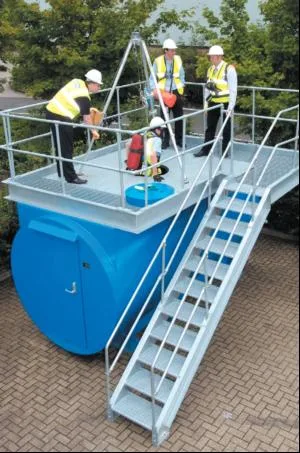
At HSS, we felt it was
essential to give confined
space workers the
opportunity to put theory
into practice so we
invested in a custom-made
confined space tanks to
add a practical element to
our confined space
training. These tanks
enable the simulation of
various confined space
scenarios including
gushing floods, rising
water levels, gas leaks and
reduced visibility. From
the man-hole sized entry
point, delegates are trained
firstly on the safe access to a confined
space. Once inside, a range of
hazardous environments are
simulated.
Working within confined spaces is
forever going to be integral to various
jobs, but with a combination of
theoretical and practical based
training to help educate people on
correct and safe practice, the risks
posed to employees of working in
restricted environments can be both
managed and reduced. Adequate
training in preparation for working
within confined spaces will help to
ensure a competent, safe, compliant
and efficient workforce.
IPE Newsletter
IPE publishes a weekly eNewsletter, delivering a carefully chosen selection of the latest stories straight to your inbox.
Subscribe here