

Pandemic drives cobot growth
According to supplier of industrial robots, GEKU, the global pandemic and subsequent lockdowns have resulted in many businesses looking to robotics, particularly cobots, to help increase efficiency and productivity while allowing current employees to take on more complex tasks.
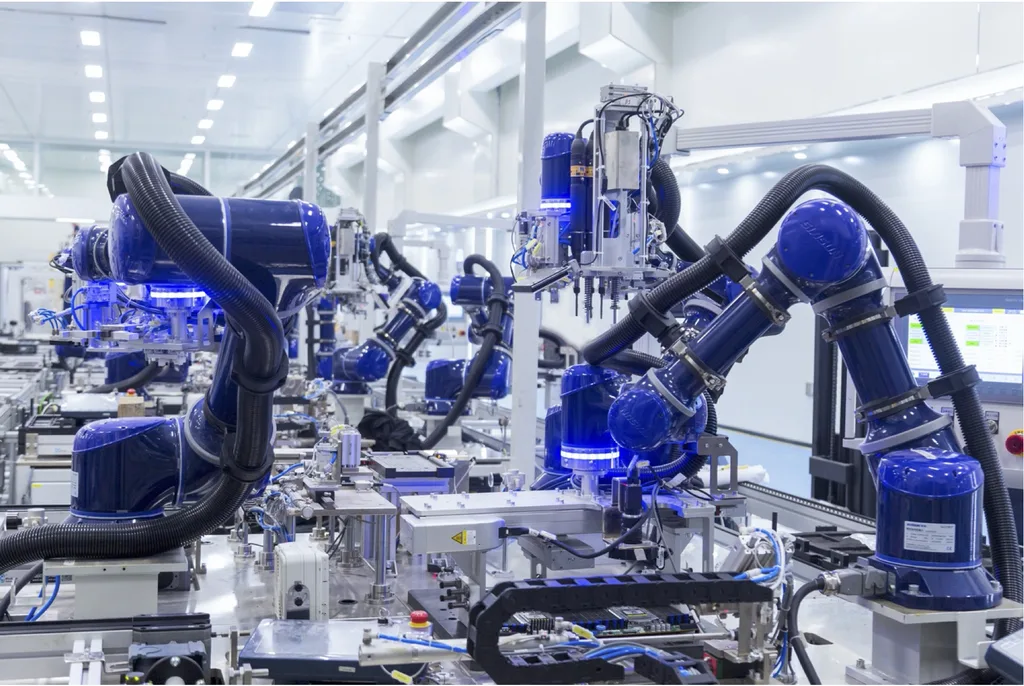
A key driver in manufacturing for automation using cobots is the shortage of employees and the difficulty in recruitment.Additionally, industries that have traditionally resisted any form of automation are now finding ways to utilise cobots to improve productivity, efficiency and safety. For example, construction companies are beginning to automate installing dry walling using Cobot arms with astonishing accuracy while saving human workers the risk of ergonomic strain or injury.
Other sectors embracing automation, particularly cobots, to enhance efficiency and overcome the issues with the current talent shortage include scanning robots in grocery stores to check on stock levels to automated vacuum cleaners that work entirely in the background saving 60 – 70% of the cost of commercial cleaning.
cobots are proving to be popular in eCommerce fulfilment centres in the US, enabling a 200% increase in productivity working alongside the human workforce.
How cobots are changing manufacturing and industry
Cobots are revolutionising how the human workforce can work safely and collaboratively with robots in the manufacturing and industrial sectors. Traditionally robots used in heavy industry have to be shielded to protect the human workforce working in their vicinity. This is because they have no way of knowing if anything is in their way; they’re there to perform a task, but their size can be a danger to others in the same area.
On the other hand, cobots are specifically designed to work in close proximity to humans and are inherently safe. This safe working environment is achieved by power and force limiting, speed and separation monitoring and safety monitored stops. They are also fitted with an array of sensors for tactile sensitivity, accelerometers, 3D cameras and lasers to trigger an action.
Cobots aren’t designed to remove the need for your employees but to work alongside them and enhance productivity and efficiency while reducing the need to employ additional staff, which given the difficulty that employers in every sector are facing, can only be a good thing.
Most surprisingly is the cost of cobots compared to traditional robots. GEKU cobots start from as little as £16,000, and they have models with payload capacities between 3kg and 20kg. Compared to large, non-collaborative robots, this cost is significantly less and the payback far quicker.
Industries that have traditionally used robotics for decades, like the auto industry, which use them for welding and spraying, have begun to consider cobots for final assembly jobs.
For example, Dutch car maker Stellantis N.V. uses cobots for final assembly in their factory in Turin, Italy, which produces the new electric Fiat 500. Tesla has said it plans to launch a humanoid robot to work in its factories alongside its regular employees, initially carrying items around its factories but could address the labour shortage issue over time.
GEKU cobots
GEKU, a leading supplier of industrial robots, can now provide a range of cobots from dexterous and nimble at the smaller end of the scale to larger cobots that can lift and stack items or unload vehicles.
GEKU’s cobots are suitable for businesses who want to begin their automation journey without the prohibitive costs of traditional industrial robots.
With the skills gap that currently exists in manufacturing and other industries, cobots may be a way to transform production processes without significantly impacting your human employees.
Several cobots are available ‘off-the-shelf’, giving the flexibility to suit various needs. When customised with various tools like cameras, suction cups and welding tips, they have endless applications.
IPE Newsletter
IPE publishes a weekly eNewsletter, delivering a carefully chosen selection of the latest stories straight to your inbox.
Subscribe here