


In the picture on inline cameras?
Monitoring critical plant and machinery periodically, with
handheld thermal imaging cameras can result in critical
incidents being missed, according to Chris Jones,md, Micro-
Epsilon UK. With low cost inline cameras availa
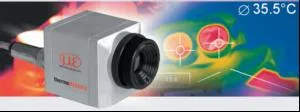
Monitoring critical plant and machinery periodically, with
handheld thermal imaging cameras can result in critical
incidents being missed, according to Chris Jones,md, Micro-
Epsilon UK. With low cost inline cameras available from
£2950, he says continuous monitoring is now affordable
Many plant and maintenance
engineers are familiar with
handheld thermal imagers as a
non-contact, portable, relatively low cost
method of preventive maintenance. These
devices are generally used as patrol
monitoring tools, helping engineers to locate
‘hot spots’ on process plant, including critical
machines and equipment such as pumps,
fans, motors and electrical connections –
without having to interrupt production.
Manufacturers of thermal imagers are
developing more compact, cost effective
versions with a wide array of features and
connectivity options. The latest thermal
imagers are smaller, lighter, easier-to-use and
ergonomically designed. However, when it
comes to monitoring, controlling and
managing process temperatures, engineers
should familiarise themselves with the inline
(fixed) non-contact temperature
measurement alternatives that are now
available.
One complete inline thermal imaging
camera can now be supplied, with one
optical lens, user configurable setup and
configuration software for just £2950.
For example,Micro-Epsilon’s
‘thermoIMAGER’ range of inline/fixed
radiometric thermal imaging cameras
provides temperature images and profiles of
a target area. These ‘plug-and-play’ units
come with software that enables the user to
configure all the device parameters, as well as
enabling the real time capture and storage of
images or video of an event for slow motion
play back or snapshots at a later date.
Unlike a handheld thermal imager, inline
thermal imagers are fixed into position in
typically a production process, where they
can monitor the temperature profile of a
target material or object. These cameras are
well suited to process control across a wide
range of industries, including plastics,
packaging, machine building, FMCG,
thermoforming, automotive, paper, printing,
textiles, food, chemicals and pharmaceuticals
and medical engineering.
Rather than supplying the inline thermal
imagers with a single factory calibrated
optical lens,Micro-Epsilon provides a choice
of up to three interchangeable lenses (6, 23
and 48° FOV). For engineers who may be
unsure of which applications they will use
the device for, the three interchangeable
lenses cater for every possible field of view
for temperature monitoring tasks. Other
features and accessories available with the
thermoIMAGER range include a traceable
certificate of calibration (one for each
individual lens), adjustable tripod mount,
carrying case, USB cables (up to 100m) and
process control and analysis software.
With inline thermal imagers, the user can
mount the device in almost any type of
process manufacturing environment. A wide
variety of mounting brackets and protective
enclosures cater for almost every type of
installation and allow the unit to be installed
in wash-down or high temperature
environments.Micro-Epsilon offers a special,
high temperature thermoIMAGER version
that is protected by a water-cooling jacket.
This enables the camera to be used in
temperatures up to 200°C.
Patrol monitoring a process plant using
relatively expensive handheld thermal
imaging cameras to monitor critical plant
and machinery is not a viable option for
many companies. However, inline thermal
imagers can be installed in a fixed position
next to a critical component or part of a
production line, to constantly monitor a
target.
Micro-Epsilon’s thermoIMAGER TIM160
is compact and lightweight and made from
anodised aluminium. The camera housing
measures 45 x 45 x 62mm and weighs just
250g (including lens and a 1m USB cable),
enabling easy-mounting in restricted spaces.
The rugged device is protected to IP65
(NEMA-4) and is powered (5V DC) via the
USB 2.0 interface, with a maximum current
draw of 500mA.
The system is compatible with Windows
XP/Vista, enabling easy integration of
thermal imaging information with mini-
PCs, rail mounted PCs and industrial
embedded PCs and PLCs. A DLL is provided
so that the user can export thermal imaging
data from the process imager into customerspecific
software.
Related posts
IPE Newsletter
IPE publishes a weekly eNewsletter, delivering a carefully chosen selection of the latest stories straight to your inbox.
Subscribe here