

Fire-resistant and easy-to-install
An advance in the materials science related to the
properties of the cable insulation known as INFIT has made
it possible to develop new families of electrical power and
data cables with a high level of fire resistance u
An advance in the materials science related to the
properties of the cable insulation known as INFIT has made
it possible to develop new families of electrical power and
data cables with a high level of fire resistance using classical
extrusion methods.Arnaud Piechaczyk, R&D group leader,
Nexans International Research Centre in Lyons explains
During the critical building evacuation
and fire fighting periods required by
stringent national and international
standards, fire-resistant cables play a key role
in ensuring the integrity and continuity of
vital safety circuits. In many cases, the need
for cables to deliver the required levels of
performance, reliability and safety has forced
designers and installers of electrical systems
to compromise on other desirable properties
regarding ease of handling and installation.
Until now, the cable industry has mainly
relied on two major technologies to ensure
the integrity of flexible cable insulation
during a fire: XLPE/Mica taping and ceramic
forming silicone rubbers. Each of these
technologies presents a number of
advantages. The classical insulation taping
based on Mica, and largely used since the
80s, can easily be implemented on an
industrial scale to provide a tough, effective
electrical insulation when overlaid with a
cross-linked polyethylene (XLPE) coating. It
is strong but stiff to handle, so can present
some installation difficulties.
On the other hand, silicone rubber
insulation can be extruded directly on to the
conductors, and offers a good compromise
between fire performance and ease of
installation thanks to its flexibility. It is,
however, vulnerable to cuts and tears.
Increasing customer demands for
improved fire performance, together with
strippability, ease of installation and
connection prompted Nexans to search for a
new insulation technology that could offer
all these benefits.
INFIT combines, in a polymeric material,
the advantages offered by both the tough
Mica tapes layer and the extruded silicone
insulation layer. This now enables the
manufacture of fire-performance cables that
are both tough and easy to handle as well as
being easy to strip and install.
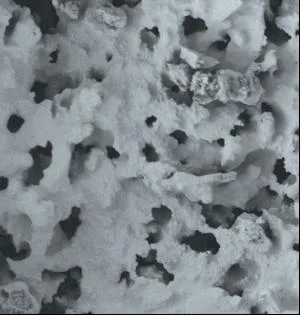
INFIT technology offers enhanced fireperformance
because, when the insulation is
exposed to fire, it transforms from a flexible,
plastic covering to a tough insulating ceramic
layer, hardening like clay in a potter’s oven to
form a protective shield. The key to the
success of the new insulation has been in
using advanced materials and polymer
science to optimise the nanostructure of the
primary insulation materials. A combination
has been found that reduces the occurrence
of cracks or breaks in the insulation to
preserve the operational integrity of the
circuit, ie preventing short-circuits.
Extensive laboratory tests have shown that
cables with INFIT insulation continue to
deliver power in the event of a fire, long after
the plastic sheath and insulation have burnt
away. This means that, for example, exit
lighting, smoke and heat exhaust ventilators,
fans or pumps will still function reliably,
even in areas directly affected by fire,
ensuring safe evacuation.
Applications
Depending on the specific cable application,
the new insulation material can be offered in
either a cross-linked or thermoplastic
version. This enables cables to offer a
combination of fire, mechanical, electrical or
thermal properties optimised for each
application.
INFIT is a proprietary Nexans technology.
Cables insulated with INFIT can, for
example, resist fires reaching temperatures of
around 1000°C, at voltages to 1kV, exhibiting
a high level of char cohesion and electrical
insulation. The product is gradually being
deployed across the Nexans fire-resistant
ranges. This will include power,
communications, control and LAN cables for
use in industrial applications and public
buildings, and it is expected to be of interest
to the marine sector.
IPE Newsletter
IPE publishes a weekly eNewsletter, delivering a carefully chosen selection of the latest stories straight to your inbox.
Subscribe here