

Beware winter is on its way
With autumn upon us,Michael Povey of steam specialist TLV
Euro Engineering takes a timely look at what companies
can do to ensure that the pipes and pipeline components of
their steam systems do not become frozen
The
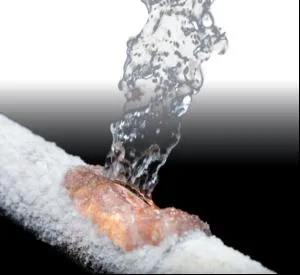
With autumn upon us,Michael Povey of steam specialist TLV
Euro Engineering takes a timely look at what companies
can do to ensure that the pipes and pipeline components of
their steam systems do not become frozen
The summer months are a distant
memory and while some of us may
still be thinking back to our holidays,
is anyone thinking ahead to the long winter
months? Most users of industrial process
steam shut down office heating systems
during the spring/summer months to reduce
boiler loading. However, with autumn now
upon us, the demand for office heating
returns and it’s also not unusual to
experience an early chill or frost. If you have
an extra boiler installed, its services and all
the other systems that have been unused
during the summer, may be required simply
to spread the load.
Over the summer months, cold and
possibly more acidic condensate has been
slowly corroding pipes and pipeline
equipment, and when steam is raised, leaks
are discovered where you haven’t previously
had problems – which is something you
don’t need when the temperature is barely
above the legal minimum.
We know that steam systems will
experience heat losses in the depths of winter
if exposed pipes aren’t insulated, which is
why we lag them. However, there are
reported instances where the cladding itself
is intact but, due to water penetration or
birds stealing insulation for their nests,
lagging has disintegrated or been removed,
increasing the likelihood of freezing on the
coldest of days. So how do you check the
efficiency of your plant’s lagging and
cladding? Autumn is a good time to employ
a thermographic survey to identify high
heat-flux zones that are radiating expensive
heat to the atmosphere, costing significant
amounts of money and increasing CO2
emissions into the environment.
Be aware too, that pipes are not the only
cause of heat loss. Components and fittings
are also potential heat sinks. For example, a
flange has a greater diameter and mass than
the one metre of pipeline fitted either side of
it, and should therefore be insulated
wherever possible*. And don’t forget the
steelwork that pipes, fittings and
components are attached to. This can also
act as a heat sink radiating expensive heat
energy to atmosphere, and should therefore
be insulated.
Prevention is always better than the cure
so at the planning and installation stage of a
steam system, pipelines should be either
covered or re-routed to reduce the
condensation rate in the pipeline system and
minimise heat losses from cold winds or
water quenching of cladding surfaces.
A final tip: You may think that today’s
strict environmental regimes would
eliminate any chance of pipework not being
insulated; however, cladding can be damaged
during routine plant activities or even
removed and not replaced during summer
maintenance. If not noted or reported, the
resultant heat losses may not be discovered
until costs increase or system performance
reduces.
Actions to take
Drain off any condensate systems not in
use
Conduct professional thermographic and
steam trap surveys on steam process
pipework
Ensure that insulation is continuous over
the whole system and adequately
waterproofed
Insulate pipes and fittings from the
supporting steel work*
Survey and ensure that strainers/traps are
clean and operating correctly
If you have already experienced freezeups,
examine the design and layout of
your system and its condensate return
pipework and seek advice and assistance if
necessary
Where possible, install condensate drain
and anti-freeze valves at low points on the
system and in trap bodies to enable cold
condensate to drain before it freezes. This
will also avoid problems if the system is
shut down for long periods.
To sum up, be prepared and don’t be
caught out this winter. If in doubt, seek
advice from a steam specialist or talk to your
component manufacturer.
*Important note. Certain designs of steam
traps must not be insulated so contact your
steam trap manufacturer for advice.
IPE Newsletter
IPE publishes a weekly eNewsletter, delivering a carefully chosen selection of the latest stories straight to your inbox.
Subscribe here