

Sensing a need for savings
Passive infrared ( PIR ) sensors offer a cost effective motion
sensing solution for a wide range of applications and can be
used to provide energy savings, for example, in the
operation of lighting or power in areas such a
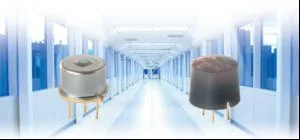
Passive infrared ( PIR ) sensors offer a cost effective motion
sensing solution for a wide range of applications and can be
used to provide energy savings, for example, in the
operation of lighting or power in areas such as warehouses,
corridors and isolated rooms.Richard Thornton,MD of
Panasonic Electric Works UK, explains
Passive infrared sensors offer simple,
cost effective motion detectors that
can be mass-produced for use in a
wide range of applications. They use
electromagnetic radiation in the low infrared
spectrum in which radiation emitted by
human movement is identified using a PIR
detector. Objects that are located within the
area of sensitivity generate electromagnetic
radiation in the low infrared range and
project an image through the focus line of the
sensor onto the internal heat-sensitive
element. The signal processing electronics
then convert the images into electrical signals.
If the heat image remains the same, the
output signal of the sensor remains
unchanged. If the heat image changes,
because the object moves within the area of
sensitivity, the optical imaging changes
accordingly. This movement results in a
change of the output signal that in turn can
be evaluated by a window comparator that
specifies upper and lower thresholds.
Panasonic has a wide range of PIR sensors
including the NaPion and PaPir ranges that
offer motion detection of objects up to 12m
away from a unit measuring 20mm and
taking less than 1µA standby current. The
PaPir sensing elements contain lithium
tantalite and are lead free. The PaPir sensors
were developed around a specialised circuit
that allows the reduction of current
consumption after motion is detected. The
reduction of consumed energy allows battery
life to be reduced, especially important in
remote wireless or energy sensitive
applications.
Panasonic has found that lighting controls
companies are among the most prolific users
of its PIR device. The NaPion and PaPir
sensors are easily integrated into a circuit.
Many PIR sensors are supplied with separate
components for the sensor, the amplifier and
the comparator leaving the design engineer
to circuit design, match the components and
mount the unit onto a PCB. The NaPion and
PaPir sensors however, have all of these
circuits enclosed in one device leaving the
designer with the simple task of supplying
the power and connecting the output to a
suitable driver circuit.
All the components are enclosed in a
single shielded housing in a TO-5 style case,
so the MP sensor is more tolerant to external
interference from sources such as mobile
phones. This greater shielding and high
signal to noise ratio can help prevent false
triggering and mis-operation of the control
circuit.
Recent applications have include lighting
control in pub and restaurant bar
refrigerators that have glass doors to display
bottles and cans. Here, refrigeration needs to
take place constantly but the interior light
does not always need to be on. Typically,
however, in this type of refrigerator the light
does not automatically go off when the door
is closed. To ensure that the light is always on
when required, a PIR sensor has been
mounted within the front edge of the unit
and when bar staff walk past it at regular
intervals the light will stay on. However, once
the bar has closed the light will turn off after
a preset time. This saves power both in
lighting and in the refrigerator not having to
deal with the excess heat given off by the
lamps when the bar is not in use.
Further applications can be illustrated by a
large museum which was concerned with the
amount of energy wasted in keeping display
cases and their contents illuminated when no
patrons were present. To solve the problem
an MP sensor was mounted into display case
frames to ensure exhibits are only lit when a
visitor approaches.
Another use within this field has been to
activate and track patrons along a series of
plasma video displays to continue the
information exchange while continuing
along an exhibit.
Due to their high performance and low
cost, the NaPion and PaPir sensors are
suitable for energy and security management
applications, including access control, door
intercom systems, Intelligent light
management, automatic control of air
conditioning and ventilation systems,
lighting in and around vending machines
and public telephones and ATMs.
Panasonic offers free technical support
and product samples to allow designers with
possible applications to fully evaluate the
range of PIR products and decide on the
most beneficial solution to their particular
requirements.
IPE Newsletter
IPE publishes a weekly eNewsletter, delivering a carefully chosen selection of the latest stories straight to your inbox.
Subscribe here