

Steps towards greater safety
Feet are exposed to a variety of hazards in the workplace,
yet their role is often forgotten. Here,Graham Abbott, sales
and marketing director, UVEX (UK), explains some of the key
considerations in the selection of safety
Feet are exposed to a variety of hazards in the workplace,
yet their role is often forgotten. Here,Graham Abbott, sales
and marketing director, UVEX (UK), explains some of the key
considerations in the selection of safety footwear
Prolonged standing, walking, climbing,
handling heavy machinery, falling
objects, and slippery or sharp
surfaces all pose potential dangers to feet,
while slips, trips and falls account for the
highest number of work-related major
injuries in the UK ? over a thousand per
month ? and over two million sick days are
lost every year through lower limb disorders.
However, the pain, disability and time off
work caused by these accidents could be in
the main avoided if practical actions and
precautions are taken, such as keeping floors
clean and dry and gangways clear of
obstructions, fitting special flooring, and
providing appropriate safety footwear.
Ironically, the workplaces that appear
clean and tidy can often be the ones where
slip and trips are most likely to happen.Wet
floors are a common cause of these, as are
the concreted and painted floors of a lot of
modern factories. Indeed, sometimes the
most dangerous environments can actually
be the safest ones, as people are more aware
of potential hazards and will pay more
attention to them.
The HSE’s ongoing Slips and Trips
Programme is currently reviewing the role
played by slip-resistant footwear in the
prevention of slips and trips, to identify what
more needs to be done by the industry and
regulators.
At uvex, we aim to explain which products
are the most suitable within the standards
that our customers specify, via our website,
brochures and catalogues and through our
work with the HSE. Each of our products
comes with the relevant standard and icons
indicating the features it includes.
However, it is sometimes frustrating for
manufacturers as many companies focus
upon the price of the product rather than the
technical performance such as impact/slip
resistance or other safety related tests that
have been performed.
A footwear product should not be judged
on its slip-resistance test results alone. In a
factory, where there may be slippery wet
floors in addition to contamination, a shoe
with a soft sole compound with small cleats
on the base may not be suitable, as it could
gather contamination and be prone to wear
quickly due to the soft material needed to
attain the slip resistance.
We welcome the fact that our customers
are increasingly asking questions. To obtain
feedback from our users in factories with
slip-resistance issues, we visit the area where
the product will be used, looking at the
different types of contamination and other
issues, and put forward solutions.We then
instigate a trial process, letting the individual
try the product we think is appropriate for
four to six weeks before buying it.
Safety footwear fulfils a multitude of roles.
It is not only about the impact on the toecap,
but much more about other functions. The
tread pattern can protect against slipping, the
type of material under the foot can protect
from heat and cuts, and good safety footwear
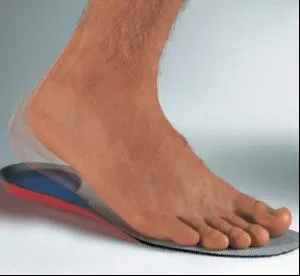
that incorporates shock absorbing elements
can help prevent/reduce musculoskeletal
disorders (MSDs).
The foot produces a lot of moisture, so
breathability and hygiene are important,
especially if an individual is working for long
periods of time, so the product needs to keep
the foot dry. To maximise safety and
efficiency, safety footwear has to be worn; the
wearer must be willing to wear it. It sounds
obvious, but the company involved should
provide the people who must wear safety
footwear with an appropriate product.
Comfort is a big factor ? 8h a day in a pair of
shoes that are killing you is far from ideal.
A lot of work goes into understanding
how the foot works, its movement and where
slip resistance is required, for example where
the ball of the foot hits the ground,
movement through the step and where
potential slip issues are.We are also looking
at new compounds, materials and tread
patterns.
No one type of safety footwear meets all
requirements. There are different toecap
materials available, for example steel,
aluminium and non-metallic toecaps. Plastics
were brought in to try to reduce the weight of
the product and because they are unlikely to
be influenced by ambient temperature.
Everyone has their own idea of what is
fashionable, so it’s useful to have a selection
of safety footwear ? all of which meets the
relevant standards.
Related posts

IPE Newsletter
IPE publishes a weekly eNewsletter, delivering a carefully chosen selection of the latest stories straight to your inbox.
Subscribe here