

A new era in sealless design
A new design of sealless pump has eliminated the high cost
of ownership, maintenance and environmental costs, as
well as the reputational taint that has dogged some sealless
pump designs, according to Tony Peters, MD of Ax
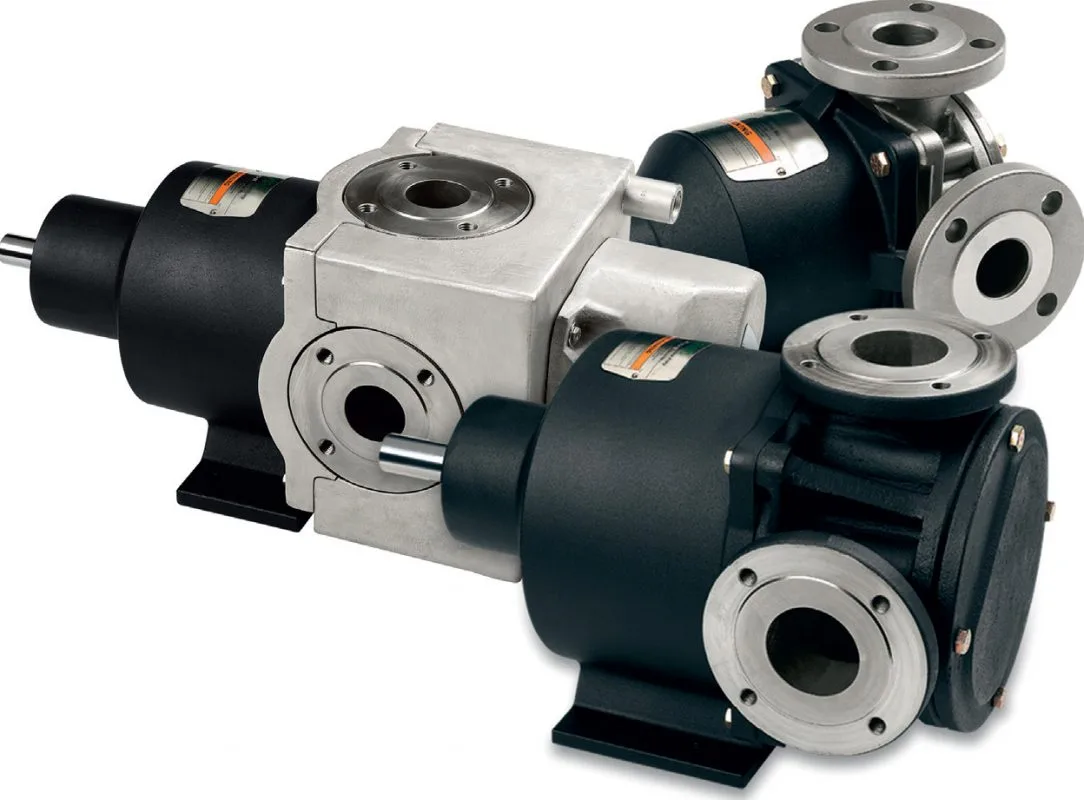
A new design of sealless pump has eliminated the high cost
of ownership, maintenance and environmental costs, as
well as the reputational taint that has dogged some sealless
pump designs, according to Tony Peters, MD of Axflow
In June 1990 a management consultancy
firm produced a report for a US
manufacturer of industrial gear pumps
predicting that sealless pumps would take an
increased percentage of the market –
“probably 25% by 1995 and 50% by 2000.”
However, we know now that the 1990s did
not signal the beginning of the golden age of
sealless gear pumps.
The technology, as it was designed and
constructed at the time, was not reliable
enough, with too many instances of failures
that created an operating stigma that many
manufacturers of sealless pumps are still
trying to overcome.
The leakage that occurs in
traditional mechanically
sealed pumps results in
two types of prohibitive
costs for plant operators:
maintenance and
environmental damage. As much as
40 to 50% of the cost of owning a pump
is spent in the year after it is bought due
to maintenance issues. The leading
causes of high maintenance in many
conventionally sealed pumps include those
associated with mechanical seal replacement
and the premature wear of the bushings and
close-fitting metal parts due to insufficient
support of the pumping elements. The
environmental cost of leakage includes cleanup,
possible forced shut-down and
environment hazard fines and penalties.
There could also be bad press and
community mistrust.
Traditional sealless gear pumps are
designed with a cantilevered load where a
large rotor gear is attached to the end of the
pump shaft. As hydraulic force is applied to
the rotor during pump operation, extra
pressure is put on the shaft and bearings.
This pressure can lead to shaft deflection and
increased bearing wear, which results in
more rotor-to-casing or rotor-to-head
contact wear. The result is reduced pressure
and flow rate.
Traditional sealless gear pumps feature
two fluid chambers – a hydraulic chamber in
which the gears work and a second chamber
for the magdrive coupling unit – that are
joined together. This design requires that a
portion of the media being pumped through
the hydraulic chamber must be used to cool
the magnet in the other chamber. These
requirements result in a long, complex pump
with elongated, narrow flow-paths and the
need for more components, which make
the pump
more expensive and
difficult to maintain.
This also limits the
viscosity of the liquids
that can be pumped.
When looking to create a gear pump that
is affordable, controls leaks and reduces
maintenance costs and environmental
concerns, the first step was to identify the
areas in which sealless pumps fall short then
look for improvements. The first area in
which traditional sealless pump operation is
compromised is the bearings and how they
interact with, and are affected by, the pump’s
cantilever load. The second step was to find a
replacement for the classic magdrive two
chamber design.
The new new Envirogear pump comprises
just seven primary parts – a magnet housing,
containment canister, casing, rotor magnet
assembly, eccentric spindle, idler gear and
head, greatly reducing maintenance costs.
Design enhancements include a betweenthe-
bearing support system. The new gear
pump supports the rotor and idler gears at
three locations. This is achieved through the
creation and incorporation of:
A patented eccentric spindle that is
supported in the head, the crescent
location and the back of the containment
canister, eliminating much of the
cantilever load. This design reduces shaft
deflection by 91%.
Large diameter journals that provide more
rigid support for less shaft deflection and
bearing wear. For example, a traditional
75mm port sealless pump will have a shaft
diameter of 36.5mm. The diameter of our
new design’s eccentric spindle is 50mm.
Large, long radial bushings that support
the entire length of the rotating element,
which spreads out the hydraulic forces and
gives extended operational life. The
pump’s bushings are made of premium
grade carbon graphite that will last up to
eight times longer than some common
bushing materials.
The improved design has only one fluid
chamber with the pump’s magnets
placed on the back of the rotor
and close-coupled, or piggybacked,
on the rotor gear. This
design gives the pump a
much shorter, simpler
flow-path. It also allows
the pump to easily
handle viscosities up to
30,000cP and on certain
applications as high as
50,000cP, while still
maintaining the ability to
pump thin liquids such as
caustics and solvents.
These pumps can also
pump liquids and slurries
that contain suspended
solids.
Another feature of this
design is flange/mounting
dimensional interchangeability with 95%
of the other internal gear pumps available.
This means that a plant can run a traditional
sealed pump in the morning and have it
pulled out in the afternoon and drop the
single fluid chamber Envirogear pump into
the footprint while reusing the same piping,
gearbox, motor and base plate.
These new sealless gear pumps offer an
engineered solution for environmentally
conscious fluid handling that lowers
maintenance costs.
IPE Newsletter
IPE publishes a weekly eNewsletter, delivering a carefully chosen selection of the latest stories straight to your inbox.
Subscribe here