

Training key to ongoing success
Without adequate training and education we cannot hope
to sustain the world-class status and long term profitability
of Britain’s advanced manufacturing base, as Paul
O’Donnell, head of external affairs at the Manufacturin
Without adequate training and education we cannot hope
to sustain the world-class status and long term profitability
of Britain’s advanced manufacturing base, as Paul
O’Donnell, head of external affairs at the Manufacturing
Technologies Association (MTA) explains
Sir Isaac Newton’s belief that he only
achieved his scientific breakthroughs
by “Standing on the shoulders of
giants,” is true of all areas of human
endeavour. Learning from others and
building on what went before is how our
societies have grown. It is how extraordinary
advancements are made and that’s why
fostering and passing on talent is so vital.
Every day in our industry, passion, expertise
and skill combine to create technologies and
tools that are changing all our lives. But to
keep the UK out in front we need to make
sure that we are bringing new talent into our
businesses at all times. We need to be able to
manufacture high value products, of better
quality and produced more cost effectively
than the competition and give the
individuals charged with maintaining this
lead, the training and education that will
allow them to keep doing it.
According to figures from SEMTA, our
industry currently needs to recruit and train
82,000 engineers, scientists and technologists
by 2016 and to up skill 363,000 of the
technical workforce to achieve world class
standards. How do we meet this challenge?
Firstly we need to inspire young people to
pursue engineering as a career and secondly,
through providing funding to help businesses
develop their workforce and take on new
apprentices. Why should we? Because highly
skilled people are beneficial not just to our
sector but to the UK economy.
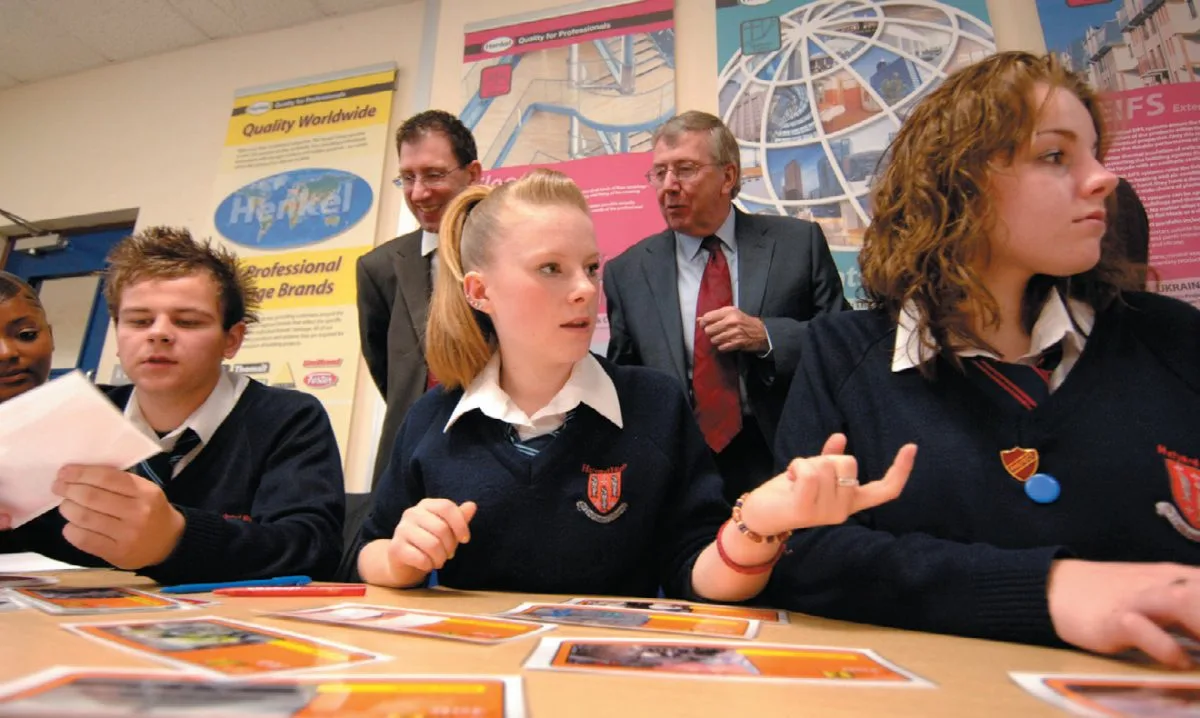
The MTA is working hard to introduce
young people who are still at school to the
exciting and rewarding careers that our
industry offers. The recent TDI challenge
which saw students from all over the country
showing off their Design and Technology
work, was one such example as was the
hugely popular Education and Training Zone
at MACH 2012. Some 2500 young engineers
and students visited the exhibition and were
given tours by current apprentices at MTA
member companies including Renishaw and
Sandvik. The business secretary, Vince Cable,
also attended MACH and one of the main
points we discussed was the importance of
getting the right skills into manufacturing.
But inspiring interest alone will not deliver
the building blocks and skills our industry
needs. To create world class engineers, what
it also required is the investment of time and
money. That’s why the MTA offers grants to
companies to help them recruit the staff they
need.
Initiatives like The University of Sheffield
Advanced Manufacturing Research Centre
(AMRC) apprenticeship scheme is an
excellent example of how to build up the
skills our industry needs to thrive. Up to six
apprentices are taken on at the AMRC on the
Advanced Manufacturing Park each year.
The apprenticeship programme has been
running for five years and so far 11 have
completed the programme. One is working
in industry and the other 10 are working as
technicians and engineers within the AMRC
and Nuclear AMRC.
From this autumn, the AMRC will be
taking 200 apprentices a year into the new
Advanced Manufacturing Institute Training
Centre – based in purpose-built facilities
alongside the current AMRC campus. The
Training Centre will provide high-level
engineering apprentice training for
manufacturing companies of all sizes across
the Sheffield city region. The apprentices
play a key role in the AMRC, working
alongside researchers and industrial partners
and gaining experience at the cutting edge of
manufacturing technology. Experience like
this helps young people gain solid foundations
for their careers, whether they go on to work
in industry when they are qualified or
continue into higher study and research.
The Government is investing £15m in new
capital equipment for the High Value
Manufacturing Catapult, part of a Government
backed network of technology and
innovation centres, which will assist projects
such as these across the advanced
manufacturing sector. Investment in research
and equipment are also part of the matrix
needed to help the UK innovate and are
fundamental to our industry’s future success.
By enhancing the skills of our workforce we
can produce products more efficiently and
competitively. And just as the government
invests in our sector and we in turn invest in
our apprentices and staff, we reaffirm a
commitment to keeping our sector world class.
Related posts

IPE Newsletter
IPE publishes a weekly eNewsletter, delivering a carefully chosen selection of the latest stories straight to your inbox.
Subscribe here