

New manufacturing model challenges batch pharmaceutical production
A four-partner European consortium has successfully tested a continuous-flow platform for active pharmaceutical ingredients with the potential to reduce the lengthy scale-up phases and capital commitments associated with traditional batch production
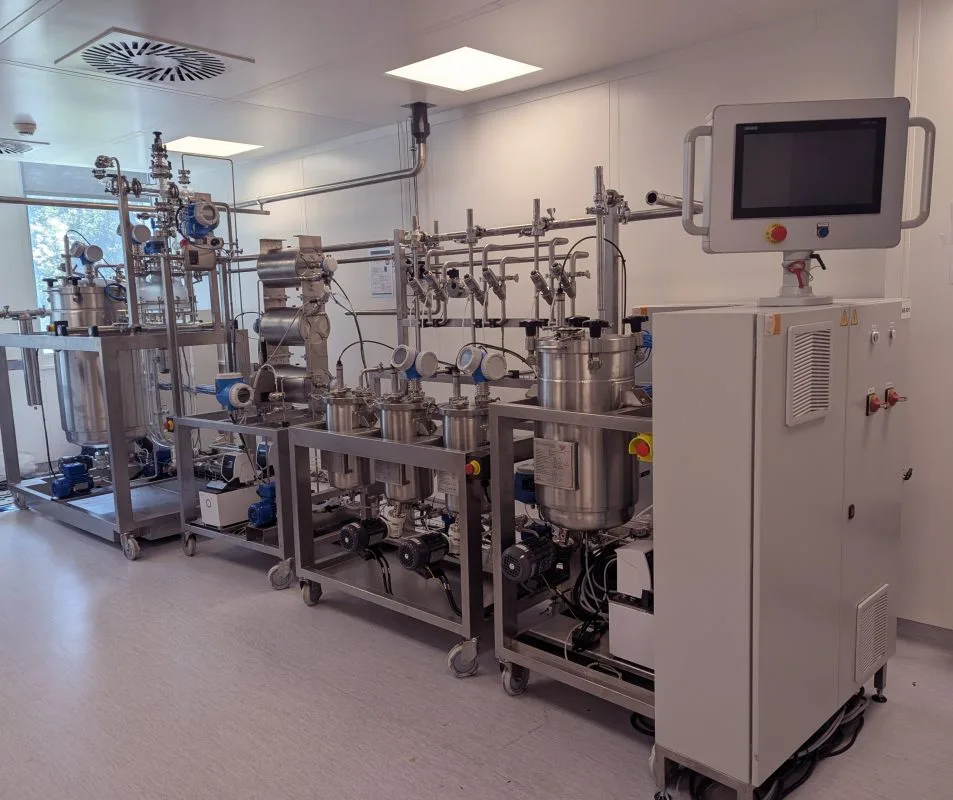
A EUROPEAN consortium has successfully demonstrated a new way of manufacturing pharmaceutical ingredients which could help reduce dependence on centralised production.
The PIPAC consortium, composed of De Dietrich, Alysophil, Bruker and Novalix, announced the successful completion of a pilot programme validating a continuous manufacturing platform for pharmaceutical active ingredients (APIs).
The platform combines continuous-flow chemistry, AI-powered real-time analytical monitoring and control to enable pharmaceutical compounds to be produced, tracked and optimised continuously rather than through traditional batch manufacturing.
The consortium successfully validated the technology through the continuous-flow production of fentanyl, one of the pharmaceutical industry’s most tightly regulated active pharmaceutical ingredients. The trial demonstrated the platform’s ability to operate under challenging manufacturing conditions, laying the groundwork to produce other pharmaceutical ingredients in the future.
Moving away from traditional batch manufacturing
Pharmaceutical ingredient production has relied largely on batch manufacturing for decades, requiring lengthy scale-up phases and significant commitments of time, capital and raw materials before production processes can be fully validated.
The PIPAC project set out to challenge that model. Unlike traditional batch production, continuous manufacturing allows product quality and process performance to be assessed throughout production, enabling earlier intervention, reduced scale-up risk and more efficient use of resources.
The approach also opens the possibility of smaller, modular production units that could support future decentralised manufacturing strategies and strengthen regional pharmaceutical production capabilities.
The collaboration brought together expertise across the value chain, spanning pharmaceutical synthesis, analytical technologies, process control and industrial engineering. Novalix designed and implemented the continuous-flow synthesis route. Bruker contributed advanced analytical capabilities, enabling continuous real-time measurement and monitoring of the process.
Alysophil developed AlchemDrive, an autonomous AI-driven process-control platform that continuously analyses production data and adjusts key manufacturing parameters in real time. De Dietrich developed the industrial hardware platform and automation architecture, integrating synthesis, analytics and process control into a scalable manufacturing environment designed for future industrial deployment.
Towards industrial and GMP deployment
The successful demonstrator establishes a foundation for future GMP-compatible continuous manufacturing systems. The platform can also be expanded to incorporate downstream processing operations such as filtration, purification and drying, creating a pathway towards fully integrated pharmaceutical production.
By enabling manufacturing to be scaled through continuous operation rather than traditional batch scale-up, the technology has the potential to accelerate industrial deployment while improving flexibility, efficiency and supply-chain resilience.
“For decades, pharmaceutical manufacturing has relied on production models that were designed for a different era. Today, the industry faces new challenges: supply-chain resilience, production sovereignty, faster industrialisation and greater flexibility,” explained Frédéric Guichard, group executive director at De Dietrich. “PIPAC demonstrates that it is possible to rethink how pharmaceutical ingredients are manufactured. By combining continuous production, real-time analytics and intelligent process control, we have created a platform that has the potential to transform how critical medicines are produced in the future.”
For more information:
Tel: +33 (0)6 08 96 70 63
IPE Newsletter
IPE publishes a weekly eNewsletter, delivering a carefully chosen selection of the latest stories straight to your inbox.
Subscribe here