

Germ warfare in the workplace
A workplace hazard that’s often overlooked – yet can affect
both the health of employees and the efficient running of
the business – is the spread of infectious diseases. Stephen
Armstrong, sales director of Germstar Hygie
A workplace hazard that’s often overlooked – yet can affect
both the health of employees and the efficient running of
the business – is the spread of infectious diseases. Stephen
Armstrong, sales director of Germstar Hygiene UK explains
Scrupulous hand hygiene is probably
the single most important factor for
reducing the spread of infection and
this message seems to be getting through. A
recent study showed superbug infections in
hospitals fell dramatically during the
Government’s Clean Your Hands campaign
when the use of alcohol hand rubs and soap
tripled.
Companies lose huge amounts of money
every year when staff fall ill and have to take
time off – usually with familiar, but highly
contagious, complaints such as colds and ‘flu,
food poisoning and what granny used to call
‘bilious attacks.’
Once, ‘the Englishman with his usual
bloody cold’ (as the Sixties song had it)
routinely struggled into work
feeling like death. Many still
choose to self-medicate and
turn up as usual; others are
now advised to call in sick rather than place
colleagues at risk.
That’s good news for their workmates, but
bad news for your business, especially in
those winter months when absenteeism can
soar and you need all hands to the pump.
According to NHS Direct, colds and flu
alone affect 15 million people each year in
the UK. Together with other minor illnesses,
they are the chief cause of short-term
sickness breaks.
Remember that winter when companies
were forced to draw up emergency plans to
deal with mass absenteeism in the event of a
‘flu epidemic? It was a time when we became
just a little more aware that coughing and
sneezing over our workmates was a very bad
idea.
But – and here’s a surprise – the bugs that
cause all this respiratory tract misery, as well
as those causing stomach upsets, are more
likely to be spread by hand than by coughs
and sneezes. About 80% of infectious
diseases are handborne. The germs and
bacteria can survive on a surface for 48
hours waiting to move on and are picked up
by touching handrails, shaking hands,
sharing a keyboard.
The European Centre for Disease Control
says the most effective thing you can do to
prevent illness is to wash your hands. But
surveys show only 60-70% of people follow
this rule after using a restroom. And only
half of those use soap
So that ubiquitous sign urging us to ‘Now
Wash your Hands’ is not just another tiresome
message from Nanny but an important
component in any company’s facilities
management programme operating within the
‘enclosed’ community that is the workplace.
With studies indicating that workplace
sickness absence can be halved by adopting
sensible hand hygiene practices, it behoves
employers to give priority to this aspect of
staff welfare.
This means giving careful though to
washrooms by building in and maintaining
all the necessary facilities which encourage
routine hand hygiene.
Soap and hot water is a given, of course,
but the soap needs to be of good
quality and available from a wallmounted
dispenser rather than via
a quick rub on a grimy bar left on
the side.
As in hospitals, the use of
alcohol-based hand rubs, which are
quickly effective against 99.9% of
harmful germs, is also becoming
more apparent in workplaces. Some
companies are now installing hand
sanitation dispensers in their
reception areas and encouraging
staff and visitors alike to use them
as they enter and leave.
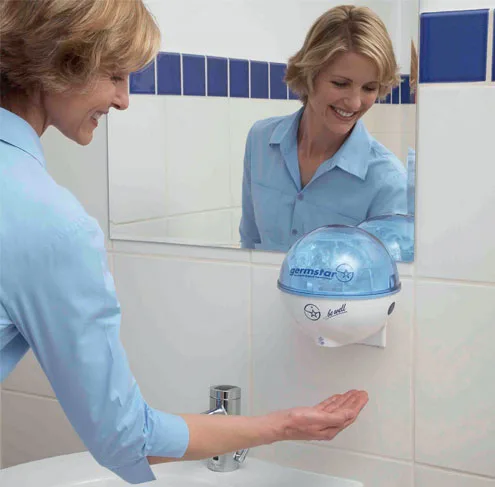
Technology advance is playing its part
here as ‘smart’ touchless soap and hand rub
dispensers are now available to deliver an
automatic measured dose of sanitiser just by
placing a hand underneath.
There’s no fool-proof way of warding off
debilitating infectious diseases, but creating
employee awareness of the need for good
hand hygiene (beefing up signage would help)
and providing all the facilities to achieve it,
can greatly reduce the risk this winter.
IPE Newsletter
IPE publishes a weekly eNewsletter, delivering a carefully chosen selection of the latest stories straight to your inbox.
Subscribe here