

Loads of reasons to plan ahead
Failure to plan ahead for the service and maintenance of
load handling equipment is a false economy which could
have serious and expensive consequences for both
machinery owners and operators, says John Meale,MD of
Thor
Failure to plan ahead for the service and maintenance of
load handling equipment is a false economy which could
have serious and expensive consequences for both
machinery owners and operators, says John Meale,MD of
Thorworld Industries
An estimated 25% of factory and
warehouse accidents occur in and
around the loading bay. High levels of
personnel and mechanical traffic, often
combined with a low appreciation of the
risks involved, mean that loading bays can,
potentially, be extremely hazardous places in
which to work. The British Safety Council
has warned that in the current business
climate there is a danger that firms will cut
back on health and safety
planning and implementation.
This is a short-sighted
approach as it could lead to
potential equipment failure,
together with a possible
increase in personal injuries
at work.
There are a number of
statutory obligations where
it is a legal requirement for
loading bay and load
handling equipment,
including industrial doors,
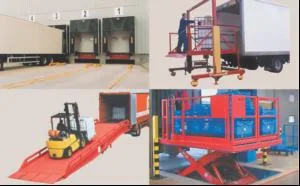
mobile yard ramps, dock
levellers, lifting platforms
and scissor lifts, to be subject
to Thorough Examination
inspections, in conjunction with regular
service and maintenance programmes.
These include the Health & Safety at Work
Act; the Provision & Use of Work Equipment
Regulations (PUWER); Lifting Operations &
Lifting Equipment Regulations (LOLER) and
the Machinery Directive. In general terms
the PUWER regulations, which cover the use
of mobile loading ramps, require that
equipment provided for use at work is:
Suitable for the intended use
Safe for use, maintained in a safe
condition and, in certain circumstances,
inspected to ensure this remains the case
Used only by people who have received
adequate information, instruction and
training
Accompanied by suitable safety measures,
eg protective devices, markings and
warnings
The new Machinery Directive has been
introduced with the aim of reducing the
number of accidents relating to machinery
use by setting much stricter safety standards.
There are also additional recommendations
from the Federation Europeene de la
Manutention (FEM) – the European
Materials Handling Federation – under their
Periodic Inspection of Lifting Tables and
Dock Levellers guidelines (see www.femeur.
com for more information).
However, making sure your loading bay
area is safe is not just about meeting the
correct regulations. It shows that as a
responsible employer, you take health and
safety issues seriously and are concerned
about the well-being of your employees.
If you fail to meet the appropriate
regulations and do not service and maintain
your load handling equipment properly, it
can result in a fine and, if an employee is
injured in an accident due to equipment not
being maintained properly, it might also
mean you could be faced with an expensive
personal injury claim, as well as possibly
invalidating any manufacturer warranties.
Badly maintained equipment can also lead to
expensive downtime.
Buying equipment from a reputable
supplier and implementing a regular
inspection and maintenance schedule as part
of a pre-planned service contract is a costeffective
way of avoiding such problems,
while also extending machinery working life.
It’s crucial that all your loading bay
equipment bears the CE mark. This is the
manufacturer’s confirmation that it meets all
the essential health and safety requirements
of the Machinery Directive.
To meet the PUWER and LOLER
requirements, checks have to be carried out
by a ‘competent person’. Thorworld service
and maintenance contracts are available for
all relevant equipment provided by us; this
delivers compliance with all the relevant
regulations and ensures the correct operation
of the equipment to maintain the efficiency
of your business operations.
As part of a Thorworld pre-planned
service and maintenance agreement, our
team of dedicated service engineers will
inspect and maintain all of the equipment
we supply and, additionally, can advise on
(and undertake) any essential repairs.
Under the terms of our service contract we
carry out regular annual inspections –
although some customers prefer a six month
check; it depends on the type of equipment
and level of use.Where required, on-site staff
training can also be carried out, with
competency certificates issued as appropriate.
The message is clear: Spending a relatively
small amount each year on a pre-planned
service and maintenance agreement is a
valuable long-term investment. It will save
money, increase personnel safety, ensure you
keep within the law and, at the same time,
extend the working life of your equipment
by keeping it in a tip-top safe and efficient
working condition – providing extra peace of
mind for all concerned.
IPE Newsletter
IPE publishes a weekly eNewsletter, delivering a carefully chosen selection of the latest stories straight to your inbox.
Subscribe here