


Hand protection: Selection matters
The huge growth in the market for industrial hand
protection, driven by increasing awareness by employers
and wearers of the need to avoid potential accidents and
injuries, has led to glove manufacturers offering a large, and
sometimes confusing, variety of gloves. Here, uvex offers
some tips on glove selection
The huge growth in the market for industrial hand
protection, driven by increasing awareness by employers
and wearers of the need to avoid potential accidents and
injuries, has led to glove manufacturers offering a large, and
sometimes confusing, variety of gloves. Here, uvex offers
some tips on glove selection
Selection of the appropriate glove for
each specific task, and the hazards
involved, is critical to avoid the risk of
injury. This is illustrated by the 40,000 hand
injuries reported to the HSE by employers in
2009/2010. While this figure reduced to
39,000 in 2010/2011, it clearly emphasises
the ned for protection.
The HSE recommends that safety gloves
be selected according to the type of work,
wearer compatibility and the environment in
which the work takes place. It urges that the
substances handled and all other hazards
should be identified along with the type and
duration of contact. Consideration should
also be made for the hand size, wearer
comfort and task suitability.
Glove selection Before the selection of hand protection is
made, the following checklist should be
taken into account:
Factors the glove is protecting against:
Cuts, punctures, abrasion, tears, heat,
sparks, biological and mechanical hazards
and hand fatigue are commonly
considered, but protection from impact,
especially to the back of the hand, should
not be overlooked.
Dermatological issues: There can be
individual risks of allergy or adverse
reactions to some gloves leading to
eczema or dermatitis, so the option of
allergen-free gloves can be beneficial.
The right glove for the application: What
is involved? Is it precision work? What is
the type, duration and frequency of
contact with, for example, grease or water?
Different coatings according to the task
and circumstances: For example foam
coatings for oil grip and repellent ones for
wet environments. It is important to
maintain good grip and control, especially
in greasy, oily, soapy or wet conditions, to
avoid accident and injury.
Required dexterity, mobility, durability,
comfort and flexibility of the glove;
performance, as well as protection is
essential.
Cost in use over the life span of the glove:
The employer needs to work out how
many gloves are used per year. A
‘throwaway culture’ is encouraged by the
provision of poor quality gloves that
deteriorate quickly, and there is a huge
difference between price and value. The
more spent on better quality gloves at the
outset, the more savings are made in the
long-term.
Benefits of correct selection Using the correct glove benefits both
employer and employee. The employer
profits from reduced costs and waste,
increased efficiency and productivity,
improved health and safety, increased
acceptance of PPE, the need for lower stock
levels and a reduced environmental
footprint. The employee benefits through a
reduced risk of injury and ill-health.
uvex is a company that can provide hand
protection solutions to suit all budgets. It
offers advice on which glove to use for the
application through its glove surveys and an
online chemical selection guide on which
glove to use.
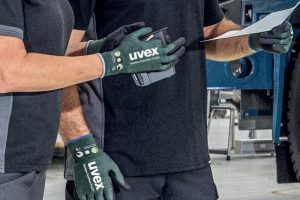
A recent addition to the uvex family is the
phynomic glove for precision work. This is
free from harmful solvents and allergenic
substances and offers good fit, functionality
and purity. The glove has good grip in both
wet and dry conditions. The cut 5 protection
of the C500 and cut 3 protection of the C300
gloves with intelligent yarns, manage excess
heat and moisture at the same time as
protecting the wearer with a high degree of
dexterity.
Use of the correct hand protection is an
effective way of preventing injury and must
be taken seriously. The cost of an injury, a
citation or a fine is much higher than the
cost of providing the correct hand protection
for employees.
Related posts

IPE Newsletter
IPE publishes a weekly eNewsletter, delivering a carefully chosen selection of the latest stories straight to your inbox.
Subscribe here