

Controlling costs
Many organisations are striving to reduce operational costs
and maintain profitability.Control valves may not at first
seem a prime target but, says Mick Phipps of Spirax Sarco,
there are real savings to be achieved by spe
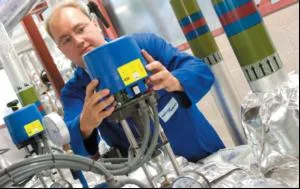
Many organisations are striving to reduce operational costs
and maintain profitability.Control valves may not at first
seem a prime target but, says Mick Phipps of Spirax Sarco,
there are real savings to be achieved by specifying valves
that carry the lowest total cost of ownership (TCO)
Major processing sites often have
valve populations running into the
thousands. These organisations
have well-developed processes for sourcing
valves with low running costs to keep their
operational expenditure to a minimum.
More modest operations with fewer valves
can benefit from a similar approach, making
year-on-year maintenance cost savings.
The key lies in the proper sourcing of
valves that will give the lowest life cycle cost.
The cost of prematurely shutting down a
process to replace a poor quality valve that
has failed, will far outweigh any capital costs
saved at the time of purchase.
The following criteria serve as
a basic guide to purchasing
valves with a low total cost of
ownership.
Aim to get best value for
money. It has been estimated
that more than 70% of a
control valve’s TCO is spent
on maintenance. Only 20%
is down to the valve’s capital
cost; the remainder goes on
installation. It is vital to
buy valves that will give
long service life and low
maintenance costs as these
can far outweigh the lower
capital cost of a valve that
incurs higher levels of maintenance.
Search out valves that are quick to maintain.
Valves that can be maintained and restored
to duty quickly help to limit production
delays. Quick replacement of the stem seal,
for example, means less downtime and less
lost production. Even when maintenance is
planned, it is often scheduled during plant
shutdowns when maintenance personnel
have a heavy workload.Minimising time
spent on valves reduces the need for overtime
pay or the hiring of third-party contractors.
Points to watch out for when sourcing
valves include maintenance that is possible
without removing the valve from the line
and the ability to replace components
without special tools. Look also for selfaligning,
clamp-in-place internals. Valves
with screw-in components can suffer from
the seats seizing in place, requiring the valve
to be removed from the pipeline and
incurring a lengthy shutdown.
Insist on simple maintenance procedures.
These reduce training costs and help to
ensure that any maintenance work done will
restore the valve to full operating capability.
Complex maintenance routines carry a
higher risk of valves not being re-assembled
correctly, potentially reducing performance.
Long maintenance intervals. Buyers of
control valves expect several years of reliable
life without major maintenance being
required, such as replacing the stem seal.
This figure is typically five years, but could
be 10 years+, depending on application.
Valves on lines carrying fluids with suspended
particles or operating in dusty atmospheres
may need maintaining more frequently than
valves in less harsh applications. Valves that
have design features to minimise the impact
of such conditions, for example by including
wipers to prevent dust and particles getting
into the valve stem, are likely to offer longer
service intervals throughout their life. Hard
trim materials and a design that diffuses the
discharge from the plug and seat and reduces
internal flow velocities to minimise internal
erosion, further extends valve life.
Ensure it’s easy to change the valve’s duty.
Occasionally there may be a major change in
process parameters that requires new valves,
or a process line may shut down completely.
In such situations, control valves that use a
modular design carry a cost advantage as
they can be reconfigured relatively easily.
This could easily save the cost of purchasing
several new valves.Modular valves also help
to cut spares stockholding costs.
Consider the less obvious benefits of
accurate control, important for the efficient
running of any process. Use of positioners to
provide precise valve movement contributes
to higher productivity and lower energy costs
with their environmental benefits, as well as
reduced maintenance. Accurate and smooth
control tends to reduce the amount of valve
movement and wear, as well as decreasing
running costs such as compressed air
consumption. High quality valves that are
well designed using modern design tools
such as Computational Fluid Dynamics, can
achieve smooth fluid flows under all
conditions. Smooth flows lead to reduced
internal wear and longer service life.
Good technical support. Take time to look
beyond the valve specifications and review
the supplier and level of support it provides.
The biggest impact of a poorly chosen valve
will be poor process performance, leading to
low productivity and poor product quality.
The running costs of a badly specified
valve may be excessive too. A valve that is too
large for a given duty, for example, will
operate more closely to its seat and
experience more trim wear. Equally, a valve
that is too small may constrict the flow and
lead to high velocities, reducing its life. An
incorrectly sized and selected valve may also
be subject to cavitation and noise in the flow,
which can rapidly wear the valve internals. It
makes sense to use the vendor’s technical
expertise to help get it right.
Therefore, pick a vendor that has the inhouse
expertise and experience to provide
support whenever needed.
IPE Newsletter
IPE publishes a weekly eNewsletter, delivering a carefully chosen selection of the latest stories straight to your inbox.
Subscribe here