


SMEs: The challenge of exporting
One of the most challenging areas for small and medium sized enterprises (SMEs) ambitious to grow is to enter the export market. However, help is at hand: Increasingly UK government departments are improving their support to businesses considering exporting and those with some experience of trading overseas, as Eric Beech, communications manager at the Manufacturing Technologies Association (MTA) explains
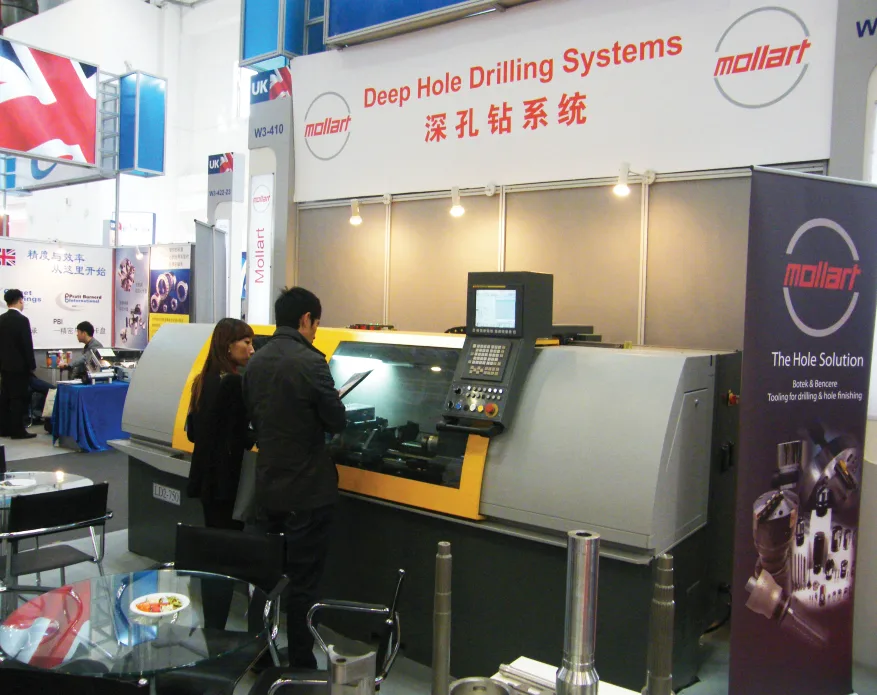
Many UK-based SMEs’ first foray into exporting is to English speaking markets or those where English is widely spoken. So typically potential exporters look for business in Ireland, the USA, Scandinavia, The Netherlands and increasingly India. Overall, Europe is still seen as the UK’s main export market followed by: Asia, China, Middle East, Eurasia and North America.
The route via the English speaking world is followed by some manufacturing technologies companies but other factors are sometimes as important. If an SME is a member of a trade association such as the MTA, expertise will be available to build up the capacity to enter overseas markets. The MTA, for example, has offices in Russia and China, two markets that are growing strongly. With a dedicated office and access to local expertise, members are able to make introductions, receive technical guidance and support throughout the contract negotiation process.
Attendance at overseas trade shows is an essential means of gathering intelligence on specific markets. The next stage, obviously, is to exhibit at key exhibitions. Here again an SME’s relevant trade association can advise on the merits of different shows, where to exhibit within the exhibition halls and marketing advice on the targeted countries. The UK Trade and Investment (UKTI) and other government agencies can also help, but they are not the complete answer for a business new to exporting.
Although there has been a fall-off in confidence among all UK companies involved in exporting over the past year, three out of five companies contacted in a recent report – the International Trade Survey by Trade and Export Finance – indicated that they expected exports to grow over the next five years. The obstacles, however, are numerous.
Exporters lack of confidence was cited in the Survey as the single most constraining factor for companies considering trading into overseas markets. Understanding the procedures involved in exporting was raised as a further restricting factor to starting to export. It seems that not knowing who to speak to was a common complaint from respondents. This is particularly disappointing given the emphasis the UK government has given to promoting exporting since coming into power. In response UKTI has adopted a more proactive stance, although some of the initiatives may not have been adequately marketed. UK Export Finance (UKEF) has been formed to make it easier for firms to negotiate the financial pitfalls of trading overseas. Also, the Foreign and Commonwealth Office has increased its efforts to promote trade and assist exporters in country from the UK’s embassies. However, considerably more needs to be achieved if the UK is to match the performance of rival exporters.
There is evidence in terms of exporting performance that the gap between micro companies, small and medium sized companies and larger companies is widening. The differences emerge in the form of finance available and the support received from Government departments.
UK Government’s support for exporters provided by UKTI and UKEF has increased over the past year according to the International Trade Survey. More companies are now aware of the schemes available, but the Survey observed that more traction is required to increase take-up of the help available.
Bank finance, it appears, is still a factor which is holding companies back, with no growth in the use of export finance over the past year. According to respondents to the Survey the availability of bank finance is a key area which is preventing UKEF from supporting more businesses, as all guarantees have to be given by banks.
In general it is the lack of knowledge and training that is constraining export momentum, especially for small and medium sized companies. While the information is available, the onus is on companies to seek out support and remain nimble when negotiating business abroad.
Related posts

IPE Newsletter
IPE publishes a weekly eNewsletter, delivering a carefully chosen selection of the latest stories straight to your inbox.
Subscribe here