

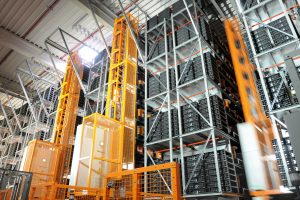
Data centre fire safety starts with cable design
With data centre capacity expanding worldwide, engineers are paying closer attention to cable fire performance. CPR classifications and cable design are emerging as key factors in protecting infrastructure and maintaining operational continuity
GLOBALLY, CLOUD and internet firms are building between 120 and 140 new data centres each year to meet rapidly growing demand for digital capacity, particularly as artificial intelligence and cloud services expand.
Data centres consume vast amounts of energy and operate under significant thermal stress. This creates another concern: the risk of fire. The fire at the OVHcloud data centre in Strasbourg in 2021 caused major service interruptions for thousands of businesses and public institutions. Since then, several incidents involving fires in battery rooms or electrical installations have been reported across Europe, the United States and Asia, underlining how vulnerable these facilities can be to thermal and electrical faults.
The role of CPR classification
A CPR classification assesses how cables, including conductors, insulation, shielding and sheathing, react to fire. No cable is completely fireproof, but some are engineered to slow flame spread by controlling how each layer behaves when exposed to heat.
In data centres, technical specifications increasingly require high classes such as B2ca. This classification combines a very limited contribution to fire (B2) with enhanced requirements for secondary effects: low smoke emission (s2), absence of flaming droplets (d1) and very low acidity of emitted gases (a1). These performance levels are now considered a minimum standard in many data centre projects.
CPR classification does not measure electrical performance but how a cable behaves in fire conditions: contribution to flame spread, smoke release, production of flaming droplets and emission of acid gases.
Anticipating incident scenarios
In confined environments such as data centres, smoke is often the principal hazard. Its density, composition and toxicity depend on how the different layers of the cable degrade under heat. Designing products that limit smoke and reduce harmful emissions requires a detailed understanding of these interactions.
Gas acidity is particularly significant. Corrosive emissions can threaten people and damage sensitive electronic equipment. Limiting these effects depends on the composition of the internal layers of the cable, down to the choice of additives and polymers.
Another issue is molten droplets. If a cable softens and drips, it can spread flames to adjacent equipment or structures. Here again, everything depends on the internal architecture of the cable: the way the materials hold together, stiffen or deform under the effect of heat.
Additionally, limiting smoke and its acidity is crucial. It is this, more than the flames themselves, that causes prolonged shutdowns, corrosion of electronic equipment and can delay the ability to quickly restart systems after an incident.
This approach to fire risk illustrates a reality that is often overlooked: in industry, and even more so in critical infrastructure, cables are never generic components. Small engineering decisions within a cable can shape how an incident develops and how quickly systems can safely return to service afterwards.
Eliott Hoole is project business manager and Matt Ansell is product portfolio manager at LAPP
For more information:
Tel: 020 8758 7800
Related posts

IPE Newsletter
IPE publishes a weekly eNewsletter, delivering a carefully chosen selection of the latest stories straight to your inbox.
Subscribe here