

Five RFID applications that could transform your warehouse
Logistics companies that have used RFID are said to have improved their efficiency by over 25%
Indeed, application of the technology is fastest growing in transport and logistics, where an increase in ecommerce transactions is driving RFID demand and its capability at providing better visibility, accuracy and efficiency.
Being able to identify multiple tagged items fast and without direct line of sight is a much-touted and undoubtedly great benefit of RFID but it’s where it’s applied that makes the strongest business case. For example, if manual identification is creating a high enough level of friction, then changing the process would make a measurable difference.
TSC Auto ID believes there are any number of similar beneficial applications in warehouses for RFID but claim these five are a good starter to create tangible value:
- Accurate identities you can trust
A bit like the old principle of ‘garbage in, garbage out’, RFID’s value starts at receiving. Physical items must first be connected with their correct information like part number, quantity and storage location. An RFID label can then be printed and encoded, establishing an identity that can be trusted and used throughout later processes. Getting this initial process right matters as inventory visibility is only as reliable as the identity behind it.
- More informed inventory helps exception finding
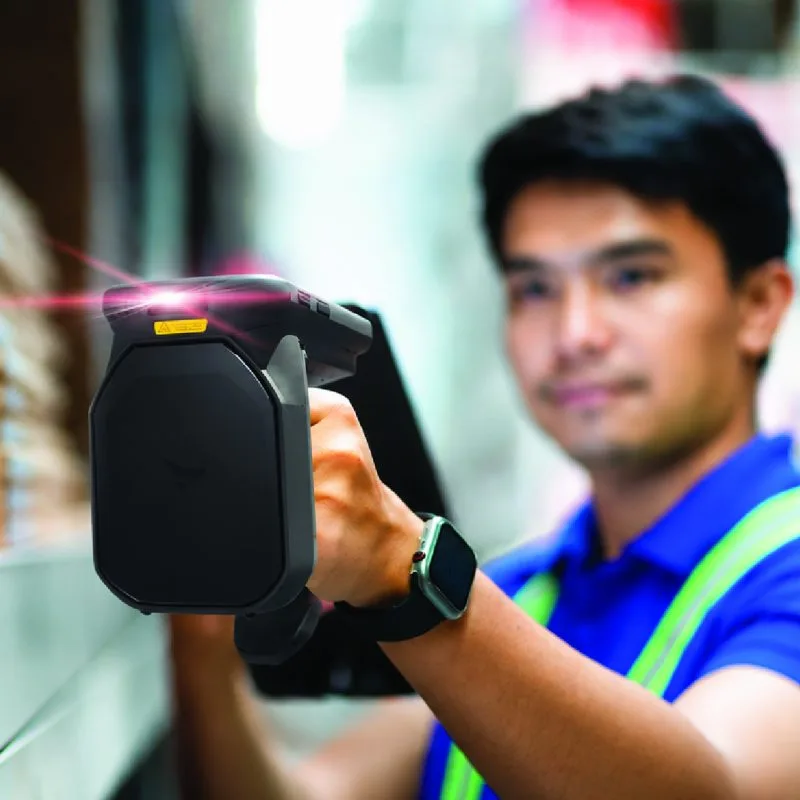
Cycle counting is one of RFID’s most obvious applications. Handheld RFID readers can capture multiple tags during stock checks, while systems compare detected inventory with what should be present. Instead of simply producing a count, the process can identify missing stock, unexpected items and potential location errors.
- Find and pick with greater confidence
Warehouses face an all too common problem. Their systems may know that stock exists but somebody still has to go and find and move the correct physical item. This is where RFID application can help, in two practical ways:
- Its signal strength can guide an operator towards tags on specific items, especially in dense storage areas, reducing time spent visually searching through similar products.
- It can also provide another confirmation during picking that the physical item being collected corresponds with the expected stock record.
- Verify before the ‘horse has bolted’
Like the proverbial stable door, dispatch is a valuable control point. A fixed RFID reader can automatically compare tags physically present in boxes or pallets with the warehouse system’s expected shipment. Missing, or unexpected, items can then be investigated before shipments actually leave the dispatch area. Being able to correct issues at this stage is relatively straightforward and a lot less costly than trying to rectify them after the event.
- Tailored to your unique conditions
Materials, tag selection, label placement, storage density, warehouse layout and reader configuration can all affect RFID performance: operator experience matters too. Workers need to understand what the system is asking them to do and what action to take when something does not match.
TSC advocates designing initial RFID projects around processes that offer the clearest operational advantage. It suggests that the strongest opportunities often lie in the most obvious place such as: why are you spending time looking for, or verifying, something that your system should already know? Start with the operational problem, test the technology under real conditions, and then scale the workflow that solves it.
Warehouse RFID will increasingly concentrate on specific high-value processes like inventory, item locating and automated verification. If you want to explore how it could be applied to transform your warehouse contact TSC now.
Related posts


IPE Newsletter
IPE publishes a weekly eNewsletter, delivering a carefully chosen selection of the latest stories straight to your inbox.
Subscribe here