


From silos to systems: Rethinking heating and cooling
Industrial heating and cooling are often treated as separate systems, but this siloed approach wastes vast amounts of recoverable energy. Integrated thermal management offers a smarter, more efficient alternative, says Jose La Loggia
MOST INDUSTRIAL facilities still treat cooling and heating as siloed, disconnected systems. By shifting to a unified thermal management approach, where heat and cold are part of the same thermal energy ecosystem, industries can unlock major gains in efficiency, sustainability and performance.
According to the European Environment Agency, the industrial sector's heating and cooling contribute around 20-25% of Europe’s CO2 emissions. For decades, these systems have operated in silos, often installed and managed independently. As a result, valuable energy – whether rejected heat from the cooling process’ condensation or waste heat from the heating process – is frequently lost. But this doesn’t have to be the case.
Integrated thermal management systems challenge the traditional mindset, enabling industrial plants to recover, repurpose, and balance thermal energy across their processes. This system-level thinking is key to reducing emissions, cutting cost, and moving towards truly decarbonised operations.
Converting siloed heating and cooling plants into thermal systems
Traditionally, heating has come from boilers burning fossil fuels, while cooling relied on electric chillers. These systems are designed and operated separately, ignoring the thermodynamic link between them.
This design, where chiller and boiler plants work alongside each other as standalone, separate systems, is no longer justifiable. Existing technology, like heat pumps, makes it possible to repurpose that waste heat for low and medium temperature requirements, without additional fossil-fuel consumption.
Case Example: Organon
Pharmaceutical manufacturer Organon, based in Oss, the Netherlands is gradually installing Trane heat pumps across various buildings. The first project, completed in May 2024, involved installing two water-to-water heat pumps (RTSF 070 G) in a manufacturing facility, providing cooling for compressed air treatment and recovering the heat, which is then distributed to the central heating network.
This project saves 7,700 gigajoules of energy annually, roughly equivalent to 243,000 cubic metres of gas. Organon plans further improvements, including adapting air handling units for low-temperature heating, to reduce reliance on gas and become climate neutral by 2035. flows.
Turning Waste Heat into a Resource
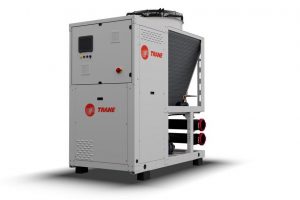
Waste heat is not a nuisance to be eliminated, it’s an energy source waiting to be tapped. Heat pumps like the Trane RTSF HT can boost the recovered energy up to 110°C, which covers a wide range of process needs beyond space or storage heating or preheating hot domestic water. Fully electrified thermal systems deliver both hot and chilled water for heating and cooling processes and can recover and repurpose energy without generating on-site carbon or NOx emissions.
Simultaneous heating and cooling systems are three to four times more efficient than the traditional methods, positively impacting the bottom line. A modern heat pump can generate three to four kilowatts of useful energy from one kilowatt of energy input, achieving an average efficiency ratio of 300-400% – more than three times the efficiency of a boiler.
The benefits go beyond performance: by combining cooling and heating systems, facilities reduce upfront investments, save space, and cut operating costs. This is the systems approach in action.
Shifting Perceptions, Overcoming Barriers
While traditional concern and scepticism around the industrial use of heat pumps persist, the benefits far outweigh the obstacles. Common concerns – about complexity, cost, or site limitations – often reflect legacy thinking rooted in siloed systems.
- Initial Costs: While the upfront costs for integrated technologies and renewable energy systems can be higher, these costs are offset by long-term savings. All-in-one (heating/cooling) thermal management systems often have paybacks of only 2-3 years due to greater energy efficiency and operational savings.
- Complexity: Designing a net zero facility does require careful planning and coordination among architects, engineers, and contractors, but the core infrastructure and technologies exist. The focus should be on converting to thermal systems plants and gaining market acceptance
- Site Constraints: Around 80% of current projects are retrofits, not new construction – proof that existing facilities can adopt this model.
Moving from separate to integrated systems doesn’t mean reinventing the plant. It means rethinking how energy flows through it.
Case example: Saint Jean
Saint Jean, a renowned French pasta manufacturer, was looking for a temporary 150kW cooling capacity to cover the additional summer load in one of their plants.
During the site, instead of recommending an additional chiller to satisfy the temporary cooling needs, Trane engineers proposed heat pumps that would not only deliver the additional cooling capacity, but also completely replace the plant’s 300kW fossil-fuelled boiler heating system – generating significant energy savings in return.
Installation of two Trane City RTSF heat pumps, connected with the plant’s existing chillers, allowed to harness and boost the waste heat generated during cooling process. The result was a 68% reduction in heating costs and a major drop in emissions.
Looking Ahead: From Equipment To Strategy
As manufacturers across Europe explore new ways to meet net-zero goals, the case for integrated thermal systems grows stronger. But the biggest step is mental: shifting from a model of disconnected systems to one where energy is seen as continuous, recoverable, and independent.
Reimagining heating and cooling as part of a single thermal system is not just a technological shift, it’s a leadership one. By replacing siloed thinking with systems thinking, industrial operators can reduce energy waste, cut emissions and future proof their operations. The mindset is already underway. It’s time to scale it.
Jose La Loggia is group president EMEA at Trane Technologies
For more information:
Tel: +32 27461200
Related posts
IPE Newsletter
IPE publishes a weekly eNewsletter, delivering a carefully chosen selection of the latest stories straight to your inbox.
Subscribe here