

Rethinking low level access
Working at height carries risks ranging from fatal falls to long-term musculoskeletal injury, and the choice of low level access equipment plays a central role in managing both, says Samuel Butterworth
ACROSS CONSTRUCTION, facilities management, maintenance, and fit‑out projects, working at height with plant equipment, particularly at low levels, is a routine part of daily operations. For decades, organisations have relied on a mix of access methods, including ladders, podiums, scaffold, and platforms, each chosen according to the task at hand. However, as site safety culture evolves and a larger emphasis is placed on worker wellbeing, many are now taking a fresh look at the options available.
Modern low-level access (LLA) solutions are part of this plant fleet rethink. Not necessarily to replace traditional methods, but give decision makers and users more choice, more control, and more opportunities to work in ways that support long term health, productivity, and site safety processes.
The scale of the issue
Low level access tasks may feel like a standard part of daily operations, but they carry significant risk. UK data continues to show the impact.
Figures from industry bodies and the HSE indicate that over the last decade, an estimated 425,000 nonfatal falls from height have occurred and around 37,000 workers self-reported a fall related injury in the last annual period. Nonfatal falls from height result in approximately 688,000 lost working days per year, costing the economy around £850 million. Falls from height can also prove fatal, and are the leading cause of death among workers, with 35 fatalities in 2024/25.
At the same time, musculoskeletal disorders (MSDs), often linked to repetitive reaching, constrained posture, and manual handling, affected more than 511,000 workers in 2024/25 and led to 7.1 million lost working days. These strains have great potential to occur in environments where workers regularly access ceilings, fixtures, or plant equipment at height.
Designed for people, not just productivity
Today’s workforce not only expect that both access and plant equipment keeps them safe, but also that it is designed to support comfort, efficiency, and long‑term health. Modern low‑level access platforms have been designed with these expectations in mind.
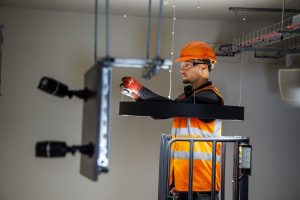
For example, JLG Power Towers LLA solutions provide space to support natural working postures, which can reduce shoulder, wrist and back strain common in overhead and repetitive work. Guardrails and enclosed platforms are designed to provide collective fall protection, supporting workers to concentrate on the job rather than maintaining balance.
Many platforms are designed to reduce the need for climbing, helping reduce the strain associated with repeated ascent and descent during busy shifts. Additionally, having equipment at platform height can help reduce unnecessary reaching or improvisation and supports more organised, efficient work.
Good design has an impact on productivity. When a worker feels comfortable, supported, and confident at height, the quality and consistency of their tasks will naturally improve.
None of this diminishes the ongoing role that ladders, scaffolds, or podiums have in many workplaces. Instead, it demonstrates how a broader selection of tools helps employers choose the right method for the right task, taking account of ergonomics, duration, reach, and frequency.
The importance of worker feedback
Changing site safety culture must stem from the top. However, plant and access equipment operators have a vital role to play as well. Every worker should feel empowered to ask questions about how they complete their tasks. Installers, electricians, maintenance technicians, or anyone working at height need equipment that supports them, protects them, and enables them to produce their best work. Employees should have the confidence to ask: "Is this the best way to work at height today?" Having a choice of solutions to match the task, operator, or environment is key.
Samuel Butterworth is business development manager UK and I – LLA at JLG Power Towers
For more information:
Tel: +44 (0) 3301 23 98 50
Related posts

IPE Newsletter
IPE publishes a weekly eNewsletter, delivering a carefully chosen selection of the latest stories straight to your inbox.
Subscribe here