

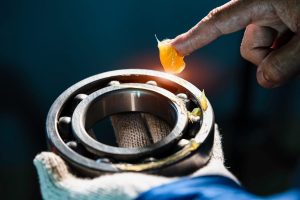
Tackling critical points of failure in manufacturing
Bearings sit at the heart of virtually every rotating system, yet they remain one of the most overlooked components in maintenance planning, says Chris Johnson
RESEARCH BY IDS-INDATA shows that UK and Europe-based manufacturers could face costs of up to £157bn in 2026 alone due to unplanned downtime. Outages can last from hours to days, leading to substantial energy losses and operational costs. Present in virtually every rotating system, bearings can become critical points of failure and embedding proactive maintenance strategies is essential for operational resilience. Despite this, bearings are still frequently overlooked in maintenance planning until something goes wrong.
Warning signs of bearing wear
This can be an expensive oversight. As a bearing degrades, its internal structure gradually deteriorates, producing warning signs such as increased vibration, rising temperature and changes in noise levels. If left undetected, these signs can escalate into failures that halt entire production lines.
The financial consequences can extend far beyond the cost of replacing the bearing itself. Unplanned downtime leads to lost production, missed delivery deadlines, wasted energy and, in some cases, damage to surrounding equipment. For manufacturers already operating on tight margins, a single bearing failure can trigger a chain of disruptions that exceeds the cost of the bearing itself.
Moving beyond fix-on-fail
In traditional reactive maintenance systems, components are either replaced after failure or on a fixed schedule, regardless of their actual condition. While reactive maintenance increases the risk of unplanned stoppages, time-based replacement can also create unnecessary costs by replacing components that still have useful service life remaining.
By monitoring the condition of bearings in real-time, maintenance teams can identify early signs of degradation and intervene before failure occurs. External sensors, for example accelerometers or thermocouples, track key metrics like vibration and temperature. The data gathered can then be fed into maintenance software, enabling earlier detection of potential failures and more accurate forward planning.
AI-driven analytics tools can process large volumes of condition data to identify patterns that may not be immediately apparent to human operators, flagging anomalies and recommending intervention before a bearing reaches the point of failure.
According to Deloitte, predictive maintenance can increase productivity by up to 25% and reduce breakdowns by 70%. With results like these, using AI to spot bearing failures before they happen is not just a smarter maintenance strategy, but a practical way to avoid costly unplanned downtime.
Choosing the right components
Predictive maintenance strategies are only as effective as the components they are designed to protect. This begins with specifying the correct bearing for each application. Bearings operating in high-speed, high-temperature or chemically aggressive environments require materials and design suited to those conditions.
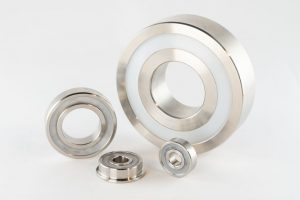
Ceramic bearings, for example, offer excellent performance under heat and are highly corrosion resistant to most chemicals, while stainless steel variants provide strong fatigue resistance and durability.
Working with a specialist bearing supplier can help manufacturers navigate these decisions, ensuring that components are correctly specified from the outset and that appropriate maintenance intervals and monitoring strategies are put in place.
The IDS-INDATA research makes clear that unplanned downtime represents a serious financial risk. For manufacturers looking to protect productivity and profitability, small components like bearings require the same strategic attention as the larger systems they support. By treating bearings as critical points of failure rather than routine consumables, manufacturers can reduce the likelihood of unplanned downtime. In doing so, businesses can both extend equipment life and protect their bottom line.
Chris Johnson is MD at SMB Bearings
For more information:
Tel: +44 (0) 1993 842 555
Related posts

IPE Newsletter
IPE publishes a weekly eNewsletter, delivering a carefully chosen selection of the latest stories straight to your inbox.
Subscribe here