

 product
See how robots are transforming manufacturing
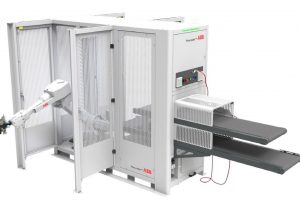
Visitors to ABB’s stand at MACH 2018 will be able to see how the latest advances in robotic automation can help them find new ways to transform their productivity and efficiency.
productVisitors to ABB’s stand at MACH 2018 will be able to see how the latest advances in robotic automation can help them find new ways to transform their productivity and efficiency.
 article
In food produce environments and packhouses, the benefits of automation when it comes to workforce health and safety are many, ranging from eliminating arduous and repetitive tasks to working uninterrupted within inhospitable chilled settings. Case loading specialist Brillopak and industrial automation pioneer Omron explore how smart robots, hardware and software can be deployed to work collaboratively, safely and productively alongside humans.
 product
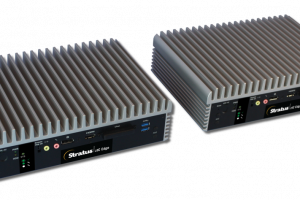
Stratus Technologies has unveiled the new Stratus ztC Edge a zero-touch, fully virtualised and self-protecting computing platform, specifically designed for industrial edge environments.
 product
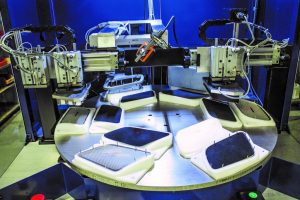
Camozzi Automation’s C_Applications division has employed its Smart Industrial Automation expertise to develop a pick and place unit for use in a car speaker assembly line.
 product
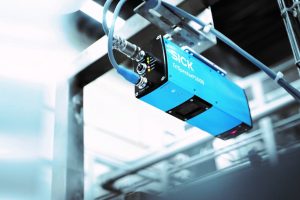
SICK has launched its fully-programmable TrispectorP1000 3D vision camera to enable reliable, continuous in-line product detection to be easily customised for robotic belt picking applications for the packaging industry.
 product
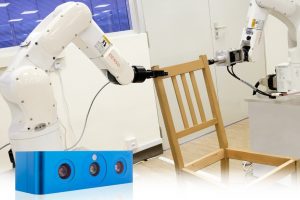
Scientists at Nanyang Technological University, Singapore (NTU Singapore) have developed a robot that can assemble the an IKEA chair without interruption in less than ten minutes. The robot consists of an Ensenso N35 3D camera from IDS and two robot arms.
 product
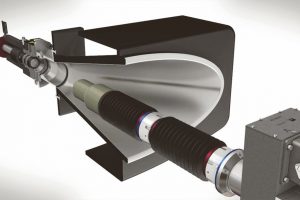
An automated quick charging system called QCC (Quick Charging Connection) has been developed by Stäubli Electrical Connectors to enable autonomous recharging of Electrically driven Automated Guided Vehicles (AGVs).
newsSSG Insight predicts that five key trends will define intelligent manufacturing over the next 12 months:
 product
Manufacturers often have a sense that there are inefficiencies on the plant floor, but find difficulty identifying them. They are correct—inefficient processes and waste happen every day in every plant around the world. In fact, the “hidden factory” phenomenon indicates losses due to workarounds, rework and inefficient changeover procedures can be as much as 40 percent of total company effort.
articleSuccessfully applying a level of smart manufacturing will bring greater efficiencies and flexibility to any given production process and is a significant step toward ‘futureproofing’ a production enterprise, explains Chris Evans, marketing & operations group manager, Mitsubishi Electric Europe B.V. Automation Systems Division.
IPE publishes a weekly eNewsletter, delivering a carefully chosen selection of the latest stories straight to your inbox.
Subscribe here
Western Business Media,
Dorset House, 64 High Street,
East Grinstead, RH19 3DE
01342 314 300
[email protected]
© Western Business Media, 2026. All rights reserved.