


Manufacturers can gain greater efficiency with temporary cooling systems, whitepaper reports
MANUFACTURERS ARE being urged to look beyond chiller performance when assessing cooling efficiency, as the way temporary systems are powered can have a significant impact on fuel consumption, emissions and operating costs.
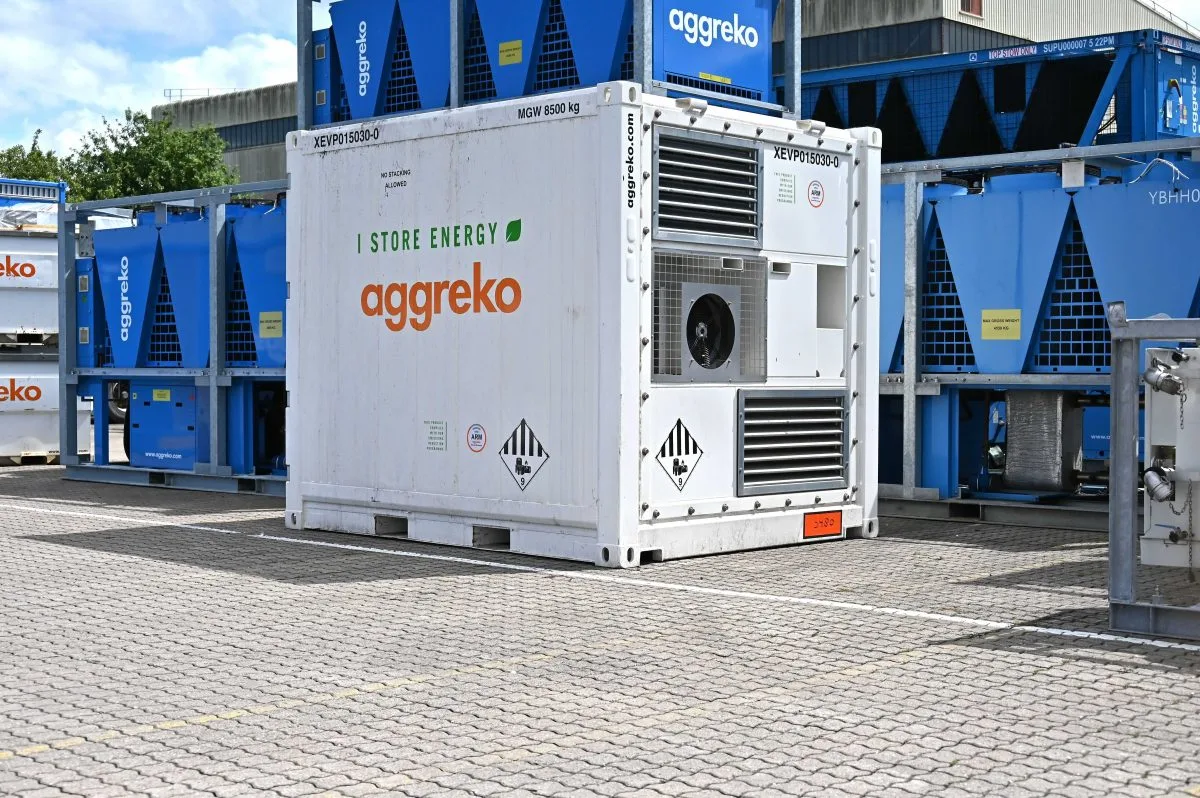
New validation testing from Aggreko has demonstrated the efficiency gains that can be achieved by considering cooling and power as one system. Detailed in its latest whitepaper, Smarter Power for Cooling, the testing showed how introducing a battery energy storage system (BESS), can enable an 800 kW chiller to operate with a 300 kVA generator rather than the traditionally required 500 kVA generator, with the modelled setup delivering an estimated £15,000 in fuel-cost savings over ten weeks.
Industrial cooling demand is increasing and using BESS in combination with generators to power temporary cooling applications can help reduce fuel consumption, emissions and operating costs. By optimising the set up used to power the chiller, efficiency can be maximised, something that is often lost due to under-optimisation.
The technical guide explores how combining BESS in combination with mains power or generators can transform temporary cooling applications by helping organisations:
- Reduce fuel consumption and operating costs
- Lower emissions through more efficient power generation
- Improve system efficiency and performance
- Support cooling deployments where power availability is limited
- Increase flexibility through intelligent energy management
- Learn from project examples from numerous sectors
Most chillers require have a high starting current but once operational have a much lower base load. Without the right guidance, this can make power solutions difficult to size correctly. In temporary setups, the challenge is often addressed by oversizing generators, leaving them operating well below optimal load for much of the time, leading to increased fuel cost and unnecessary emissions.
Within manufacturing, BESS can help, smooth fluctuating loads and take on load during low demand periods. This ensures that when generators are operating, they run at their optimal capacity, typically 70-90%, allowing for greater efficiency. This helps to reduce fuel consumption and emissions while maintaining a stable power profile. Where site capacity is limited, BESS can also create “virtual capacity”, allowing higher loads to be supported even with a limited connection.
“In temporary cooling projects, focus often falls on chiller performance, yet power systems are frequently under optimised. Without expert advice, generators are frequently oversized, leading to increased fuel use, higher emissions and avoidable cost,” said Chris Smith, head of temperature control at Aggreko.
BESS offers a flexible alternative by managing peak demand, smoothing load changes and keeping generators within their optimal efficiency range. They can improve reliability and help cooling systems to be deployed more effectively even when power capacity is constrained, including where the alternative is waiting months or years for a grid upgrade.
“Taking a holistic approach to both, power and cooling, will be essential for maximising performance and efficiency, and we would encourage any business running temporary cooling to learn more about how it can offer benefits they may not yet be taking advantage of,” Smith added.
The whitepaper can be downloaded here: www.aggreko.com/en-gb/resources/smarter-power-for-cooling
Related posts

IPE Newsletter
IPE publishes a weekly eNewsletter, delivering a carefully chosen selection of the latest stories straight to your inbox.
Subscribe here