

Air rotation
According to Powrmatic, until
recently heating large indoor spaces
such as warehouses and distribution
centres with high density racking was
challenging for environmental
engineers and often costly for the
building oper
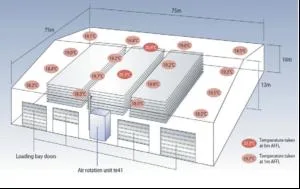
According to Powrmatic, until
recently heating large indoor spaces
such as warehouses and distribution
centres with high density racking was
challenging for environmental
engineers and often costly for the
building operator. Things have moved
on since the advent of air
rotation technology, with
users now seeing savings
in both capital and
operating costs.
Air rotation heating
systems typically
comprise a small number
of heat modules
strategically positioned
within or external to the
heated space and work by circulating
high volumes of air at low velocities
and temperatures. The maintenance
of constant air circulation within the
building reduces the stratification
effect associated with some
conventional warm air systems and
provides uniformity of heat.
IPE Newsletter
IPE publishes a weekly eNewsletter, delivering a carefully chosen selection of the latest stories straight to your inbox.
Subscribe here