

Beware the hidden costs
Compressed air can typically account for about 10% of total
electricity costs for a business.Andy Jones, general manager
of Mattei, considers ways to address this and suggests
where to turn for financial aid if an upgrade
Compressed air can typically account for about 10% of total
electricity costs for a business.Andy Jones, general manager
of Mattei, considers ways to address this and suggests
where to turn for financial aid if an upgrade is required
In today’s economic climate it seems that
many companies have learnt the
importance of cost-cutting in order to
survive the recession. Even when the
economy recovers, hopefully many
businesses will continue to look at ways to
reduce expenditure, turning to energy-saving
methods in a bid to achieve both lower
carbon emissions and financial savings.
When looking to make these
savings, it is often easy to
simply look at electricity and
gas bills. However, there are
many hidden costs that can
often be overlooked. Those
in the industrial or
manufacturing sector should
assess their compressed air
systems, especially when
considering that the
electricity consumed over a
five year period can
actually account for more
than 75% of the total cost
of ownership, which includes
servicing costs and the initial
capital outlay of the equipment.
It may be surprising to learn that a 132kW
compressor could consume more than
1,000,000kWh of electricity each year, so
companies running several large
compressors could easily see associated
electricity costs of £500,000 per annum. By
reducing the system’s energy consumption
by just 10% a business could save £50,000.
It is important to recognise that
improving efficiency does not necessarily
mean buying a new compressor. While in
some cases this can be the best option, there
are a variety of ways to lower the cost of
running compressors that are cost effective,
and should be investigated first.
Carrying out a data logging exercise will
identify whether changes to the existing
system will deliver energy savings, or
investment in new equipment is necessary.
One of the key pieces of data it will identify
is whether there is a constant or variable
demand for air. Data logging records and
measures air consumption profiles over a
seven day period, and this information is
then used to clarify if the right type of
technology is being used.
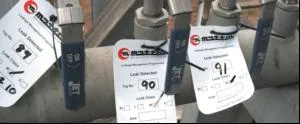
To complement data logging, a leak
detection service should also be carried out.
Identifying and repairing leaks is a simple and
cost effective way to reduce the expenditure of
producing compressed air. In some
companies, in excess of 30% of air generated
is wasted through leaks in the system – so it
would be an entirely false economy to install a
new, energy efficient compressor without
fixing any leaks that might exist first.
It is also important to assess the design and
layout of the system. Poorly sized pipework,
long distances for the air to travel and an
excessive number of bends and fittings will all
have a negative impact on its efficiency. These
should be addressed to improve the existing
system, and should certainly be altered before
a new compressor is introduced – otherwise
any energy efficiency benefits from a newer
technology could be negated.
Financial help
If investing in new technology does appear
to be the best option, then there is one
source of finance that businesses should look
to use. An interest-free loan may be
obtainable from the Carbon Trust to
purchase energy efficient equipment –
including compressors. Between £3000 and
£100,000 can be borrowed and paid back
over a period of up to four years. The
organisation anticipates that the energy
savings will offset the loan repayments and
the new equipment essentially pays for itself.
Using the different services to identify
whether a new compressor is needed will
certainly pay dividends, and could
potentially stop an unnecessary purchase.
For those who do need to buy a new
compressor, or want to make that
investment,Mattei would certainly
recommend accessing the support offered by
the Carbon Trust.
IPE Newsletter
IPE publishes a weekly eNewsletter, delivering a carefully chosen selection of the latest stories straight to your inbox.
Subscribe here