

Breathing protection – the long term view
Exposure to harmful substances can, in the long term, lead to incurable silicosis, lung cancer and other serious lung diseases such as chronic obstructive pulmonary disease (COPD) and tuberculosis (TB). The belief that ‘it will never happen to me’ can be dire, as uvex explains
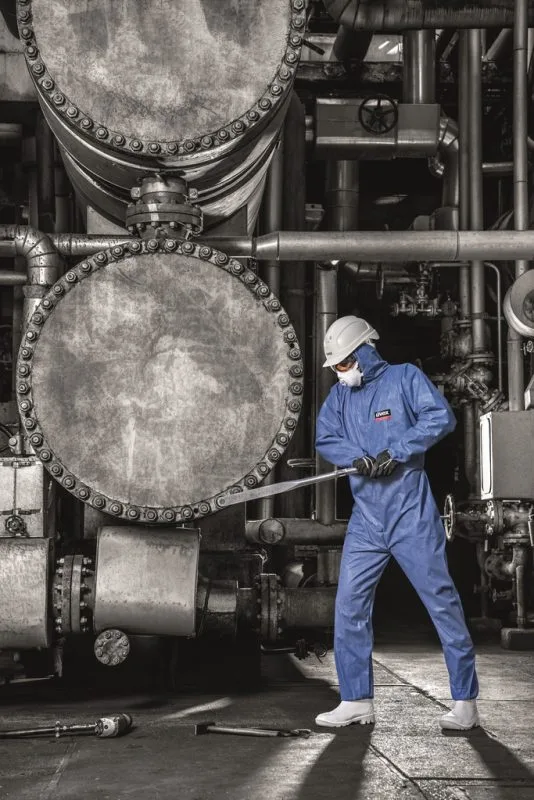
Workers may falsely think that working with asbestos, respirable crystalline silica, or silica dust, or other carcinogens did not do them any harm in the past, and it’s true, at the time, it probably didn’t. However, sadly we now know only too well the devastating effects these substances can have on the respiratory systems and health of those who regularly inhale them when they becomes apparent 10, 15 or even 20 years later.
While asbestos is the biggest killer, silica dust is catching up. Exposure to this is currently a big issue, exemplified by the Institution of Occupational Safety and Health (IOSH)’s ‘No Time to Lose’ www.notimetolose.org.uk campaign, a new, global, cross-industry commitment to tackle silica dust and related workplace cancers.
Cancer from working with carcinogens is the leading cause of EU work-related deaths, responsible for more than 100,000 deaths per year, while 900 workers in Britain get lung cancer from silica dust exposure each year.
Quartz is the most common form of silica, found in common workplace substances such as sand, stone, rock, concrete, bricks, clay and mortar. Silica is only hazardous when very small dust particles are inhaled, which penetrate deep into the lungs.
Operations such as cutting, sanding, sawing, drilling, grinding and crushing of concrete, brick, ceramic tiles, rock and stone products can cause airborne silica dust, so that workers in industries such as construction, demolition, excavation, foundries and glass, pottery and concrete products are particularly vulnerable.
While dust control measures such as local exhaust ventilation systems and dust suppression by vacuuming or spraying water are useful, these are not enough on their own. Well-fitting, appropriate and comfortable RPE should be provided to prevent workers from breathing the dust that inevitably becomes airborne despite these other measures.
Assess the risk
Under the Control of Substances Hazardous to Health Regulations 2002 (COSHH), employers must perform an assessment of the risks from silica dust and take any necessary preventative or control measures. They must keep exposure below the Workplace Exposure Limit of 0.1 mg/m3 respirable dust, averaged over 8h and, where necessary, provide workers with, and train them how to maintain and use properly, respiratory protective equipment (RPE), which must also be face fit tested.
The correct type of disposable, or reusable, breathing protection should be selected for the task in hand, according to the level of hazard, to ensure that it performs properly. Disposable masks are designed to keep out dust, and may feature valves to ease breathing, while reusable respirators protect against chemicals, gases and vapours as well as particulates.
Whichever type is chosen, it will need to fit properly, be as comfortable as possible over long periods of time, be super-sealable, reliable, able to fit a variety of head sizes and face shapes, have low breathing resistance and be compatible with other PPE, such as safety eyewear.
EN149 Standard specifies three types of filtering facepiece respirator: FFP1, the simplest device, FFP2, which offers more protection, and FFP3, which gives a greater level of protection for jobs such as cutting kerbstones, reducing exposure by a factor of 20.
uvex offers a selection of all three types of breathing protection mask, all of which perfectly fit the above criteria.
Providing RPE that does not fit the wearer properly and is therefore ineffective can be worse than not providing any protection, since it may give a false sense of security. The BSIF’s Fit2Fit (Fit Test Providers Accreditation Scheme) http://fit2fit.org gives helpful advice and lists accredited testers, and aims to raise the quality of fit-testing in the UK.
Related posts

IPE Newsletter
IPE publishes a weekly eNewsletter, delivering a carefully chosen selection of the latest stories straight to your inbox.
Subscribe here