

Cleaning with confidence
Buying new component cleaning plant offers the potential
for chaos if not handled properly. Layton Technologies,
manufacturer of solvent and aqueous component cleaning
equipment, offers advice on avoiding the pitfalls
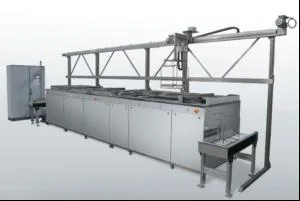
Buying new component cleaning plant offers the potential
for chaos if not handled properly. Layton Technologies,
manufacturer of solvent and aqueous component cleaning
equipment, offers advice on avoiding the pitfalls
Buying a new piece of equipment to
clean manufactured parts or
components is something that
should be relatively straight forward.Why
then are so many companies getting this
wrong and finding the experience
complicated, costly and fraught with
unforeseen problems?
The reason may well be due to companies
not really understanding the role and
contribution component cleaning plays. It
can have a direct influence on quality,
business reputation, customer satisfaction,
new customer acquisition, environmental
compliance, production efficiency and costs,
employee health and safety, capacity and
many other key business activities and
management responsibilities.
Installing new cleaning equipment,
however simple it might seem, will have
implications and getting it wrong will do
more than make those involved look silly, it
will also be very costly. Existing plant is often
basic compared to the plant that replaces it,
which can be dramatically more technical
and demanding. The reason for this higher
technical specification is that modern
cleaning plant is designed to meet strict
environmental standards and the technology
to achieve this has shifted massively. Given
that equipment is more sophisticated, the
risks involved in specifying it need to be
understood and carefully addressed.
Before any specific system is considered a
business case should be built to examine and
evaluate options and look carefully at what
investment in cleaning plant might offer the
business. It needs to include a thorough
understanding of where costs can be saved
and therefore how payback can be improved.
This involves appreciating how cleaning
contributes to the manufacturing process,
both directly and indirectly, how this is
valued and correctly measured.
Poor cleaning standards and an
inadequate or inconsistent process can play
havoc with quality and raise reject and
reprocessing costs – in extreme
circumstances leading to product defects,
recalls and even litigation. This might seem a
little over reactive but there are reference
cases in the USA including a recent example
of a major healthcare company going
through just that experience.
Costs need to be looked at thoroughly, as
the true cost of ownership can be affected by
unforeseen operating costs, such as
consumables, disposal of waste streams,
energy and other utilities, maintenance and
service costs. These should be budgeted so
that surprises are avoided. As part of the
financial business case, an evaluation of risks
should be incorporated. There are risks of
disruption, delay, unforeseen costs, operator
capability, all of which can contrive to affect
a smooth transition.
The implementation phase of new
equipment will create its own problems.
Typically, although new equipment is largely
automated, the inclusion of touch screens
and computer technology, the need for
simple procedures to be adhered to and
maintenance tasks completed may mean a
real change for operators, who may be more
used to basic, low-technology equipment.
Their induction and training should come as
part of the standard package provided by the
machine supplier.
Clearly the project has an obvious starting
point which involves assessing what
outcomes for component cleaning are
expected and therefore what needs to be
achieved.
Establishing the cleaning standard and
how is it measured from a quality and
consistency point of view will depend on the
application. Customer expectations are
important and there may be opportunities to
impress and retain customers or discover
how you might grow new business
opportunities.
It is clearly vital to understand what
cleaning process will work best, and that
means more than meeting a cleaning
standard. It will also involve capacity, process
times, materials handling and cost of
cleaning. This is an area where some testing
and trialling can be very beneficial, but it
also means recognising how different
processes may have different outcomes for
quality, costs and environmental compliance.
Cleaning processes have been affected by
change and regulation of recent years.Much
of the change has been absorbed by the
design and functionality of cleaning plant
which is now designed to manage and
control emissions and exposure. This has
meant that chemistries, especially solvents
can continue to be used within a safe and
compliant system.
Introducing new equipment takes some
thinking about, especially when it can
involve a sizable investment and carry risks
that could seriously affect the business if not
understood and managed effectively.
IPE Newsletter
IPE publishes a weekly eNewsletter, delivering a carefully chosen selection of the latest stories straight to your inbox.
Subscribe here