

Complacency too commonplace
Recent deaths from Legionnaires’ disease indicate that poor
maintenance regimes or complacency are still too prevalent
in Britain’s public buildings and other large complexes, says
the B&ES (the Building & Engineering Serv
Recent deaths from Legionnaires’ disease indicate that poor
maintenance regimes or complacency are still too prevalent
in Britain’s public buildings and other large complexes, says
the B&ES (the Building & Engineering Services Association).
It believes more needs to be done to combat this everpresent
threat
Health authorities in Scotland believe
the recent outbreak of Legionnaires’
disease in Edinburgh, in which
three people died and dozens were
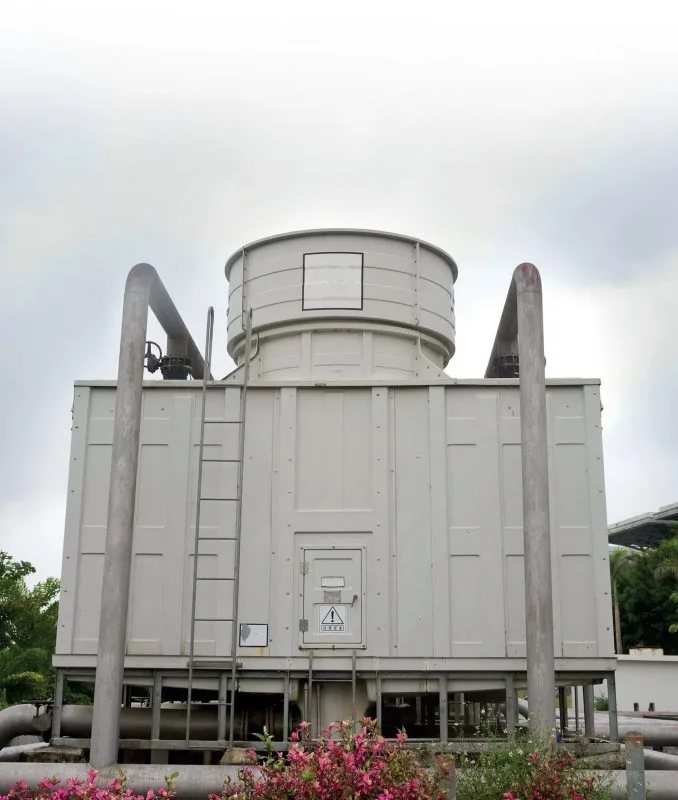
hospitalised, was probably caused by a
cooling tower in the south west of the city.
Deaths from Legionnaires’ are not
uncommon, and many people remember the
tragic outbreak in 2002 in the town of
Barrow-in-Furness in Cumbria, resulting in
the deaths of seven members of the public
with a further 180 people taken ill.
Legionnaires’ disease is a potentially fatal
form of pneumonia which can affect anybody
but primarily affects those who are more
susceptible because of their age, those suffering
from chronic respiratory or kidney disease and
people whose immune system is impaired.
Infection is caused by breathing in small
droplets of water contaminated by the bacteria.
Water temperature between 20 and 50°C is
the range in which legionella bacteria will
proliferate most rapidly, with the optimum
temperature believed to be 37°C. Legionella
bacteria are however killed within a few
minutes at water temperatures above 60°C.
Regular maintenance
Blane Judd, chief executive of B&ES, says that a
regular programme of inspection and maintenance
of air conditioning, water holding and water
supply systems is essential if future deaths from
Legionnaires’ are to be avoided. He comments:
“On average there are approximately 300 reported
cases of Legionnaires’ disease each year in the
UK and when clusters of cases occur they can
typically be traced back to poorly maintained
cooling tower systems, air conditioning plant or
hot and cold water systems in offices, factories,
hotels, hospitals and other larger establishments.
“Legionnaires’ disease is a potentially fatal
form of pneumonia but it is possible to
significantly reduce the risk of creating the
conditions in which the legionella bacteria thrive
by taking important measures such as a
programme of regular inspection and
maintenance of susceptible plant and equipment,
including regular cleaning and disinfection.
“Building owners and occupiers should be
aware of, and comply with, their legal
obligations, and these are set out in a single
document, published by the Health and Safety
Commission (HSC), called ‘Legionnaires’
disease: the control of legionella bacteria in water
systems’. This is a HSC Approved Code of
Practice (ACoP), commonly referred to as L8.
“Certainly there is a pressing need for all
those involved in building maintenance and
management to understand where the health
risks lie. However, in an era of reduced staff
and budgets but higher workloads there is
more room for human error.”
Dosing systems
“Members of our Association have the experience
and expertise to help building owners and duty
holders, with many now offering ‘continuous
dosing’ systems, designed to maintain water
systems in a permanent state of excellent hygiene.
These systems release controlled levels of
chemical treatment into the water system at a set
time, or in response to changing conditions,
so removing some of the potential for human
error or omission. As well as minimising
health threats, this approach will improve on
operating efficiency and save energy as water
does not need to be kept at high temperature.
Judd adds that it’s unfortunate that it
needed an outbreak to bring the threat of
Legionnaires’ disease back into the spotlight:
“The same thing always seems to happen
with carbon monoxide poisoning. Big
headlines are swiftly followed by
complacency when the fuss dies down. Poor
maintenance regimes are still too prevalent
in Britain’s public buildings and other large
complexes.”
IPE Newsletter
IPE publishes a weekly eNewsletter, delivering a carefully chosen selection of the latest stories straight to your inbox.
Subscribe here