

Cutting out bacterial issues
How do you stop a user-friendly, bactericide-free cutting
fluid from becoming contaminated with bacteria, resulting
in the emulsion splitting and producing bad odours? One
solution is with patented emulsifier technology, t
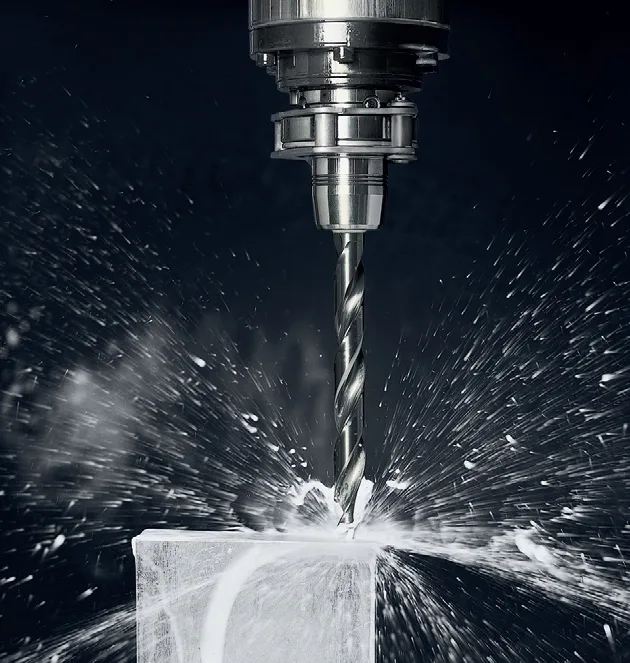
How do you stop a user-friendly, bactericide-free cutting
fluid from becoming contaminated with bacteria, resulting
in the emulsion splitting and producing bad odours? One
solution is with patented emulsifier technology, the main
feature of a new cutting fluid from Henkel. Peter Homfray-
Cooper, a technology specialist at the company, explains
The bacterial contamination of
commonly available metal cutting
emulsions is a natural biological
process. However, once bacteria have
multiplied to a certain level, the emulsion
can split and become unusable. Traditionally
there have been two ways of avoiding such
problems. The first option is to use
conventional bactericide-free metalworking
fluids where bacterial growth is initially
tolerated to a certain level of concentration,
then combated by adding bactericides. The
disadvantage here is that the dead microorganisms
act as excellent nutrients for the
generation of bacteria, so the remedial
process has to be repeated at ever-shorter
intervals. The second option is to use fluids
that contain bactericides, which permanently
suppress bacterial growth.
In both cases, use of bactericides has to be
viewed critically. Exposure to bacteria or
bactericides represents a potential health
hazard for employees who may develop skin
irritations or increased sensitisation after
contact with the fluids. Frequent changing of
slip emulsions is also costly, putting an
additional burden on the environment.
Henkel has developed a water-miscible,
bactericide free cutting fluid technology. The
company believes that what makes it
different is its patented formulation that
actively prevents bacteria from absorbing
nutrients from the degradation of emulsifiers
once a certain minimum bacteria
concentration has been reached. In effect
bacterial growth is impeded because these
micro-organisms have nothing to sustain
them.
In this way, this new generation of Multan
fluids fully comply with the revised EU
Biocide Regulations. They save manufacturers
the cost of regular fluid replacement and
enable them to demonstrate good
environmental responsibility.
Two of these fluids are now available in
the UK: Multan 71-2, described as the
generalist; and Multan 77-4, the specialist.
Multan 71-2 is multifunctional due to its
high lubricity which makes it suitable for a
broad variety of metalworking processes,
including grinding. Multan 77-4 is for high
alloy steel and aluminium machining.
Henkel believes it takes lubricity to a higher
order, even at low concentration. It is
especially suitable for centreless grinding.
Although a relative newcomer to the UK,
Multan 71-2 has a proven track record on
mainland Europe. For example, the tooling
manufacturer Walter AG, uses it in its training
and demonstration centre as its former
coolant was responsible for a strong build-up
of odour when machines were left idle.
The company manufactures high quality,
high precision metal cutting tools and offers
some 48,000 items for turning, milling,
drilling and threading. The selection of
metalworking fluids is of vital importance,
not just in the efficient manufacture of
carbide tools but also a recommendation to
customers to get the best return on tool life.
Not only did Multan 71-2 immediately
resolve the bad odour problem in the
training centre, it demonstrated a high
degree of process stability. This led to the
product being adopted on the production
line for the manufacturing of turning tool
holders for indexable inserts. In addition to
providing important health and safety
benefits, it delivered quality performance in
volume production and cost efficiency.
Another important point for Walter AG is
that Multan 71-2 performs well in de-ionised
water without foaming and without the need
for additives. In the past fluids had to be
diluted with tap water to avoid heavy
foaming. While solving this problem, the
hard water also led to heavy deposits of lime
scale and mineral salts accumulating in the
manufacturing system.
In the UK, Multan 71-2 is now being used
successfully by a number of manufacturers.
Indeed several of these companies plan to
extend its use to more machines and
different processes on the strength of the
early results. These users are tier suppliers to
the aerospace, automotive and offshore
industries as well as a number of high
precision, specialist machine shops.
IPE Newsletter
IPE publishes a weekly eNewsletter, delivering a carefully chosen selection of the latest stories straight to your inbox.
Subscribe here