

Data loggers on space station mission
Miniature data logging devices from MSR Electronics are accompanying the flights of the unmanned spacecraft Cygnus to the International Space Station (ISS) to take transport measurements.
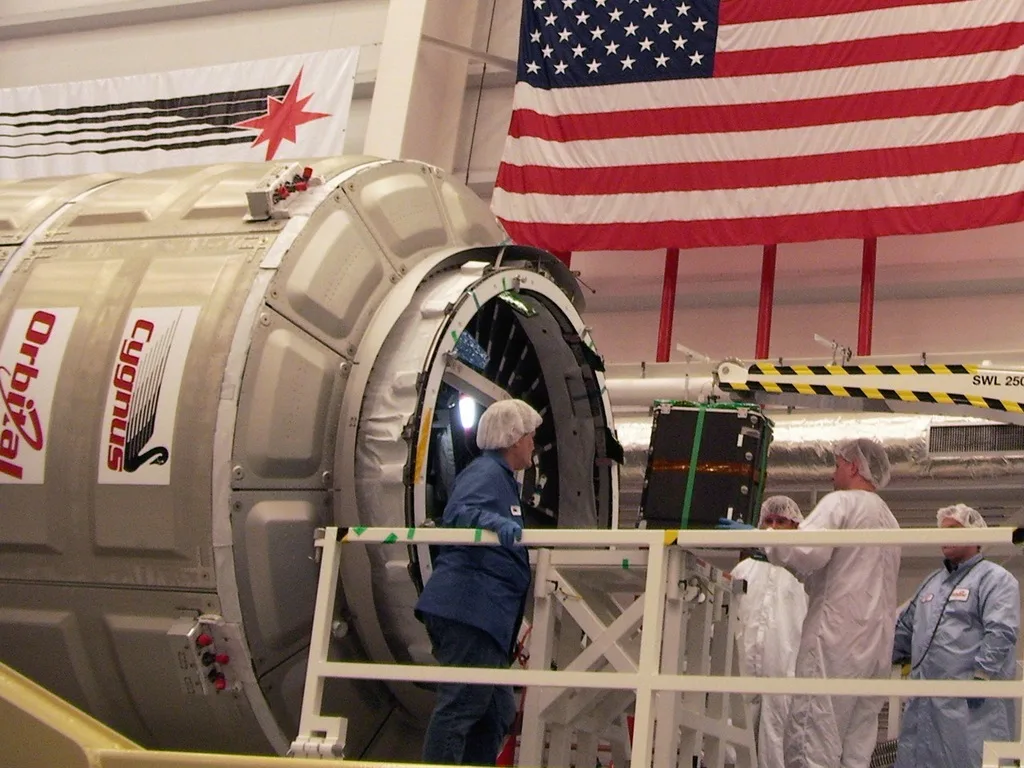
Michael Bain, ISS cargo integration and operations services manager of the Orbital Sciences Corporation, says: “We are getting spectacular data from these tiny data loggers.” NASA contracts with Orbital Sciences Corporation for commercial cargo delivery to the International Space Station.
The data loggers are used to record shock and vibrations on the transport route of the supply transporter Cygnus to the ISS. According to Bain, cargo to the ISS includes consumables (food, clothing, science support, medical supplies, space operations support, periodic maintenance items, etc), as well as spare parts, crew support, and science facilities.
Some of the cargo is sensitive to the loads imparted during transportation, especially during launch where structural loads and vibrations can be significant.
The highly sensitive 3-axis-acceleration sensors of the MSR data loggers measure these strains, so called G forces, during the entire space flight until the transporter docks with the ISS, and records them in their internal memory.
Bain states: “We are able to track virtually every physical event that occurs on the spacecraft from roll-out to the launch pad, to rocket rotation to the vertical, to ignition, launch, main engine cut-off, stage separation, upper stage ignition and burn-out, fairing separation – even the movement of the spacecraft while attached to the space station arm.”
On orbit, the data loggers are retrieved from the module by the ISS crew as cargo is unloaded. The data files of the loggers are down-loaded to a PC onboard and then transmitted to the ground. According to Bain, Orbital takes the data, compares it against models and mission specific predictions and then submits an analysis of the loads seen by the cargo during the cargo delivery mission to NASA as proof that the systems operated as advertised.
According to Wendelin Egli, CEO of MSR Electronics, Orbital selected the MSR165 data loggers partly because their sensors can autonomously perform precise measurements for long periods and with high measuring rates. “Another prerequisite for the space flight was that the loggers had a very low weight, small format and very high memory capacity – conditions which the MSR165 ideally fulfils.”
IPE Newsletter
IPE publishes a weekly eNewsletter, delivering a carefully chosen selection of the latest stories straight to your inbox.
Subscribe here