

Double stacking: Care needed
Double stacking of pallets doubles the effective storage area and transport loading density so there is a massive incentive to do so. However, AEC Designs warns that incorrect double stacking can greatly increases risk.
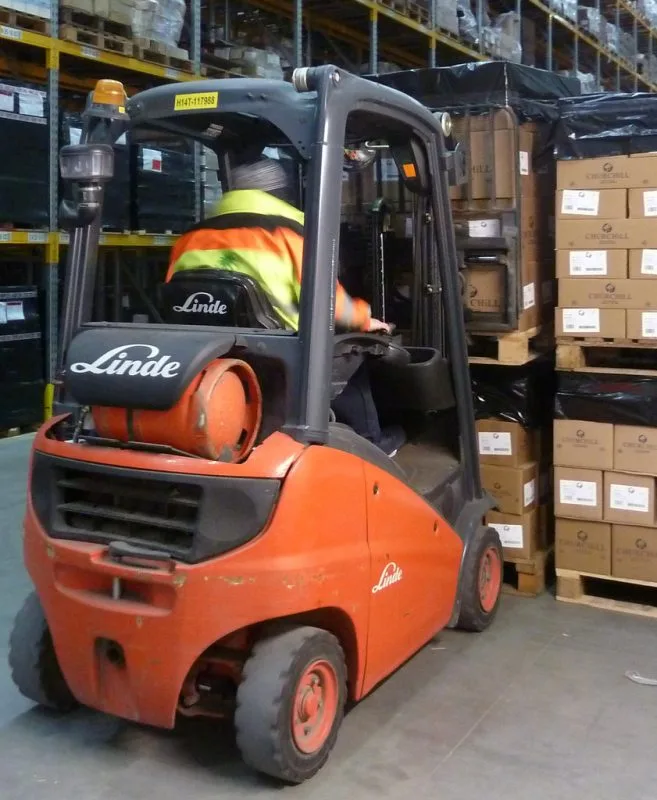
Successful double stacking relies on the base pallet load being sufficiently strong to carry the
load of the pallet above. In palletised carton loads all the strength is provided by the walls of the
cartons, which are only strong in compression. Any sideways forces will cause the cardboard to
deform and ultimately collapse. Once one carton wall starts to collapse the other cartons are
sharing a greater portion of the load, so adjacent cartons are also likely to collapse. Added to
this the upper pallet load will start to lean applying further load to the already weakened side of
the carton stack.
Successful double stacking therefore requires the upper pallet to be placed squarely and level
onto the pallet below so that the weight is evenly shared by all sides of the bottom stack.
The problem for FLT drivers is that they cannot see to accurately set the upper pallet level
before stacking. Any error in tilt angle as the upper pallet is lowered will apply more load to one
side of the lower stack. Any attempt to correct the tilt once the loads are touching will impart
lateral forces to the lower pallet, which is likely to cause the carton walls to deform.
The collapse of double stacked pallets can occur days or weeks after the stack was created, and
without any warning. Changes in atmospheric conditions, especially humidity have a large effect
on carton wall strength. Often final collapse will occur overnight when the temperature drops
and condensation levels increase.
Similar stack collapse is also common with palletised bagged granular products, where
unbalanced forces due to uneven pallet stacking cause the granules to shift inside the bags. The
contents of each bag act like a slow moving fluid that is being squeezed by the load above. If the
load is more on one side of the pallet, then the contents will flow away from this load point
causing the upper pallet to lean, which increases the load to the same side of the pallet.
Guide to successful double stacking:
-
Correctly applied stretch or shrink wrap helps to stabilize the carton side walls as well as
holding the cartons into a close stack. -
It is important that only the correct pallets are used as not all pallets are suitable for
double stacking. -
Ensure Forklift trucks have a suitable mast tilt indicator so that the pallets can be
accurately stacked. -
Double stacked pallets should generally not be moved as a stack. The extra forces
applied whilst tilting and moving the stack can cause its collapse. -
Be very careful when forming a row of double stacked pallets. If these are pushed close
together there is a build up of forces down the row which can cause the whole row to
collapse.There are strict rules relating to the correct stacking and restraining of pallets for transportation
due to the additional dynamic forces experienced during shipping.
IPE Newsletter
IPE publishes a weekly eNewsletter, delivering a carefully chosen selection of the latest stories straight to your inbox.
Subscribe here