


Get to grips with glove selection
In the first of a series of articles from the British Safety Industry Federation (BSIF), Sarah Bridge, the Federations chair, discusses best practice when selecting the correct glove for the workplace
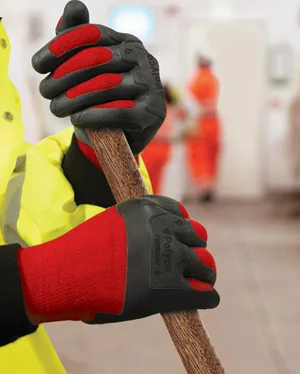
In the first of a series of articles from the British
Safety Industry Federation (BSIF), Sarah Bridge,
the Federation’s chair, discusses best practice when
selecting the correct glove for the workplace
Hand protection is a vital
form of Personal Protective
Equipment (PPE) in many
different industries including waste
and recycling, construction and
manufacturing where workers can be
exposed to sharp or abrasive
materials or dangerous and toxic
substances. If a worker’s hand
protection is not fit for purpose or it
is made from sub-standard materials,
then the wearer is at risk of serious
injuries that could prevent them
from working and even carrying out
basic day-to-day tasks.
With such a vast choice of hand
protection on the market, selecting
the most appropriate glove is a
potential minefield.
There are a variety of factors
which can help an organisation when
selecting hand protection:
Identify substances handled
Many types of hand protection
differ in design, material and
thickness. No glove material will
protect against every substance.
Identify all other hazards Is there a risk of abrasion, cuts and
puncture or high temperature?
Identify all the risks so that
maximum protection can be
provided.
Type and duration of contact How long will the glove be worn?
Comfort should be a consideration if
wearing for a long period of time.
Generally speaking thicker gloves
can offer greater protection than
thinner gloves, whereas thinner
gloves offer more dexterity.
Consider the user The correct hand protection should
fit the wearer; tight gloves can
promote fatigue whereas large gloves
can create folds, impairing dexterity.
To ensure best fit use sizing charts.
Consider the task Gloves should protect not hinder the
user; choose gloves that balance
protection with dexterity and ensure
the gloves selected meet the
standards required for the task.
Knowing what the potential wearer
needs from a pair of gloves will make
the selection process easier and
ensure a safer and happier working
environment. If there is any doubt
about selecting the most appropriate
product(s), why not take advantage of
a Hand Protection Assessment
Survey that is offered (often free of
charge) by BSIF members.
The British Safety Federation is a
leading trade body within the safety
industry and an HSE-recognised
competent authority. Its members
include manufacturers, distributors,
test houses, certification bodies, safety
professionals and service providers.
Further information can be found at:
www.bsif.co.uk.
Related posts


IPE Newsletter
IPE publishes a weekly eNewsletter, delivering a carefully chosen selection of the latest stories straight to your inbox.
Subscribe here