

Glove selection: It’s in your hands
More than 2 million UK workers are at risk of serious injury
to their hands and between 160,000 and 250,000 new
incidents of occupational dermatitis are reported to GPs
each year1.Using appropriate hand protection is param
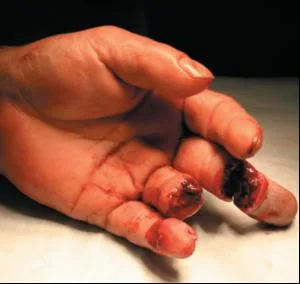
More than 2 million UK workers are at risk of serious injury
to their hands and between 160,000 and 250,000 new
incidents of occupational dermatitis are reported to GPs
each year1.Using appropriate hand protection is paramount.
Dave Linley of BM Polyco comments
With some 27 bones and a further 8
in the wrist, not to mention the
number of ligaments, tendons,
muscles and nerves, the human hand is an
engineering marvel in itself and one that
needs protection in today’s modern working
environment. Losing the use of any fingers
or, worse, an entire hand can be devastating
to an individual and their quality of life.
Every year in the US, 30% of workers who
experienced hand injuries were deemed to
have worn inappropriate gloves for the task
in hand2. This can have significant financial
implications too. In the UK, depending on
the severity of the injury, a claim for
compensation as a result of a work-related
hand injury or infection could range from
£4000 for mild ‘white finger’ (Hand Arm
Vibration Syndrome) to in excess of
£100,000 for the loss of a hand(s). But the
costs could be even higher.
The multitude of potential occupational
hand injuries makes choosing the right glove
a complex one. From minor burns, crush
injuries and cuts to more extreme injuries
such as fractures, chemical exposure and
even amputation, employees need to use
gloves that are fit-for-purpose and designed
to protect them for a specific
task and avoid the laissez faire
attitude that one size fits all –
because it doesn’t. Gloves
designed for one function
may not be suitable for
another – you need to
identify which one is right
for your purposes.
Manufacturers such as
BM Polyco, offer a general
overview of the types of
products needed for each
task:
Chemical-resistant
gloves: If being used in a
janitorial or sanitation setting,
for example, those with NRL, nitrile,
neoprene and PVC are most effective. For
chemicals used in the automotive,
aeronautical and other industries such as
oils, solvents, fuels and greases, butyl and
nitrile-based gloves offer superior
resistance qualities by being three-times
more puncture resistant than natural
rubber gloves.
Cut-resistant gloves: The days when
workers had to rely upon traditional
leather and cotton gloves have long gone.
Modern gloves have a greater lifespan than
their predecessors and offer much higher
levels of protection in the most sensitive of
areas. They are reinforced at vulnerable
wear points and woven as a seamless
knitted shell often using cut-resistant
fibres such as Kevlar and Dyneema to
ensure comfort during long periods of
wear.
General purpose: Regardless of whether
gloves are to be worn for a short or long
periods, protection is paramount.When
choosing the best general purpose glove,
opt for one that is compliant with EN420
and ensure that the abrasion, cut, tear and
puncture resistance scores meet the
standards required for the task.
For more detailed information on the type
of glove that should be used, you should take
advice from the manufacturer whose experts
will be able to identify precisely which glove
best meets your needs.
Having identified the correct glove for the
task, the next challenge is for employers to
ensure workers will wear them. There is
evidence to suggest that there is a serious
lack of product knowledge among users of
protective gloves; training is key.
Workers must be trained and educated
about the risks associated with the jobs they
do and be given adequate support to enable
them to correctly identify the gloves required
for the task. And employees need to be
familiar with how to don, doff and care for
their gloves, and recognise when they need
to be replaced.
Comfort, fit and dexterity are also critical
to PPE compliance. Gloves that are too tight,
for instance, can make the hands feel tired,
stressed and incapable of maintaining their
grip – a discomfort factor which saw 3 out of
5 respondents to a survey in the US admit to
being the main reason for their failure to
wear PPE compliant gloves2.
Comfortable fitting gloves will not only
encourage greater uptake, they will by default
increase productivity and make users more
likely to comply with PPE protocol; thereby
reducing the element of risk and helping
employers improve health and safety in the
workplace.
The importance of using the correct hand
protection is more acute than ever. As we
have seen, while it may be a complex task, if
done wrong it could result not only in a
career-ending injury for the employee
concerned, but could have severe financial
implications for employers too. However, the
significant developments in hand protection
technology – such as fabric and yarn
development, advances in protective coatings
and manufacturing techniques – in recent
years have consigned the once prevalent
issues over poor dexterity or
cumbersomeness to the history books.
Now, the challenge is enforcement and
training and to give workers the correct hand
protection equipment to reduce the risks –
reducing risk is everyone’s job.
1 Source: BSIF 2Source US Bureau of Labor Statistics
IPE Newsletter
IPE publishes a weekly eNewsletter, delivering a carefully chosen selection of the latest stories straight to your inbox.
Subscribe here