

Keeping the bugs at bay
Establishing good hygiene habits and maintaining pristine
washrooms helps to protect employees against outbreaks
of infection, as Keri Reynolds, marketing manager of PHS
Washrooms, explains
Well-equipped washrooms are
Establishing good hygiene habits and maintaining pristine
washrooms helps to protect employees against outbreaks
of infection, as Keri Reynolds, marketing manager of PHS
Washrooms, explains
Well-equipped washrooms are a
must on a number of levels.
Companies have a duty of care
to their employees and customers to provide
easily accessible washroom facilities that
meet the highest hygiene standards. Not only
does this create a good visual impression, it
suggests business success and a commitment
to caring for staff and visitors.
It also makes sound economic sense.
According to a CBI/Pfizer survey conducted
during January and February 2011, the UK
economy lost 190 million working days to
absence in 2010 – costing employers £17bn.
Whether it’s the headline grabbing viruses
and infections such as swine flu, MRSA or Ecoli;
or seasonal flu, coughs and sniffles,
effective hygiene practices are valuable in
helping to prevent the spread of infections.
Companies that invest in washroom hygiene
not only make their staff and visitors feel
happier and healthier, they also guard against
the disruption to business, loss of
productivity and fall in customer satisfaction
rates that inevitably come when employees
have to take days off because they are ill.
Germs thrive in environments where
people come into close contact with each
other so infections love the workplace.
According to the NHS’s hand washing
campaign – www.wash-hands.com – there
are a number of facts that may encourage
employers to increase their efforts to
promote the value of hand washing to their
employees:
Norovirus, a common form of sickness
and diarrhoea, can result in individuals
being off work for up to four days
We have between two and ten million
bacteria between our fingertips and elbow
The number of germs on your fingertips
doubles after you use the toilet
Germs can stay alive on hands for up to
three hours
Washroom solutions
Although it’s not a glamourous or hi-tech
solution, the simple act of washing your
hands properly with soap and warm water,
and drying them thoroughly, is the most
important thing you can do to reduce the
spread of infections.
Correctly equipped washrooms with the
right facilities to ensure a high level of
hygiene help control infections and lessen
the chances of cross contamination.
Provision of anti-bacterial soaps and
dispensers, effective hand drying systems,
regular cleaning by trained operatives, and
routine checks for contamination are all
essential.
For an added level of protection PHS
Washrooms offers a wide range of products
incorporating SteriTouch. This comprises a
range of antimicrobial masterbatches,
additives and coatings that have been proven
to reduce the spread of pathogenic germs
such as MRSA, E.coli, and salmonella, and
it’s now permanently embedded into PHS
products such as hand dryers, sanitary
disposal units, dispensers for toilet rolls,
hand towels and soap. It won’t wear off over
time, requires no special upkeep or
maintenance and lasts the lifetime of the
product, ensuring consistent protection.
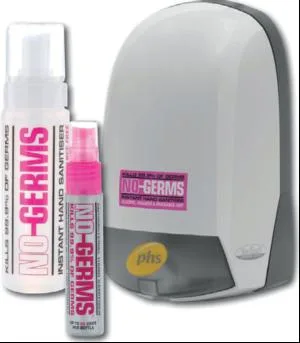
In addition to well-equipped washrooms,
hand sanitisers can offer another level of
protection. They can be wall or standmounted
in reception areas, waiting rooms
and any areas that see heavy footfall as a
reminder to employees and visitors to
take the
appropriate
measures. PHS’s
No-Germs hand
sanitiser, for
example, is also
available as a
hand wash. It
kills 99.9% of all
germs, is
effective against
swine flu, MRSA
and flu viruses,
and comes in a
25ml spray bottle. This
enables staff to carry it
with them, ensuring that they have
protection wherever they are.
IPE Newsletter
IPE publishes a weekly eNewsletter, delivering a carefully chosen selection of the latest stories straight to your inbox.
Subscribe here