

Legionella – the need for vigilance
An employer is responsible for identifying and assessing the
risk of exposure to legionella bacteria from work activities
and water systems, and for defining any precautionary
measures.Neil Brown, technical director,Hygien
An employer is responsible for identifying and assessing the
risk of exposure to legionella bacteria from work activities
and water systems, and for defining any precautionary
measures.Neil Brown, technical director,Hygiene Group,
offers some guidelines
Legionnaire’s disease is a potentially fatal
infection, normally contracted by
inhaling fine water droplets containing
legionella pneumophila, causing a localised
infection in the lungs. Legionella protects
itself from the body’s other natural defences
by hiding within macrophages – white blood
cells that normally attack invading bacteria.
This allows it to grow quickly, with severe
untreated infections causing pneumonia.
Most people do not develop Legionnaire’s
disease, but around 12% of identified cases
are fatal. However, if identified quickly
enough, Legionnaire’s disease can be treated
effectively with antibiotics. Legionella needs
food, warmth and somewhere to live; water
systems can offer all of these. Any equipment
producing a fine spray or aerosol adds an
extra bonus, allowing the
bacterium to travel.
It is a legal requirement for
water system operators to keep
them clean and demonstrate
that they have been treated
with suitable disinfectants.
This is usually required every
six months, with an L8
certificate – referring to the
HSE legionella control code
of practice – issued by the
cleaning contractor.
Ideally, a survey of all
water systems should be
undertaken, to include an
asset register of associated
plant, pumps, strainers and so
on, with up-to-date drawings or diagrams. It
can then be determined which components
present a potential risk. Employers should
consult employees on measures and actions
taken.
If the assessment shows a foreseeable risk,
the employer should appoint someone to
take managerial responsibility and provide
supervision for the implementation of
precautions. This individual should know
the potential sources of risk; immediate
measures to be adopted, and measures to
ensure controls remain effective.
Where it is impossible to avoid using
systems posing the risk, a written scheme for
controlling it should be implemented. This
should include precautions to be taken,
checks to ensure the control scheme’s
efficacy, and planned remedial action if the
scheme is found to be ineffective.
The findings of the risk assessment, the
written scheme, and results of any monitoring,
inspection, tests or checks undertaken, with
dates, should be included in records which
should be retained and updated. Systems
with an identified risk should be regularly
drained, flushed out and disinfected.
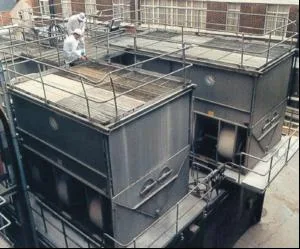
Cooling towers
The warm environment and high organic
debris levels that can accumulate in cooling
towers are ideal for rapid bacterial growth. A
build-up of biofilm will also encourage
growth of Legionella bacteria. The correct
biocidal treatment regime will ensure
bacterial populations remain under control.
The ‘fill’ – the trellis-type layers which
permit air transfer but minimise the risk of
water droplets escaping – must be removed
and thoroughly cleaned and disinfected,
while the tower’s insides must be cleaned and
disinfected. Treatment success depends on
the compatibility of all chemical components
used, and adherence to recommended
application, monitoring and control
procedures.However, it must be remembered
that an operating cooling system is subject to
unpredictable recontamination both by
legionella and sources of nutrients. Regular
microbiological testing will ensure the
biocide programme remains effective. The
tower’s operations manual should include a
detailed maintenance schedule, listing time
intervals when system plant and water should
be checked, inspected, overhauled or cleaned.
A typical cooling system requires weekly
inspection for damage and soiling, and
chemical checks of circulating water to
monitor pH, hardness, temperature and the
oxidising biocide level. It also requires weekly
micro-checks to monitor general microbiological
growth. A quarterly Legionella
check is required, with a thorough clean of
the tower interior, sump and fill twice yearly.
Each check must be meticulously logged,
allowing observation of any trends to
promote better tower and risk management,
while proving the operator has discharged
his legal duties.
For other water systems, temperature
control, chlorine dioxide treatment,
ionisation, and ozone and UV treatment can
all contribute to reducing the risk of
legionella build-up. All water services should
be routinely checked for temperature, water
demand, cleanliness and use. An annual
check should comprise visual inspection of
water storage tanks; recording water
consumption to ensure water is not
stagnating; checking hot and cold water
circuit plans to ensure they are current;
ensuring operation and maintenance
schedules are readily available and updated;
and checking connections to outside services.
Microbiological monitoring should also
take place in the form of samples from both
cold and hot water systems, carried out by a
UKAS-accredited laboratory participating in
the PHLS Water Microbiology External
Quality Assessment Scheme for the Isolation
of Legionella from Water. Remedial action is
needed if legionella bacteria reach more than
100 cfu/L. However, this is unlikely if proper
management systems exist.
Indeed, simple cleaning and maintenance
regimes, and consultation with an expert on
chemical use and certification, will ensure
this never becomes a major issue.
IPE Newsletter
IPE publishes a weekly eNewsletter, delivering a carefully chosen selection of the latest stories straight to your inbox.
Subscribe here