

Lightening the energy load
For many production facilities and process engineering
environments that run 24/7 lighting, a 60% energy saving is
easily achievable, and such a project would usually pay for
itself in less than a year, according to Duncan
For many production facilities and process engineering
environments that run 24/7 lighting, a 60% energy saving is
easily achievable, and such a project would usually pay for
itself in less than a year, according to Duncan Stevens,
director at Vita Energia
Despite the ever-increasing focus on
reducing carbon emissions, the
main driver for companies across
the UK to reduce energy usage is still
economic. Changes to the Carbon Reduction
Commitment (CRC) scheme in the recent
spending review have reduced incentives for
positive change, and managers now need to
look carefully at what energy saving projects
offer the best ROI.
Green incentives – it’s not enough
Initiatives such as the CRC and the interestfree
Carbon Trust loan scheme are steps in
the right direction but the scale of the
savings and energy prices alone are often not
high enough to be a viable incentive when
balance sheet and immediate cash
management pressures dominate business
financial planning.
As an example, Vita Energia recently
conducted a site survey of a complete
financial services office with 800 employees.
We could achieve a 55% energy saving on
the lighting cost alone, save around 200t of
CO2 per year, and
the cost saving
would be £40,000
for a £100,000
investment. Even
though the
company might
well have qualified
for a Carbon Trust
loan (zero interest, no security) this
company did not seem willing to saddle the
balance sheet with such a debt. Many others
have similar concerns.
Carrots to sticks
Despite best intentions, the economic
incentive of the CRC scheme was quite poor
as the initial cost of buying CO2 credits was
not a sufficient penalty to markedly change
the economic drivers for doing lighting, or
other energy saving projects. Following the
Government spending review, the CRC is
now essentially a tax. The payback element
has been removed, which will act to reduce
some of the economic incentive to invest in
energy saving. Facilities managers need to
move closer than ever to identify projects for
savings.
Another aspect which undermines the
economic aspect of the green initiatives and
incentives is that many facilities are merely
rented for a period of time. Some tenants see
no value in making investments that upgrade
their buildings, as they most likely won’t see
the long-term effects of the investment, and
therefore will never get the ROI their CFO
requires.Meanwhile, building owners can be
largely uninterested, as they are not paying the
energy bills.With a number of stakeholders
involved, all of whom have different goals and
timeframes, it is easy to see why little
progress is often made in this area.
What can be done?
With little economic incentive to go green
and with complex ownership structures,
managers need to focus on developing areas
that are quick to implement, at a reasonable
cost and which will bring them a fast ROI.
One of the best ways to tick all these boxes is
to look at how to save energy in lighting.
Implementing a new system will save both
energy and cost, in many cases improve the
lighting environment, and could bring
payback in less than a year, particularly if
your lights run 24/7.
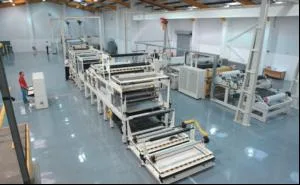
ACG case study
Advanced Composites Group, a leading
manufacturer of advanced composite carbon
and glass fibre materials, has implemented a
retrofit light energy saving project at its
high-tech manufacturing facility and
technology centre, saving the company more
than 200t of CO2 annually – a 55%
reduction of electricity overall.
Located in Heanor, Derbyshire, ACG
specialises in the manufacture of high
performance pre-impregnated (prepreg)
advanced fibre reinforced composite
materials encompassing a wide range of
applications including aerospace, high end
automotive, F1 and all other forms of
motorsport, marine, wind energy, defence
components, artificial limbs, high-speed
machinery and many other applications
where low weight and high performance are
paramount.
The quality of light at the facility has been
improved as part of the project, which will
pay for itself through electricity savings in 13
months, and provide a gross annual saving of
just over £37,000.
Vita Energia engineers undertook three
main approaches in the project:
Switching to highly efficient lighting tubes
Upgrading to electronic ballast inductors
Installing carefully designed reflectors.
IPE Newsletter
IPE publishes a weekly eNewsletter, delivering a carefully chosen selection of the latest stories straight to your inbox.
Subscribe here