

MHE engineer: A changing role
Traditionally, the materials handling equipment (MHE) engineer has been a skilled trouble-shooter. He (and she) still is, but Paul Thynne, national service manager at Briggs Equipment, says the role is changing, giving the engineer an increasingly important part to play in building a strong relationship between MHE provider and customer
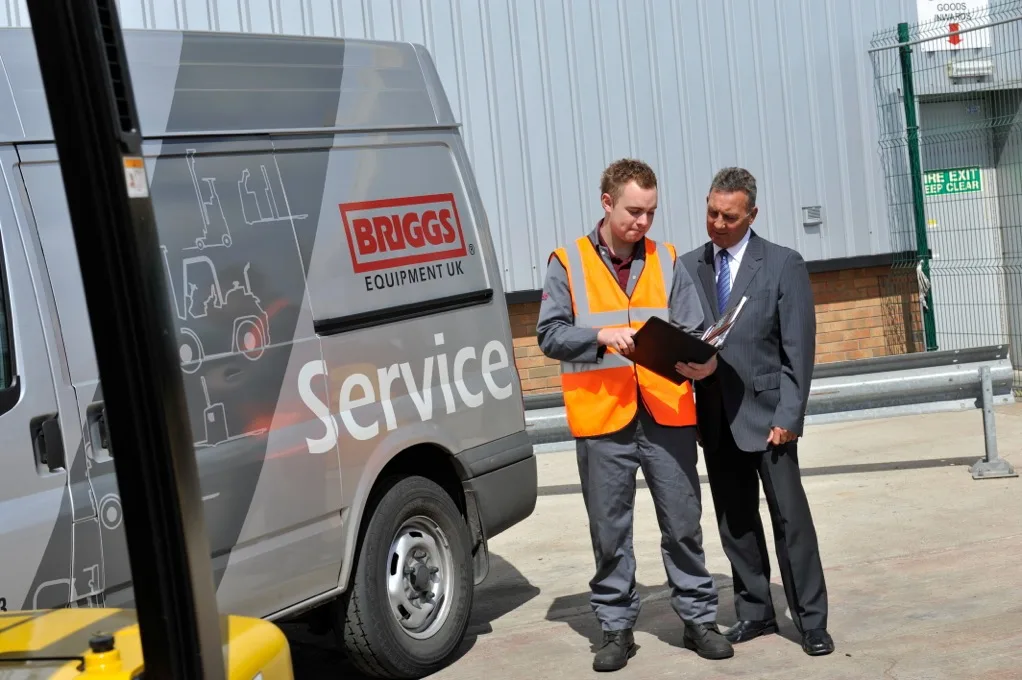
Technological advances to create more productive equipment have yielded forklift trucks that are more reliable but, to satisfy service level agreements (SLAs), they require extra preventative maintenance to ensure they meet critical productivity demands. Engineers must have the skills and competency to stay abreast of developments.
It’s no longer a case of arriving on site and expecting to fix a fault with a spanner and a few parts from the back of the van. Today’s MHE engineers carry a laptop and together with the latest software carry out a diagnostics check, identify the fault, how to fix it and then log the job electronically. Engineers also set the parameters of the machine, so they need to be as proficient with sophisticated diagnostic software as they are with a tool bag.
Advancing technology has driven truck service life from three to five years, and now increasingly five to seven years. It is service providers that are delivering this added value. The ability to carry out repairs or preventative maintenance quickly, and with minimum impact on productivity, drives the long term success of an MHE contract.
Inevitably, trust built up within the engineer-customer relationship comes into its own when problems arise. If a charge must be levied to repair equipment damaged by the customer, the engineer knows he not only has to carry out the work, but has to offer support, and that means discussing the options and proposing a solution which will optimise results.
It is vital for the supplier’s reputation that engineers develop sound interpersonal skills because the quality of service they provide can influence the relationship between the two businesses and, ultimately, customer retention.
To keep pace with advances in technology and the engineer’s greater focus on customer care, training is undergoing a major overhaul.
Traditionally, apprentices spent four years training with automotive workshop engineers and attended a local college before emerging with a general City & Guilds qualification, but in the 1980s, demand for multi-skilled engineers marked a sea change in the approach to the training. Technological advances, such as computer controlled engine management systems, led to colleges providing external training and employers establishing in-house programmes to ensure trainees had the requisite skills base.
Briggs Academy offers its engineers access to courses ranging from IT to diagnostics and customer service. The Fork Lift Truck Association (FLTA) and British Industrial Truck Association (BITA) have joined forces to offer dedicated forklift truck training via the BITA & FLTA Academy, while also promoting career opportunities in schools.
MHE solutions providers are working with the industry’s professional bodies to raise standards and many are LOLER and PUWER accredited, carrying out a regular Thorough Examination on the MHE equipment they have supplied.
Technology has also played its part in shaping the way engineers work. As more customers want to monitor equipment performance against SLAs, 24/7 access to data via Briggs Equipment’s customer portal has helped improve communication and aid transparency. Former apprentice engineer Matt Molyneux says email and computer technology have made a huge difference, simplifying communication with the customer, facilitating two-way dialogue with the service department and making it easier to plan/book services and order parts. Engineers are increasingly risk averse and technology enables them to report safety issues so that they can be investigated and action taken.
Molyneux says: “It’s easy to check out the history of an individual machine to see the work that has been carried out, so you’ve a better idea of what you’re dealing with, while diagnostic tools have eliminated the need to look through manuals or contact manufacturers for advice on fixing a breakdown.”
Being better informed makes it easier for engineers to be proactive in identifying issues such as forklift truck overuse, and the associated extra cost involved, and suggesting prompt action to prevent them escalating. While developing their customer relations skills, engineers are simultaneously taking on a new business development function, as their recommendations could well lead to additional revenue opportunities, such as short-term rental agreements to deal with a spike in capacity or driver training to reduce damage.
Customer retention is not just about price, it’s about MHE providers adding value, and the redefining of the engineer’s role is a positive step. By effectively taking ownership of the MHE contract, engineers feel integral to the success of their employer and the customer businesses they support, and consequently enjoy greater job satisfaction.
IPE Newsletter
IPE publishes a weekly eNewsletter, delivering a carefully chosen selection of the latest stories straight to your inbox.
Subscribe here