

Optimal insulation
According to Armacell, the energy
saving benefits of insulating air
conditioning and refrigeration
systems are sometimes overlooked,
with structural insulation requirements
more readily considered. Yet
investment in the
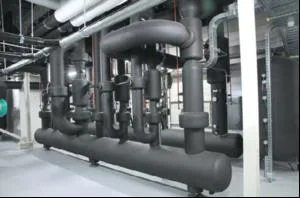
According to Armacell, the energy
saving benefits of insulating air
conditioning and refrigeration
systems are sometimes overlooked,
with structural insulation requirements
more readily considered. Yet
investment in the insulation of
HVACR service equipment can
provide much quicker payback. This
is equally true for refrigeration, airconditioning
and heating systems.
The insulation of cold pipes is
usually aimed at preventing condensation,
with insulation thicknesses of
6 to 13mm being common.However
according to the results of a study
carried out by Armacell, such thicknesses
are not optimally designed to
reduce associated energy losses, with
substantial energy and CO2 savings
possible when thicker insulation
materials are used.
The objective of the study was to
find an optimal, cost-effective
insulation thickness for various types
of plant. Armacell determined the
savings which are achieved through
the use of thicker levels of insulation.
These savings were then compared
with the cost of investment.
Armacell says that irrespective of
the complexity of the system and the
cooling demand, an optimal
insulation thickness of 15.5 to
25.0mm for Armaflex insulation was
determined for chilled-water pipes.
IPE Newsletter
IPE publishes a weekly eNewsletter, delivering a carefully chosen selection of the latest stories straight to your inbox.
Subscribe here