

Storage solutions fit for lean times
Lean manufacturing has led many plants to adopt more
streamlined processes, which can have an effect on the way
storage systems are integrated.This includes the rise in the
use of mobile storage which,says Clive Woodward,g
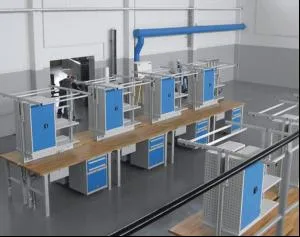
Lean manufacturing has led many plants to adopt more
streamlined processes, which can have an effect on the way
storage systems are integrated.This includes the rise in the
use of mobile storage which,says Clive Woodward,group MD
of Bott, can improve performance, simplify the working
environment and help manage inventory
The term ‘lean’ was introduced to
describe the production system
developed by the Toyota company
during the post World War II years and is
based on the practice of
achieving more with less
resource. Today, the concept
of lean is not just restricted to
manufacturing but applies to
an entire organisation,
including the supply chain,
product development and
service.
Lean manufacturing
essentially aims to save time
and money. According to
the Manufacturing
Institute, if a business can
quarter its leadtime, it will
double productivity and
reduce costs by 20%. As a
result, there can also be a 30 to 50%
reduction in floor space requirements. Under
these circumstances, significant
consideration has to be given to the types of
storage systems used to ensure they meet the
business’ needs, while taking up as small a
footprint as possible – complying with the
approach to lean operations.
Fit for workflow
Storage should be designed to fit operational
workflows, helping businesses to get the
most out of the available floor space. This
means not just looking at the physical sizes
of drawers and cupboards, but how they are
integrated. For example, where access is an
issue, some storage manufacturers offer units
with roller shutter doors, providing a viable
option for users to access a cupboard’s
contents where there isn’t sufficient room to
open a door.
The right storage also increases a business’
performance by reducing downtime and tool
loss. Tools and components must be readily
at hand and easily identifiable, contributing
to the workforce’s efficiency – a fundamental
lean principle.Mobile storage is growing in
popularity for this reason, as workers are not
going off to locate tools for each task but
instead can take the tools with them as they
move around the plant.
Safety and stability
When looking for mobile storage solutions
such as trolleys, cabinets, benches and
workstands, safety and stability must be
considerations. Make sure castors are heavy
duty and fitted with foot brakes so units can
be safely kept stationary. Ensure mobile
drawer systems incorporate safety trigger
mechanisms, so they cannot accidentally
open while in transit. To prevent units from
tipping over if heavily loaded drawers are all
opened at the same time, Bott’s units include
a drawer blocking feature.
Storage systems will also ensure efficient
inventory management – another factor
within lean manufacturing practices. Wall
boards feature silhouette shapes behind each
tool hook, allowing the user to instantly see
if a tool is missing.
To also aid identification, it is becoming
common practice for drawers to feature
foam inserts with cut-outs.
Organised tool and spare parts storage
means maintenance and production staff can
ensure every component is accounted for.
This is vital when working in areas such as
food or medical lines, to ensure that no tools
or small parts such as nuts and bolts can
accidently enter food by being left within a
production line, after maintenance has taken
place. If this were to happen, the
consequences could be costly and potentially
disastrous to a company’s reputation.
Well planned storage systems can also lead
to cost savings. Keeping items in defined
locations makes it easy for staff to keep an
eye on stock levels so that new parts are only
ordered when needed. In addition, formal
processes can instil employee discipline in
retrieving parts from, and returning to,
storage locations, ultimately saving
inefficient ‘man miles’ by avoiding staff
having to search for items and reducing their
productivity.
It is possible to choose the right storage by
working with a team of experts who will take
the time to understand the business’
requirements and provide the right solution.
Getting it right can result in efficient
working practices, which positively affect a
company’s bottom line and form part of lean
manufacturing processes.
IPE Newsletter
IPE publishes a weekly eNewsletter, delivering a carefully chosen selection of the latest stories straight to your inbox.
Subscribe here