

System selection: A 10-step plan
Choosing a conveyor system can be a difficult task. Here,
Conveyor Systems Ltd (CSL) offers a 10-point check list of
factors to consider
The basic 10-step plan detailed below
is designed to provide a company
with a s
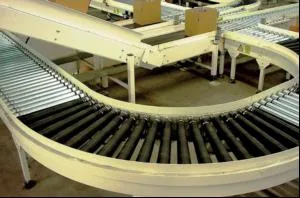
Choosing a conveyor system can be a difficult task. Here,
Conveyor Systems Ltd (CSL) offers a 10-point check list of
factors to consider
The basic 10-step plan detailed below
is designed to provide a company
with a structured approach to
selecting and placing an order for a conveyor
or integrated system.
Conveyed product should be clearly
identified and described by size, shape,
weight, special configurations, volume and
peculiarities. Record any space limitations
and note possible electrical, pneumatic and
mechanical needs or restrictions. The nature
of the product and the traffic density in the
space available will determine placement of
conveyor components and size of the system.
Evaluate the various types of conveyors
(belt, roller, wheel, powered, gravity, and so
on). Form a planning committee with staff
from the various operating departments and
assign responsibility for system design. Agree
a timetable for developing and installing the
system.
Ten step plan
1. Consult a number of engineers who work
for reputable conveyor system design and/or
manufacturing companies to evaluate their
capabilities. Some have state-of-the-art
computer-aided systems to help design and
manufacture a cost effective conveyor system.
2. After assessing the capabilities of
suppliers, prepare a criteria and rough
working layout of the system, highlighting
the results you wish to achieve. Set ball-park
budgetary constraints, allowing financial
flexibility to ensure cost effective designs are
proposed. Often conveyor manufacturers
and systems integrators can suggest special
conveyor modules such as turntables,
transfers, channelisers and vertical escalators
that cost more, but result in a more
economical and efficient operation.
3. Prepare a plan of available power
services. Knowing the location of electrical
outlets and air pressure lines may have a
bearing on system layout and help to
simplify the power system design.
4. Invite at least three companies to bid on a
project. Bids should include preliminary
design drawings that are detailed to allow
comparative analysis. Poor design
capabilities at this stage can result in a
conveyor system being ineffective later.
Quotations should contain: Product
description, size and weight; flow throughput;
roller centres and type; belt finishes; materials
of construction; proposed system layout and
necessary customer service agreements.
When evaluating bids, review all aspects of
the system, including design, quality,
materials and installation support services.
Location and financial stability of the
supplier should also be considered.
You are now in a position to select your
chosen supplier.
5. Schedule a timetable for installation of
the system with critical deadlines, one that a
supplier can realistically meet.
6. Examine the proposed drawings carefully
for any design defect and question the
supplier for clarification on throughput
speeds. You need to be clear in your mind of
the anticipated results. Any modifications
should be discussed and agreed at this stage.
Do not always leave it to the supplier to
confirm any agreement in writing.
7. About two weeks prior to the delivery
date, re-examine the proposed conveyor site
checking power and service connections and
making sure the areas is cleared of debris
with free access. Caution: Use of any part of
the system should not be planned until the
entire system is installed, unless this has
been specifically agreed in the sales contract.
8. Once all components are in place,
perform a final test of the entire system and
produce a detailed, but fair ‘snag list’,
recording all existing or potential problems.
Form an inspection committee if possible to
include sales engineers, company production
manager, electrician, IT or programmer and
installation/maintenance foreman. The
committee should perform a one/two day
start up inspection and be specific when
identifying problems. All timing, operating
speeds, workmanship and other associated
problems should be listed and presented to
the supplier with an agreed time frame for
the supplier to correct the flaws.
The warranty starts now, so be aware that
all undetected problems could result in
expenditure later on. Additional details or
system refinements can be added at this
time. However, costs for such additions are
the purchaser’s responsibility.
9. Plan a training programme for all those
involved in the system operation. An inservice
system demonstration should be
performed, noting emergency procedures
and function improving adjustments that
must be followed. ‘Do not touch’ restrictions
should also be highlighted. The maintenance
supervisor should receive all structural and
electrical drawings, along with service
telephone numbers for assistance or spares.
10. Soon after the system is in service,
report back constructively to the supplier to
advise on results – positive or negative.
What may appear to be a major customised
conveying system can often be resolved using
cost effective standard conveyor modules. This
can avoid the expense involved in one-off
designs and manufacturing tooling, plus
assures the customer of compatibility,
flexibility and continuity of supply for many
years to come.
IPE Newsletter
IPE publishes a weekly eNewsletter, delivering a carefully chosen selection of the latest stories straight to your inbox.
Subscribe here