

Test and inspect for peace of mind
Regular testing and inspection of fall protection systems for
work at height can bring huge benefits to industrial
businesses, says John Boyle, director at Eurosafe Solutions,
Any health and safety manager in the
indu
Regular testing and inspection of fall protection systems for
work at height can bring huge benefits to industrial
businesses, says John Boyle, director at Eurosafe Solutions,
Any health and safety manager in the
industrial sector should be aware of
the importance of ensuring that the
correct equipment is in place for work at
heights, but what can sometimes be
overlooked is the need for these systems to
be regularly tested and inspected.
It is often not until there is plant or
equipment failure and maintenance staff
need access to certain areas when it is
discovered that the fall protection systems
have not been correctly maintained. If fall
protection systems are deemed to be unsafe
and there is no contract in place with an
external testing and inspection company it
could lead to several days’ downtime before
they can be assessed and repaired. Any
downtime of plant or equipment can have
huge cost implications for an industrial
business and major disruption to operations.
One way to avoid this is to follow the lead
of companies, such as Tata Steel, which has
had a regular testing and inspection contract
in place with Eurosafe Solutions for several
years. This followed our installation of
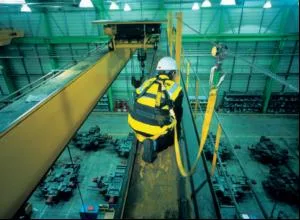
Latchways’ mansafe systems to overhead
cranes and downshop rails at two of its South
Wales facilities. The company recognised
that by contracting with a specialist fall
protection company it could ensure systems
are routinely tested and inspected, giving
peace of mind that they are fully compliant.
Tata Steel is safe in the knowledge that,
should plant fail, there is no reason why
access to work at heights would need to be
delayed. Maintenance work can be carried
out safely to address the problem, which
minimises risks to staff and a business. The
cost of a dedicated testing and inspection
service is minimal compared to the lost
revenue incurred from plant downtime.
Many companies recognise they can
better protect themselves, minimise risks
and ensure operator safety by having a
testing and inspection service that is
managed by an external specialist. For
multi-site managers, this is particularly
important as it can be difficult to monitor
specific products’ testing schedules across
numerous operations.
A specialist fall protection provider will
often schedule inspections to be carried out
well in advance of their due date to ensure
they meet the requirements for frequency of
testing and to avoid putting employees and
contractors at risk. Testing and inspection
should fit around customer needs. For
example, when carrying out a testing and
inspection programme for Tata Steel, work
is done outside working hours so that it does
not interfere with normal operations. The
same is true of any remedial work required.
Inspection reports
When an inspection is carried out, the testing
and inspection company should produce a
detailed report as to its findings and provide
up-to-date system certification that is valid
for the relevant period, i.e 12 months for a
typical cable-based fall protection system.
The report should contain an accurate
assessment of the safety of the fall protection
systems and will identify whether any
maintenance or replacement work needs to be
done, as part of achieving total compliance.
It should also identify any areas where
remedial works or replacement needs to be
carried out. The inspector would ‘Lockout
Tagout’ any potential hazards relating to the
fall protection systems, identifying any piece
of equipment that is believed to be unsuitable
for use. Staff need to be aware of how to
recognise and acknowledge such Lockout
Tagout systems and read them to ensure any
operators are aware of a potential hazard, before
carrying out any work at heights.
Introduction of corporate manslaughter
legislation in 2008 made compliance with Work
at Height Regulations even more of a concern
for company directors, so it is important that
the report findings are communicated within
a business. A procedure should be followed
which records any changes or problems
identified in the fall protection system.
However, the greatest factor to address is that
a hazard’s risk is minimised until a longer term
solution is implemented. This information
needs to be communicated to any operators
who may be involved in working at heights.
Remedial work may then be carried out to
ensure that risks are minimised and individuals
are offered the best possible protection.
The findings of an inspection report need
to be taken seriously and this requires staff to
be properly trained in the correct use of fall
protection systems. The number one reason
for accidents occurring as a result of work at
height is human error. All staff involved with
work at height must be trained in the correct
use of fall protection equipment. In some
instances, where equipment is not in regular
use, refresher training may be required.
Increasingly industrial businesses are
recognising that fall protection systems need
a dedicated approach to testing and
inspection, as part of an ongoing planned
maintenance programme. Failure for this to
be carried out by a specialist testing and
inspection company could lead to a lack of
duty of care on the part of the business.
By working closely with manufacturing
companies to provide these services, a
programme can be created where downtime
is minimised and operators are offered the
protection required when carrying out work
at height.
IPE Newsletter
IPE publishes a weekly eNewsletter, delivering a carefully chosen selection of the latest stories straight to your inbox.
Subscribe here