

Throwing light on energy waste
Industrial facilities require hundreds, if not thousands of
lights, many of which burn 24/7. With many of these facilities
using old lighting systems, unnecessary energy is being
wasted. Here, Russell Fletcher, sales and m
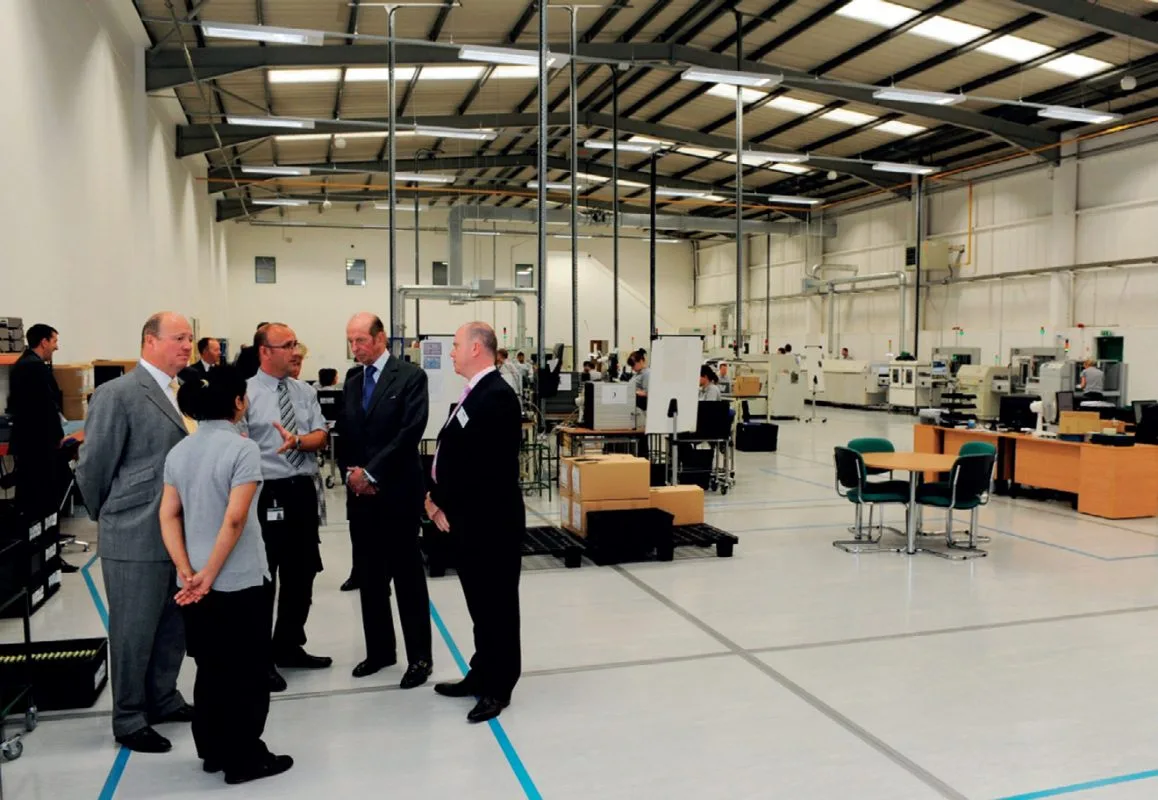
Industrial facilities require hundreds, if not thousands of
lights, many of which burn 24/7. With many of these facilities
using old lighting systems, unnecessary energy is being
wasted. Here, Russell Fletcher, sales and marketing director
at Harvard Engineering explains how industrial facilities can
save energy by using intelligent lighting technology
Industrial facilities require heavy duty
lighting, which often equates to
enormous energy bills. In fact, with
many still using lighting systems installed in
the 1950s, it is estimated that a massive
£1.4billion and 10 million tonnes of carbon
are being wasted each year.
Fluorescent tube lighting is
commonly used in industrial facilities.
However, the EU is keen for inefficient
fluorescent tubes, including the T8
Halophostate and the basic T12 to be phased
out. Additional pressure from UK
government legislation to reduce
carbon emissions across large
facilities and the promise that an
estimated immediate saving of 20% can
be made by upgrading, many companies are
now looking at lighting systems that will help
reduce energy yet provide the heavy duty
lighting necessary in industrial applications.
LED lighting is one a number of new
lighting technologies. Previously used only
for applications that did not require a high
lux level, such as emergency lighting and
signage, technological advances have led
to LEDs being installed in an everincreasing
number of
applications,
including
commercial
buildings and large
industrial facilities.
LEDs are 25% to 70% more
efficient than some other light sources –
and getting more efficient by the day – and it
is estimated that the UK’s energy
consumption used by lighting could be
reduced by up to 70% by 2050 if all lighting
was upgraded to LEDs, once the technology
achieves expected levels of efficiency.
With LEDs usually lasting for 50,000 to
100,000 hours, they provide a solution for
industrial facilities where the replacement
cost for lamps can also be substantial.
Installed alongside control equipment
called drivers, LEDs can be dimmed to
provide additional savings while prolonging
their lifespan – LEDs can last for 11 years in
continuous operation at 100%, which would
double at half the load.
One of the most common dimming forms
for LEDs is DALI, an intelligent dimming
protocol, which is increasingly being used in
commercial buildings across Europe. DALI
drivers provide digital dimming capabilities
of between 100% and 0.1%, with the
additional option of switching the lighting
off completely.
Analogue 1-10V drivers offer an
alternative solution to the DALI digital
protocol, using voltage input to manage the
intensity of the light. For example, at 10V
lights operate at 100%, 5V lights operate at
50%, and at 0V lights are switched off.
The use of dimmable drivers makes it
possible to control the lux level of each light
fitting and ensures that every light operates
at optimum level to ensure an excellent level
of light uniformity. In addition, different
lighting requirements can be set in different
areas.
LEDs can also be installed alongside other
control equipment, such as presence
detectors and daylight sensors, in order to
achieve additional savings. Presence
detectors, which detect when people are in a
room and then turn the lights on and off
accordingly are suitable for industrial
facilities where areas may be intermittently
occupied or left unoccupied for long periods
of time. Daylight sensors work by measuring
the natural light levels in a
building to determine what
lux level the artificial
light should be at.
The idea of
spending on capital
items, like new lighting
technologies, in the current
economic climate may be a
daunting thought for many businesses,
however there is financial support available
for those who want to embrace the benefits
of installing new lighting solutions.
The Enhanced Capital Allowance scheme
allows companies to write-off the whole cost
of eligible equipment against taxable profit in
the year of purchase. Every £1000 spent on
qualifying equipment would reduce a
company’s tax bill in the year of purchase by
£280 (based on a corporation tax rate of
28%).
IPE Newsletter
IPE publishes a weekly eNewsletter, delivering a carefully chosen selection of the latest stories straight to your inbox.
Subscribe here