

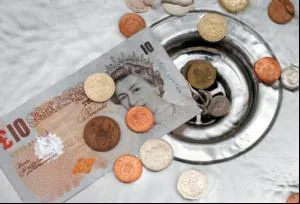
Water: A drain on profits?
Major energy users tend also to be major water users.Yet,
while reducing energy use has become a cornerstone of
industry sustainability,water use goes unnoticed, according
to Shawn Coles, founder of Water Saving Week
Major energy users tend also to be major water users.Yet,
while reducing energy use has become a cornerstone of
industry sustainability,water use goes unnoticed, according
to Shawn Coles, founder of Water Saving Week
In order to achieve energy efficiency,
improving water efficiency is vital. In fact,
water has a huge role to play in reducing
industry’s carbon footprint, because it, too, is
a contributor to a plant’s emissions.Much of
the water used in industry – for processing,
fabricating, rinsing, steam heating and
sanitation – needs to be heated using energy
from fossil fuels. Therefore, when water is
wasted onsite, energy is also wasted.
Water efficiency is a particularly pressing
issue for industry since industrial plants,
particularly in sectors such as food, chemicals
and paper, are extremely water-intensive.
According to a report by Waterwise (a notfor-
profit NGO), approximately 45% of
freshwater in the UK is withdrawn for
industrial use.Water demand in the UK has
been growing at a rate of 1% a year since
1930. This is mainly due to wasteful water use
practices, rather than a real need for more
water.
“Water – we all need it, we can’t live
without it, and yet we are using more and
more of it,” comments Chris Sheppard,
performance development manager for
Guernsey Water. “It’s a precious resource and
yet many of us use it as if it was free and
available in unlimited quantities. It’s not!”
Not only do companies pay for water in
the form of water bills, when they heat the
water, they pay again in the form of fuel bills.
However, for many organisations, the memo
has not yet been received that water
efficiency and energy efficiency go hand in
hand. According to an extensive survey
conducted by Water Saving Week, 85% of
businesses were concerned about energy
efficiency, yet only 73% were concerned
about water efficiency.
It’s a popular misconception that
achieving water efficiency involves expensive
water-saving measures. In fact, it’s the small
changes that can add up to a huge
environmental difference. For example,
fixing a dripping tap can save as much as
5000L of water a year. The simplest way to
begin saving water is to know exactly where
all the water onsite is going. Despite this, the
Water Saving Week survey found that a
staggering 87% of businesses that spend
more than £500k on water consumption do
not have metering equipment in place to
report on their water usage.Metering helps
to identify water leaks, damaged equipment
and areas where excess water is being used.
Once all the leaks have been plugged,
reducing water waste can take three main
forms:
investing in equipment that improves
water efficiency (such as waterless urinals);
recycling or reusing water (either
harvested rainwater or water used during
onsite processing);
behavioural change campaigns to
encourage staff members to use water
more efficiently.
Water Saving Week 2010, which runs from
the 12-18th June, provides an opportunity to
kick-start a behavioural change campaign
onsite. Now in its second year, it is a Defrasupported
campaign to raise awareness of
water waste.Water users of all kinds have
already logged onto our website to find
water-saving tips and make a pledge to cut
water waste.
Water Saving Week has already gathered
support from companies such as Guernsey
Water and EDF Energy, as well as
organisations like the UK Sustainable
Development Association (UK-SDA).
Terry Nash, director of the UK-SDA,
comments: “Saving water is as important to
future sustainability as reducing carbon
footprint, making Water Saving Week a very
important event in raising public awareness
of the pressures on UK water
supplies.”
For many industrial
processes, water and energy
are used in tandem, so they
should also be given equal
weight when assessing a site’s
efficiency. Fixing leaks,
adapting machinery,
recycling or reusing water,
and changing staff attitudes
towards water use can all
make a dramatic impact on
water waste – and improve
energy efficiency too.
IPE Newsletter
IPE publishes a weekly eNewsletter, delivering a carefully chosen selection of the latest stories straight to your inbox.
Subscribe here