

|
Edward Lowton
Editor |

|
Substrate repair innovation
29 January 2016
What is being heralded as a major step forward in substrate repair and manufacturing applications is now being introduced into the UK and Ireland by Dycomet UK.
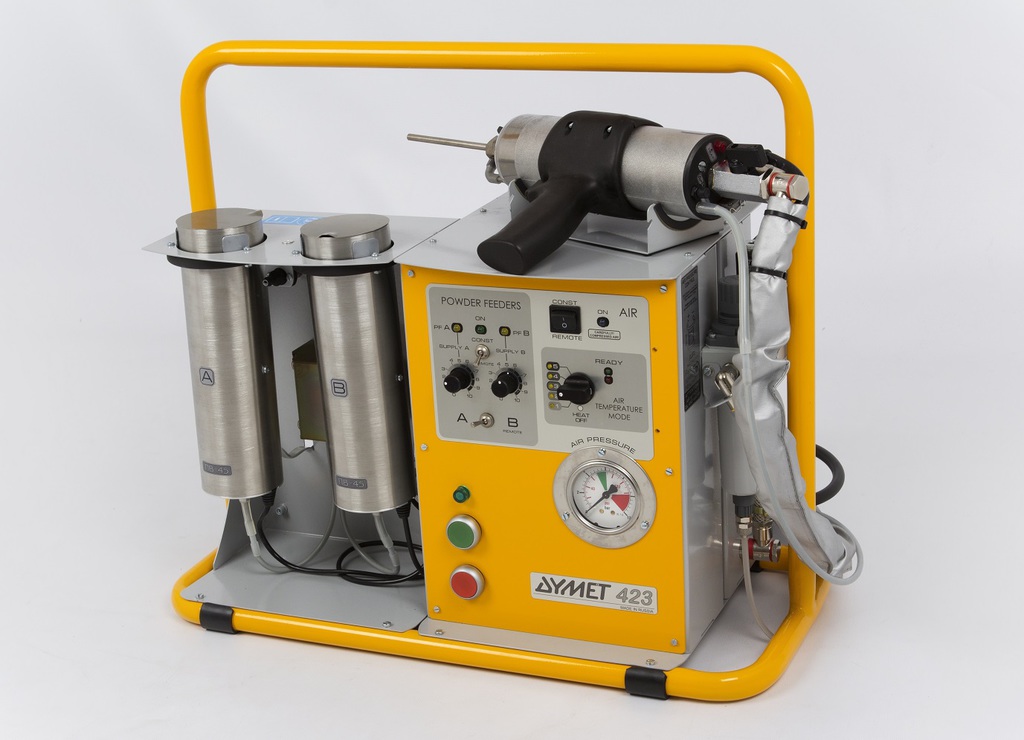
The North West-based organisation has been appointed as the UK distributor and developer by Dycomet Europe and will now work in collaboration with the organisation’s facility in the Netherlands in the specialist field of metal additive manufacturing – often described as ‘cold spray’.
“Centred on a portable, low pressure gas dynamic design, the concept overcomes issues such as stress, distortion and porosity that are often associated with traditional welding and thermal spraying, and has already provided proven benefits in a wide range of applications across Europe,” says Nick Gilfillan, Dycomet UK MD.
Now, he believes, by bringing the technology to manufacturers and engineers in this country for the first time, the company is opening up new possibilities in sectors that range from processes such as repair, restoration, sealing and corrosion protection to electrical conductivity or bespoke specialist needs.
“Importantly,” adds Gilfillan, “the system can be used with a range of substrates. This includes not just metals such as aluminium, cast iron, steel and copper, but even glass, ceramics and – currently in development – plastic and composite materials.”
Dycomet UK attributes this capability to the technology behind the design. The system is centred on creating a supersonic airflow into which metal particles are injected. This produces high levels of kinetic energy to create a rapid build-up of metal which is not simply added to the surface but actually becomes structurally integral with the substrate.
“The acceleration in the airflow means the particles deform as they hit the substrate, changing the composition of the surface yet without the risk of high temperatures causing melting which, potentially, leads to material weakening or distortion,” explains Nick Gilfillan.
The benefits of this method compared with other means of applying metal coatings are clear-cut. Applications – such as corrosion repair – can be to any thickness and can be fully machined, while there is no distortion or oxidisation of either the substrate or the coating. Moreover, because a localised spray jet is utilised, adjacent areas remain unaffected by the operation. Excellent adhesion, cohesion and optimised porosity characteristics combine with high electrical and thermal conductivity to achieve high quality results – even the restoration of thin-wall parts becomes feasible, in direct contrast to other methods which, to date, have not proven suitable.
“Dycomet UK is making two units available – single and twin-chamber options – neither of which weighs more than 18kg. Each only requires connection to single-phase 240V electrical and six bar air supplies, together with location adjacent to an extraction facility – all commonly available in a vast number of manufacturing and engineering environments,” continues Gilfillan. “The system can be put to use with only minimal training and guidance, which we are also happy to provide.”
For manual operation, a hand held nozzle is used to direct the spray towards the part in question although the company points out that the system can also be incorporated into automatic facilities. Results are achieved, says Dycomet UK, more quickly and with greater effectiveness and can offer a range of beneficial properties that cannot be achieved with ‘conventional’ procedures. These factors translate directly into savings in both costs and downtime.
The company’s involvement with Dymet systems, and particularly Dycomet, arose via the Bridge Organisation – well-established in the specialist field of automotive re-manufacturing and which now fully owns Dycomet UK.
“Bridge has always been committed to seeking out new methods of working – a commitment that is increasingly important as thinner, lighter, more highly accurate and complex components are seen increasingly with modern engines,” continues Nick Gilfillan. “The metal deposition capability of the Dymet unit clearly addresses these issues – to the extent that we were keen, and are now delighted, to become the distributor throughout the UK and Ireland.”
With full access to Dymet’s research and development capability in Europe – soon to be enhanced by a new laboratory facility in the UK – and with the next product focus in this country on introducing a high pressure system later this year, Dycomet UK is committed to moving the new technology forward. Manufacturers and engineers across industry will be quick to recognise and appreciate the opportunities and possibilities that this represents.