
|
Edward Lowton
Editor |


|
| Home> | Efficient Maintenance | >Condition monitoring | >Temperature monitoring of incinerator |
| Home> | Premises management/maintenance | >Waste management and recycling | >Temperature monitoring of incinerator |
Temperature monitoring of incinerator
31 July 2018
Compiling thermal images of objects that move at extremely slow speeds is a challenge in its own right.
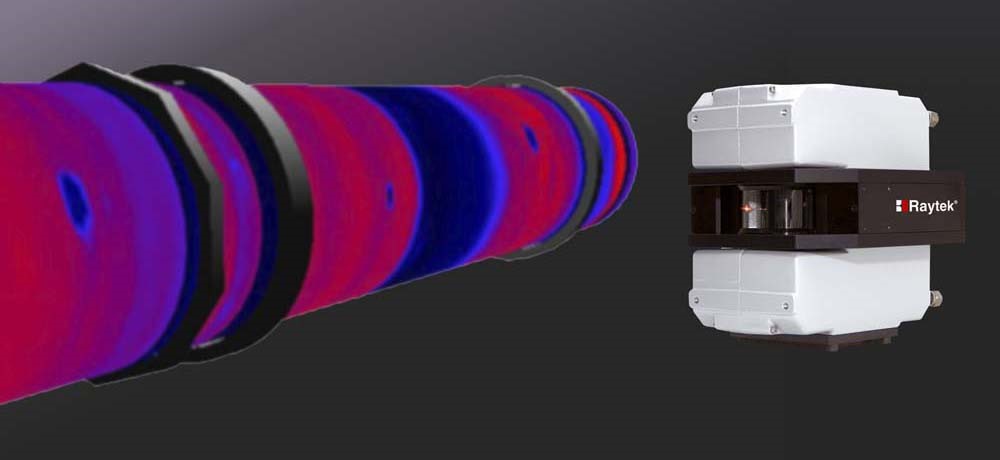
Fluke Process Instruments says it has solved this measuring task for a chemical waste incineration plant. Hazardous wastes are combusted in a rotary kiln that turns at 4 to 6 revolutions per hour. Over time, the refractory brick protecting the kiln wall degrades and has to be replaced. This used to be done in regular intervals with a big safety margin to prevent serious damage to the incinerator or even leakage of hazardous materials.
Fluke Process Instruments supplied a Raytek CS210 infrared line-scanning system that is able to synchronize thermal images at speeds as low as 2 revolutions per hour. It detects temperature deviations across the entire kiln shell and provides the plant operator with information about the state of the incinerator. The kiln shell temperature ranges between 100 °C and 500 °C. Hotspots point to refractory loss or wear. The installation of the monitoring system is said to have resulted in significant savings due to an extended operational life of the refractory and reduced downtimes.
- Contact-free temperature monitoring
- New additions to spot pyrometer series
- Compact logger checks cure of coated monoblock containers
- Industrial-strength temp profilers & infrared thermometers
- Raytek enhances kiln monitoring technology
- Processor box for remote configuration
- Infrared thermometer for steelworks
- Wider temperature range
- Thermal imaging and furnace surveys
- New industrial-grade thermal imager