
|
Edward Lowton
Editor |

|
| Home> | Production Engineering | >Cables, connectors and energy chains | >Cable range extended |
Cable range extended
18 September 2014
igus has launched a range of cables for cable carrier applications that do not require high cycle rates. With a guaranteed service life of one million double strokes, the chainflex M range is a cost effective alternative for such applications.
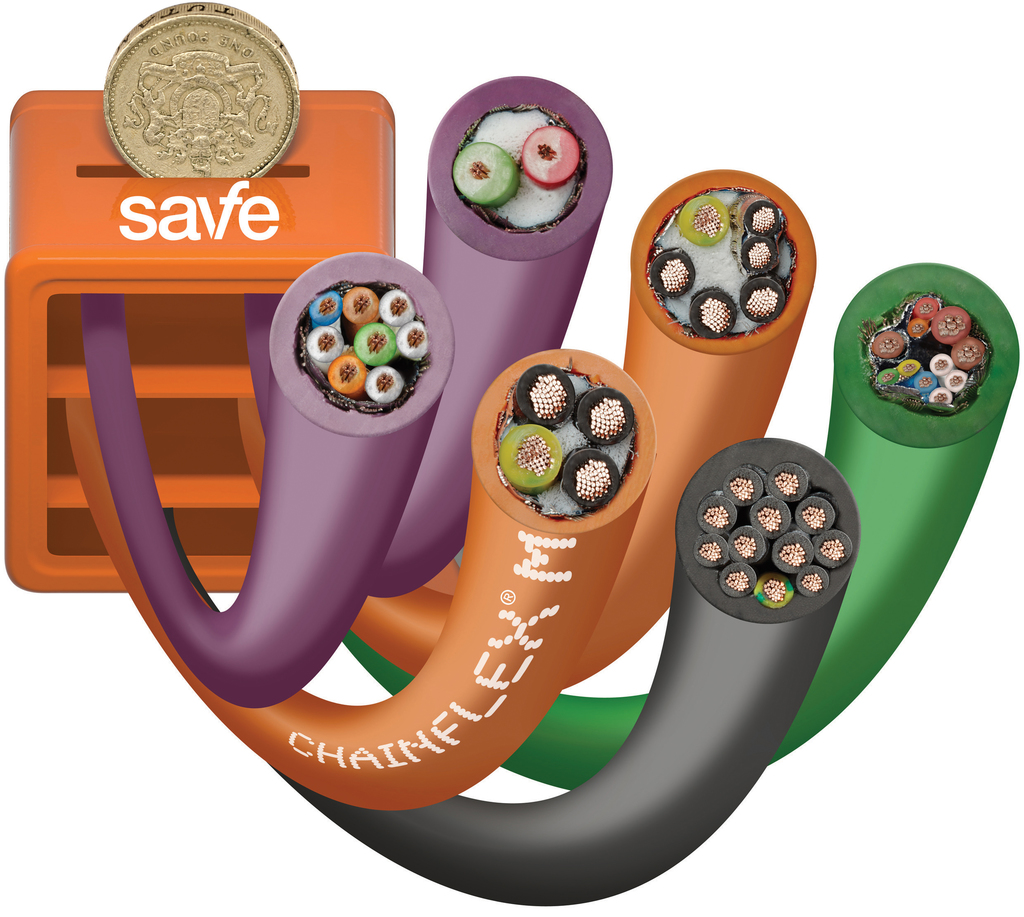
Typical uses for the chainflex M range are tools and jigs, packaging machines, some machine tools, and theatres. Covering all types of cables from control, motor, servo and measuring cables through to data and bus cables, the chainflex M range is UL/CSA certified. Cables undergo the same demanding in-house tests as standard chainflex for wear, chemical resistance, and flexing performance in energy chains.
"Our current range of chainflex cables is guaranteed for 5 million double strokes in constantly moving energy chain applications, even with high speeds, accelerations and demanding environmental conditions,” says Justin Leonard, director at igus. "Our new chainflex M range is designed for less demanding applications where reliability is still important but the required cycle life is much lower”.
"All cable families in the chainflex M range cost 20 to 30% less than the standard chainflex ranges we currently offer,” adds Leonard. "They are made from iguPUR, a highly oil and bend-resistant PUR material, or PVC."
With no cutting costs and no minimum order quantities, the new chainflex M provides a cost-efficient solution for energy chain applications that do not require a very high cycle rate.