

|
Edward Lowton
Editor |


|
| Home> | Energy Management | >Boilers and burners | >How to achieve energy efficiency in steam generation |
How to achieve energy efficiency in steam generation
15 December 2025
Ben Friend shares his experience on delivering cost and emission savings when it comes to steam boiler use
WHEN CONSIDERING a new steam installation, whether for purchase or rental, ensuring you have the most efficient boiler for your environment is key to safeguarding against wasting energy and quite literally burning money. So, the question is, do you know your steam demand?
It’s not uncommon to find that the size of the boiler onsite or that is being specified for rental is bigger than what’s required for the site. This is often as a result of legacy systems or requests specifying a like for like solution. Which doesn’t account for changes in site processes and advances in equipment. This is why it’s a good first step to look at how much steam you actually need.
Understanding boiler inefficiency
In a steam boiler, energy is supplied by combusting a fuel-air mixture. The internal heating surfaces (flame tube and smoke tubes) transfer heat to the water inside the boiler via thermal radiation, conduction, and convection to produce steam.
As an example of an inefficient boiler, you may be burning through 8 tonnes of fuel, but when conducting a site and flow meter review the machine is using just 4 tonnes of steam. So where are the other 4 tonnes going? An investigation would likely start with and show that the excess is literally going up the chimney. Resulting in a boiler efficiency at just 50%.
Conventional industrial steam boilers typically operate at an average efficiency of approximately 85%, this indicates that 85% of the energy derived from the fuel is effectively utilised to generate and maintain steam. However, the remaining 15% is lost through mechanisms such as radiation, burner purges, and exhaust gases expelled via the flue. Although some degree of energy loss is inevitable, there are strategies available to recover or reduce these thermal losses and consequently improve overall system efficiency.
Recover heat - reduce costs
Recovering heat from waste energy offers several strategic advantages, including reduced fuel consumption and lower associated emissions, both of which contribute to achieving sustainability and environmental compliance targets.
In addition to cost savings on fuel, depending on the specific heat recovery technologies employed and the scale of the industrial process, there may be an opportunity to generate an additional revenue stream through the heat recovered. Which may include recovering the heat to use in other operations on your site or a nearby third site or selling the heat.
How to recover heat from your steam processing: The role of an economiser
There has often been a tendency to overlook how efficient, or more accurately, how inefficient a system is. However, there’s a growing transparency in addressing system performance and taking steps to improve boiler efficiency.
In instances where there may be lost or wasted heat it’s typically through flue gas, therefore the inclusion of an economiser may be beneficial.
An economiser is a heat exchanger which transfers heat energy from the flue into the boiler feedwater, therefore recovering energy that would normally be lost and inputting it back into the system. This means that you can produce the same steam output however, it requires less energy and consequently less fuel.
By transferring more heat into the feedwater, the energy input to the burner is reduced by approximately 5%, instantly reducing energy costs and increasing efficiency. For example, if you are spending £30,000 p/m, recovering just 5% of that can result in a cost saving of £18,000 per year.
In addition to the fuel saved and associated financial savings, additional benefits of using an economiser include:
- Improved efficiency = less input for the same output
- Reduced environmental impact = less CO2, less Nitrogen Oxides (NOx), and other products of combustion
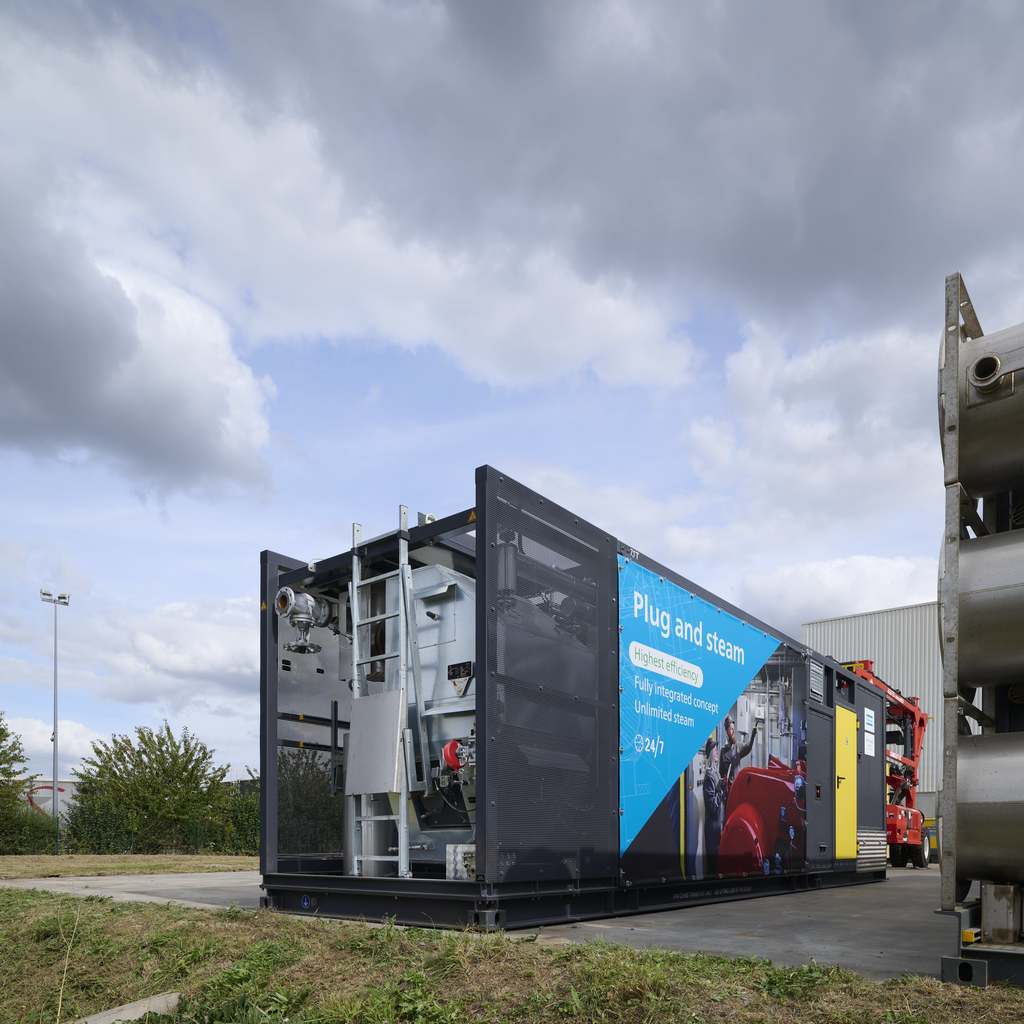
Of course, the bigger the boiler, the bigger the costs savings and reduction in waste. But that’s not to say you shouldn’t consider heat recovery even with a smaller unit. For example, our newest and ‘smallest’ plug and steam boiler is 95% efficient as it includes an integrated smoke economiser – amongst other efficient factors.
Efficient burning and condensate recovery
Additional considerations which could influence the efficiency of your system are looking at the use of a Variable Speed Drive (VSD) burner. VSDs adjust fuel and air intake to match the load demand to maximise fuel efficiency and reduce emissions. And an O2 regulation system can monitor flue-gas oxygen levels and control the fan speed accordingly.
Furthermore, a dual fuel burner can operate on natural gas or oil - supporting efforts to reduce NOx. And a further way to recover heat is to collect blowdown condensate once it cools and returns to water and return this back to the boiler for reuse. This can further contribute to energy efficiency and reducing water costs.
Ben Friend is steam sales engineer at Atlas Copco Rental UK and Ireland
For more information:
Tel: 0800 169 6611